
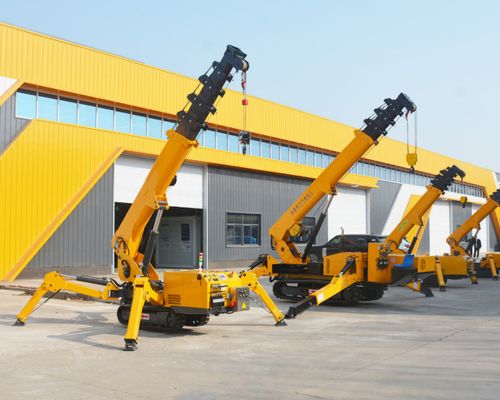
A spider crane is a compact tracked mini crane equipped with articulated stabilizers—hence its name “spider”—that can unfold to operate on limited surface areas. It is specifically designed to work in confined spaces, and YG spider cranes are compact and versatile, capable of passing through narrow doors or corridors to get as close as possible to the lifting point, prioritizing accessibility and maneuverability as a specialized solution for space-constrained tasks.
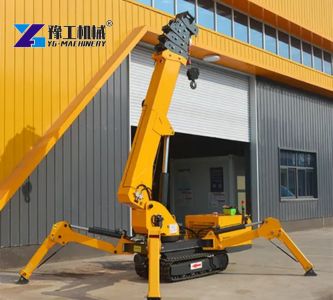
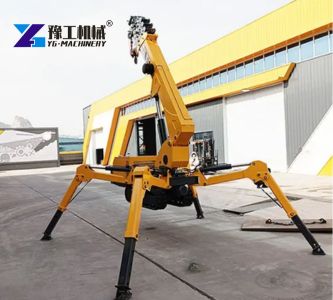
YG Hot-sale Small Spider Crane Parameters
| Model | YG-3t | YG-5t | YG-8t | |
| Specification | 3t | 5t | 8t | |
| Maximum working radius | 8.83m×0.15t | 14m×0.5t | 16.5m | |
| Maximum above-ground head | 9.9m×0.7t | 16.8m | 18m | |
| Winch device | Hook Speed | 0-8m/min(4 rope) | 12m/min(4 rope) | 12m/min(4 rope) |
| Rope diameter | φ8mm×45m | Φ11mm×80m | Φ11mm×80m | |
| Telescopic system | Boom Type | 5-section boom, pentagonal structure | 5-section boom, pentagonal structure | 5-section boom, pentagonal structure |
| Boom Length/Time | 3.1m-9.2m/20sec | 12.3m/54sec | 12.3m/54sec | |
| Up and down | Boom Angle/Time | 0°~78°/13sec | 0°~78°/13sec | 0°~78°/13sec |
| Slew system | Slew Angle/Speed | 0-360°continuous/60sec | 0-360°continuous/38sec | 0-360°continuous/38sec |
| Traction system | Walking Way | Hydraulic motor drives | Hydraulic motor drives | Hydraulic motor drives |
| Walking Speed | 0~2.5km/h | 0~2.5km/h | 0~2.5km/h | |
| Grade Ability | (25°)36% | (25°)36% | (25°)36% | |
| Operating system | Operation type (Boom/outrigger) | Manual operation, manual walking(remote control option) | Manual operation, manual walking(remote control option) | Manual operation, manual walking(remote control option) |
| Operating characteristics | Manual operation, remote control | Manual operation, remote control | Manual operation, remote control | |
| Transport parameters | L*W*H(mm) | 2950*980*1560 | 5000*1500*1900 | 5000*1600*2180 |
| Total weight(kg) | 2700 | 6200 | 7200 | |
YG Spider Cranes Types
To cater to diverse construction needs, spider cranes are available with different power systems:
• Electric Spider Cranes: Environmentally friendly and produce zero emissions. Since they are powered by electricity, they are perfect for indoor use where ventilation is limited. They operate quietly, making them the go-to choice for hospitals, schools, or office renovations.
• Diesel-Powered Spider Cranes: These are the workhorses of the outdoor construction site. Diesel engines provide the robust power and torque required for heavy-duty lifting tasks in rugged environments. They are typically equipped with advanced safety features like load alarms and emergency stops.
• Battery-Operated Spider Cranes: Offering the best of both worlds, these rechargeable machines are compact, emission-free, and easy to transport. They are increasingly popular for contractors working across multiple sites that require both indoor and outdoor versatility.
Components of a Mini Spider Crane
Understanding the detailed structure of a spider crane reveals why it is so effective at high-precision lifting.
The Chassis (The Foundation)
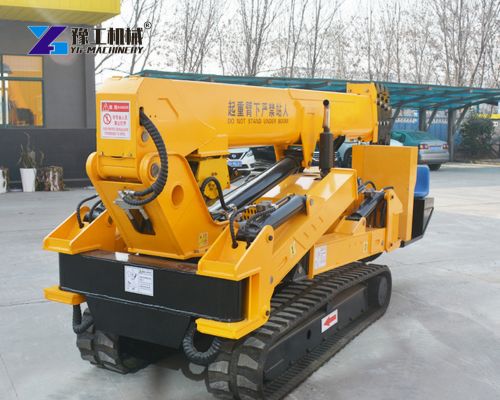
The chassis is the backbone of the crane, manufactured from high-strength steel. It supports all other components. In spider cranes, the chassis is engineered to be incredibly compact to fit through standard doorways, while remaining sturdy enough to ensure stability during operation.
The Outrigger System (The “Spider Legs”)
This is the defining feature of the machine. Each outrigger can be independently adjusted and expanded. This allows the crane to stand firmly on slopes, steps, or cluttered floors. Each leg features a safety locking mechanism to ensure the crane remains leveled during the lift.
The Lifting System
The lifting assembly consists of:
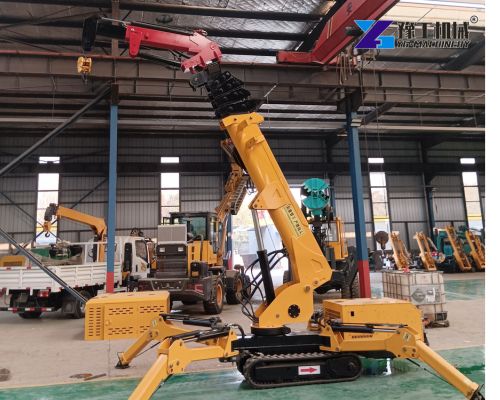
• The Boom: A telescopic arm that can often rotate 360 degrees, allowing for a wide working radius without moving the chassis.
• The Hoisting Winch: This pulls or releases the high-strength wire rope to raise and lower cargo.
• Hydraulic Cylinders: These provide the fluid power necessary to control the precise movements of the boom and winch.
The Control System
Modern mini spider cranes feature intuitive control systems located either in a localized cabin or, more commonly, via remote control. These systems include digital displays, levers, and buttons that allow the operator to manage the lift from a safe distance with a clear line of sight.
What are the main features of a mini spider crane?
What makes the mini spider crane so special? It boils down to five primary characteristics:
Compact Design & Fast Setup
A spider crane’s small footprint allows it to fit into narrow alleyways or crowded factories. Most models can be set up or disassembled by a single operator in minutes, saving significant labor costs and meeting tight project deadlines.
High Mobility & Articulation
Equipped with crawler tracks (often non-marking rubber for indoor floors), these cranes move smoothly over rough terrain. Their high degree of articulation means they can reach over obstacles or into difficult-to-access “blind spots” that a straight-boom crane cannot.
Incredible Versatility
From glass installation on skyscrapers to moving heavy machinery in a factory, the applications are endless. They are the preferred tool for:
• Lifting building materials in tight urban spots.
• Installing HVAC units and solar panels.
• Maintaining building facades and window cleaning.
Advanced Safety Features
Safety is the top priority in crane manufacturing. Standard features include:
• Load Sensors: Automatically stops the crane if the load exceeds rated capacity.
• Anti-Collision Systems: Uses sensors to detect nearby structures and prevent accidents.
• Emergency Stops: Instant shutdown capabilities for unpredictable environments.
Surprising Lifting Capacity
Don’t let the “mini” tag fool you. Despite their size, these machines have a high power-to-weight ratio. For example, a 3-ton mini spider crane can handle heavy industrial loads while still being light enough to be transported on a standard trailer. For larger projects, models like the 8-ton or 10-ton crawler cranes provide massive lifting power at a much lower cost-per-lift than traditional tower cranes.
Spider Cranes Applications Case Studies
Case 1: High-Rise Glass Installation
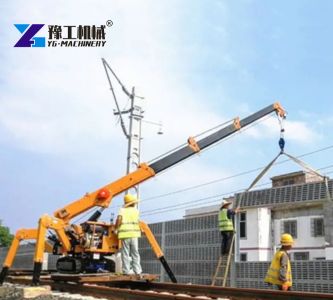
In a recent project, a spider crane was used to install glass panels on a skyscraper. Its compact size allowed it to be lifted to upper floors via a service elevator. Once on-site, its hydraulic jib provided the millimeter-precision needed to fit the glass, reducing installation time by 30% and eliminating the risk of breakage.
Case 2: Steel Erection in Restricted Sites
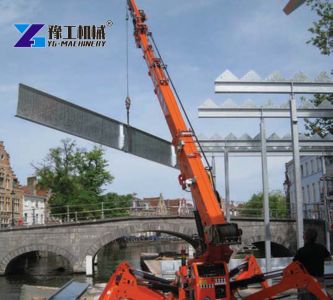
On a site constrained by existing historical structures, a spider crane navigated through narrow gaps to lift heavy steel beams into place. The independent outriggers allowed it to set up on a narrow ledge, ensuring the project stayed on schedule without needing to demolish surrounding walls for access.
Case 3: Industrial Machinery Relocation
A factory needed to move a large CNC machine to a new wing. The spider crane entered the facility, crawled through the workshop, and lifted the machine without the need for a full disassembly. This minimized “downtime” and saved the company thousands in operational losses.
Related Post: 8t Spider Crane Completes Australian Residential Lifting Task
📩 Ask About Spider Crane Solutions for Your Project
How Spider Cranes Improve Construction Efficiency
By integrating a spider crane into your fleet, you gain four major operational benefits:
• Improved Accessibility: Access elevators, rooftops, and narrow corridors with ease.
• Reduced Labor: Precise hydraulic controls reduce the need for large manual handling teams.
• Faster Relocation: Crawler tracks allow the crane to “walk” between lifting points in seconds.
• Enhanced Safety: Stability and automated load monitoring reduce the risk of on-site accidents.
Mini Spider Crane Maintenance Tips
To ensure your spider crane remains a reliable asset, a rigorous maintenance routine is vital.
Routine Inspection Schedule
Conduct a “Daily Walk-Around” t so check:
• Hydraulic Systems: Look for leaks or worn seals.
• Structure: Inspect the boom and outriggers for loose bolts or rust.
• Electronics: Test the remote control and warning lights.
• Lifting Components: Inspect the load hook and wire rope for fraying or bends.
Cleanliness & Fluids
Dust and debris are the enemies of precision machinery. Regularly clean the hydraulic fittings and the undercarriage to prevent contamination. Frequently monitor hydraulic oil, engine oil, and coolant levels. Using the manufacturer-specified fluids is non-negotiable for maintaining the warranty and performance.
Electrical & Battery Care
For electric or battery-powered models, keep the terminals clean and free of corrosion. Ensure the battery is stored in a dry, ventilated space and avoid “deep discharges” to extend the battery’s life cycle.
📩 Ask About Spider Crane Solutions for Your Project
How to Choose the Right Spider Crane
When selecting a spider crane for your next project, keep these four factors in mind:
• Lifting Capacity & Reach: Ensure the maximum weight and height ratings match your heaviest lift.
• Maneuverability: Consider the narrowest point the crane must pass through.
• Power Options: Decide if you need the zero emissions of an electric motor or the raw power of a diesel engine.
• Safety Tech: Look for cranes with integrated moment limiters and anti-two block systems.
Small Spider Crane Manufacturer – YG Machinery Factory Price
At YG machinery, we offer a range of spider cranes to suit every need. We have LPG, electric and diesel models available, each with their own unique benefits. LPG models are ideal for indoor use, as they produce no emissions and are quiet during operation. Electric models are also great for indoor use, as they produce no emissions and are easy to recharge. Diesel models are ideal for outdoor use, as they are powerful and can operate for long periods without needing to be refuelled.
For more information on our tracked spider crane hire options, get in touch with Alice today. Our team of passionate experts are always available to assist you in deciding which crane is right for your project and can easily tailor our solutions towards you and your needs. Please call us today on WhatsApp /phone:+86159 3715 2330.