A roll slitting machine is a vital piece of equipment used in many manufacturing industries. Its main job is to cut large, wide rolls of material into smaller, narrower rolls. Factories use this machine to process materials like paper, plastic film, aluminum foil, and textiles. By cutting these large master rolls into specific widths, the machine prepares the materials for final packaging or further production steps. Investing in a high-quality slitting machine helps businesses improve production efficiency, reduce material waste, and ensure clean, accurate cuts every time.
Get a Free Quote & Product Catalog Now
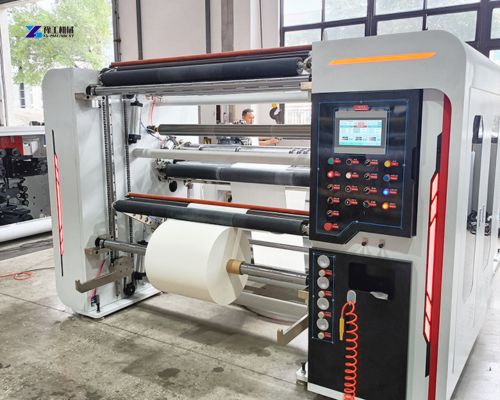
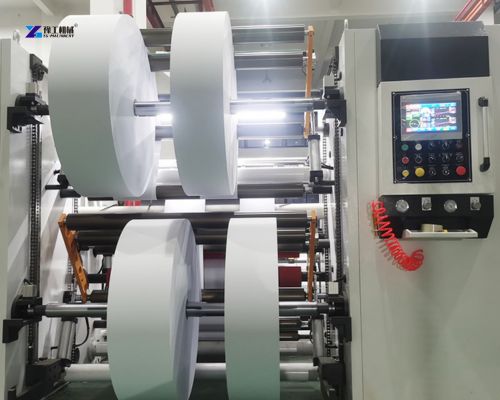
YG Roll Slitting Machine Parameters-Customised Support
| Model | YG- 1300 | YG- 1600 | YG- 1800 |
| Max width | 1300mm | 1600mm | 1800mm |
| Max Diameter for unwinding | ¢1400mm | ¢1400mm | ¢1400mm |
| Min width of slitting | 30mm | 30mm | 30mm |
| Max Diameter of rewinding | ¢1000mm | ¢1000mm | ¢1000mm |
| Speed | ≤350m/min | ≤350m/min | ≤350m/min |
| Total Power | 24kw | 26kw | 30kw |
| Power supply | 380V/50hz | 380V/50hz | 380V/50hz |
| Weight | 4000kg | 4500kg | 5500kg |
| Overall dimension(LxWxH) | 3300x3150x1930(mm) | 3300x3450x1930(mm) | 3300x3650x1930(mm) |
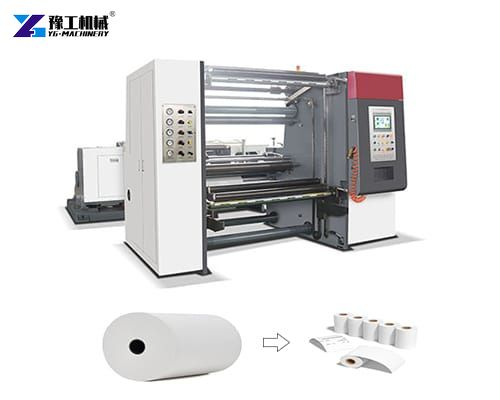
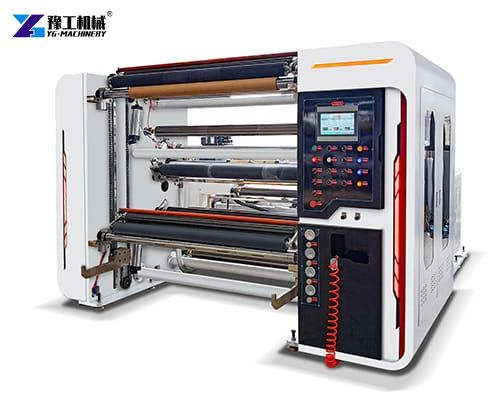
3 Steps of Roll Slitting Process
The working process of a roll slitting machine is straightforward but requires high precision to ensure quality results. It generally follows three major steps to transform the material.
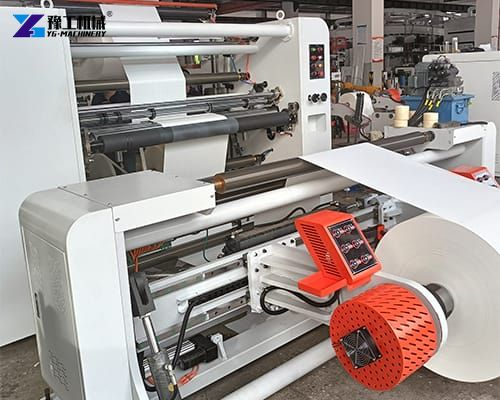
- Unwinding: The machine securely holds the large master roll on an entry shaft. As the machine starts, this big roll unrolls at a controlled speed. Automatic tension control systems keep the material flat and tight so it does not wrinkle.
- Slitting: The material passes through a set of sharp cutting blades. Depending on the material type, the machine uses different knives like razor blades, rotary circular knives, or crush cutters to slice the material into precise widths.
- Rewinding: After cutting, the narrower strips travel to the output shafts. The machine winds these strips back up into neat, tightly rolled smaller finished rolls, ready for packaging.
4 Parts Of A Paper Roll Slitting Rewinding Machine
To keep your production running smoothly, a paper roll slitting rewinding machine relies on several high-quality components working together perfectly.
1. Unwinding Section
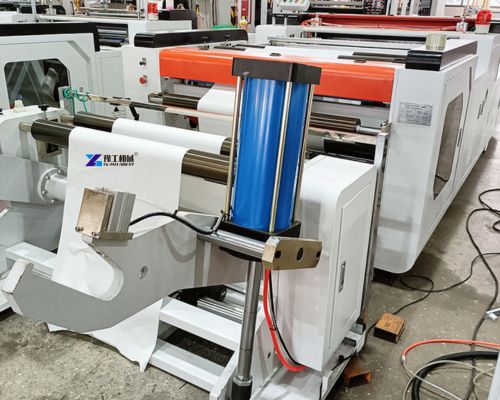
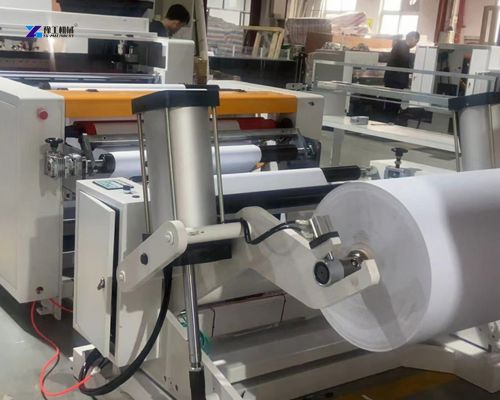
This part holds the heavy master roll. It features an air shaft to lock the roll in place and a brake system to manage the speed and stop the roll when needed.
2. Slitting Blades Section
This is the heart of the machine. It contains sharp knives that you can adjust to different distances. This flexibility allows you to cut various widths based on your order requirements.
3. Tension Control System
This system automatically measures and adjusts how tight the material is during the whole process. Proper tension prevents the material from stretching, tearing, or slipping.
4. Rewinding Section
This section uses one or two shafts to collect the slit material. It ensures that every small roll has the same tightness from the inner core to the outer layer.
Want to See Our Machines in Action? Request a Video Demonstration
4 Paper Roll Slitter Wide Applications
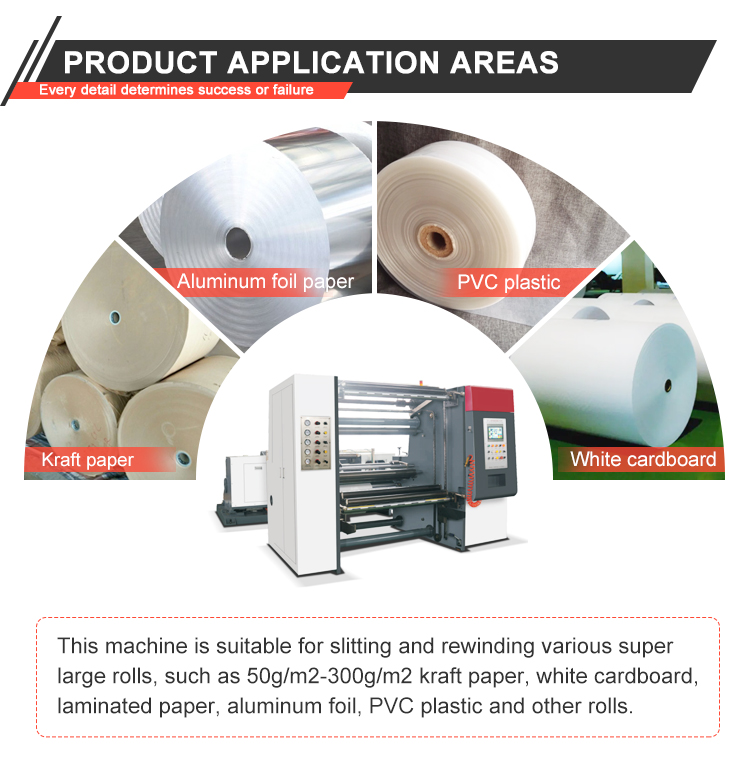
The versatility of a heavy-duty paper roll slitter makes it an essential asset across multiple manufacturing sectors worldwide. Instead of just looking at raw materials, let us look at how different factories around the globe use this equipment to solve specific local production challenges and deliver high-quality finished products.
1. Flexible Food Packaging Factory in Vietnam (Plastic Films)
A major food packaging company in Vietnam needed to process large master rolls of BOPP and PET films for the local snack industry. These films are pre-printed with vibrant brand designs and must be cut into precise widths for automatic vertical form-fill-seal packaging machines. Our dedicated film slitting machine is specially optimized for thin heat-sensitive plastic. By using YG roll slitting machine, the factory achieved perfectly smooth edges without any melting or stretching of the thin, heat-sensitive plastic. The high-speed rewinding system ensures that the smaller film rolls feed into the local food packaging lines smoothly without a single jam.
2. Eco-Friendly Shopping Bag Manufacturer in Kenya (Kraft Paper)
A large-scale paper bag manufacturer in Kenya handles heavy rolls of brown kraft paper every day to supply local retail chains. They use a robust paper roll slitting rewinding machine to slice wide paper rolls into specific, narrower strips. These strips are then immediately fed into automated bag-making machines to form sturdy handles and body panels. Because our machine maintains excellent tension control, the heavy paper never tears during high-speed slitting, drastically reducing material waste and helping the factory meet strict green packaging deadlines.
3. Logistic Label and Sticker Supplier in Mexico (Adhesive Materials)
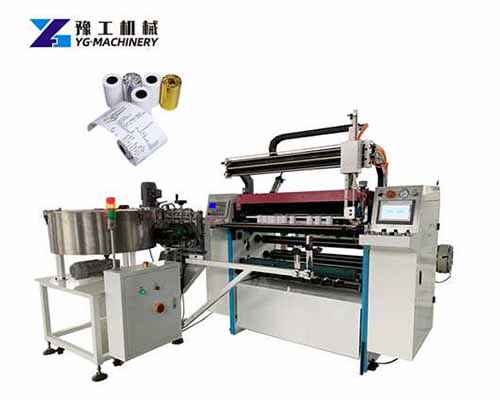
A top supplier of shipping labels in Mexico faces the daily challenge of cutting materials with sticky backings for North American logistics networks. Standard cutters often get gummed up with glue, slowing down production. For label and receipt paper production, our thermal paper slitting machine adopts anti-stick blade design. However, our specialized paper roll slitter uses coated circular knives to cleanly slice through both the face paper and the silicone release liner. This allows the factory to mass-produce uniform rolls of barcode labels, ensuring clean outer edges that do not bleed adhesive or stick together during warm warehouse storage.
4. Consumer Goods and Tissue Mill in Saudi Arabia (Soft Paper Products)
A fast-growing household paper mill in Saudi Arabia produces giant parent rolls of tissue and towel paper. They rely on our heavy-duty roll slitting machine to convert these wide, delicate rolls into smaller, tightly wound kitchen towel and toilet paper cores. The advanced surface rewinding system handles the soft, high-bulk paper gently, preserving its texture and loft while ensuring the final retail rolls are perfectly neat, evenly tensioned, and ready for supermarket shelves across the Middle East.
Looking for the Perfect Fit for Your Material? Talk to YG Technical Experts
Frequently Asked Questions About Roll Slitting Equipment
A traditional cutter usually cuts flat sheets of material one by one. In contrast, a roll slitter continuous cuts a long web of material directly from a roll and winds it back up. This makes it much faster and better suited for high-volume factory production.
The blade choice depends entirely on your material. Razor blades work best for thin plastic films. Circular knives are perfect for paper and cardboard. If you cut thick or woven materials, crush cutters are often the best choice.
If the tension is too loose, the finished rolls will be soft, uneven, and falling apart. If the tension is too tight, the paper or film might stretch or break during production. Automatic tension control ensures perfectly wound rolls every time.
Yes, many modern machines can handle multiple materials like paper, film, and foil. However, you may need to change the blades or adjust the tension settings when switching from a soft material like plastic to a stiff material like paper.
It depends on your production volume and the material you cut. Harder materials dull blades faster. Check your knives daily for nicks and sharpen or replace them regularly to keep your cuts clean and prevent ragged edges.