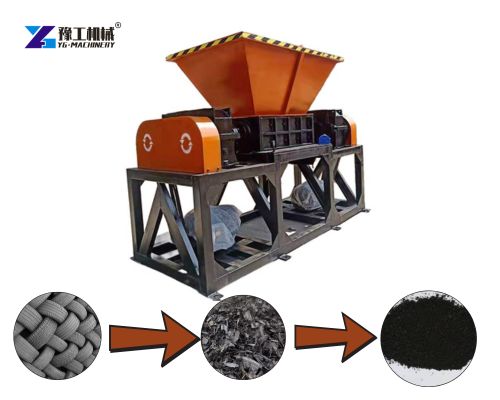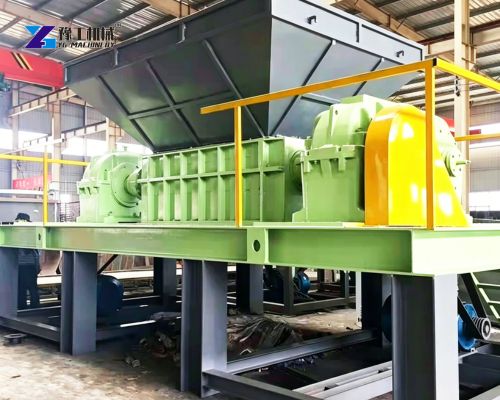
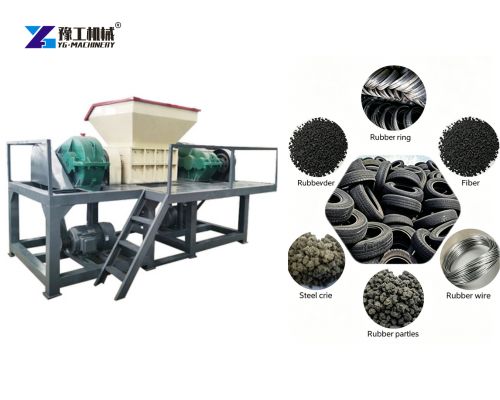
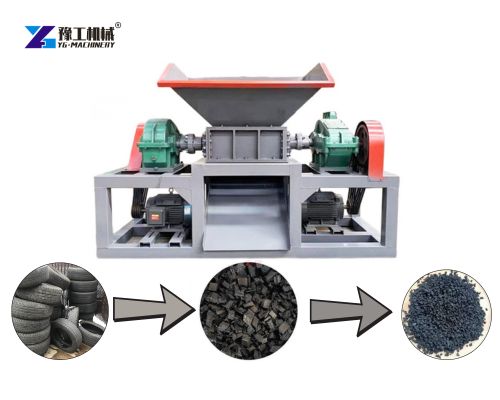
Every year, billions of waste tires from cars and trucks are discarded globally. These old tires take up huge spaces in warehouses and create serious fire hazards if left untreated. An industrial tire shredder is the most efficient equipment designed to solve this massive waste problem. By cutting thick rubber and heavy internal steel wires into small, uniform chips, this machine transforms bulky waste into valuable raw materials for various recycling industries.
For modern recycling factories, processing large volumes of rubber requires equipment that is both incredibly strong and highly efficient. YG designs dual-shaft shredding systems specifically to handle these high-pressure demands, ensuring a smooth and continuous workflow for your facility.
Get a Free Quote on Industrial Tire Shredder Models
Why Buying a Rubber Tire Shredder Machine Is a Smart Move
Investing in a high-quality rubber tire shredder machine is not just about waste reduction; it is about significantly lowering your operational costs and maximizing your business efficiency.
Dramatic Space and Transport Savings
Whole tires are incredibly difficult to store and ship because they are mostly filled with empty air. When you use a professional shredder, the volume of the waste material drops by up to 80%. This means you can store five times more material in the exact same warehouse. Furthermore, because the shredded rubber chips are highly compact, you can fit much more weight into a single truck, cutting your monthly shipping and logistics costs in half.
Transforming Waste into High-Value Resources
Shredded rubber is a hot commodity in the global market. Once the tires are processed through the machine, the resulting chips can be utilized in several profitable ways:
- As a primary fuel source for cement factories and power plants (TDF – Tire Derived Fuel).
- Cleaned and ground into clean rubber powder for playground and sports running track surfaces.
- Mixed into asphalt to create durable, heavy-duty rubber roads.
- Re-molded into eco-friendly industrial rubber mats and production parts.
Contact Our Experts for a Custom Design Solution
Inside the Technology: How Does a Tire Shredding Machine Work?
To get the best daily output from your facility, it helps to understand how a professional tire shredding machine processes heavy rubber step by step. The entire operation is fully automated and focuses on high torque rather than high speed.
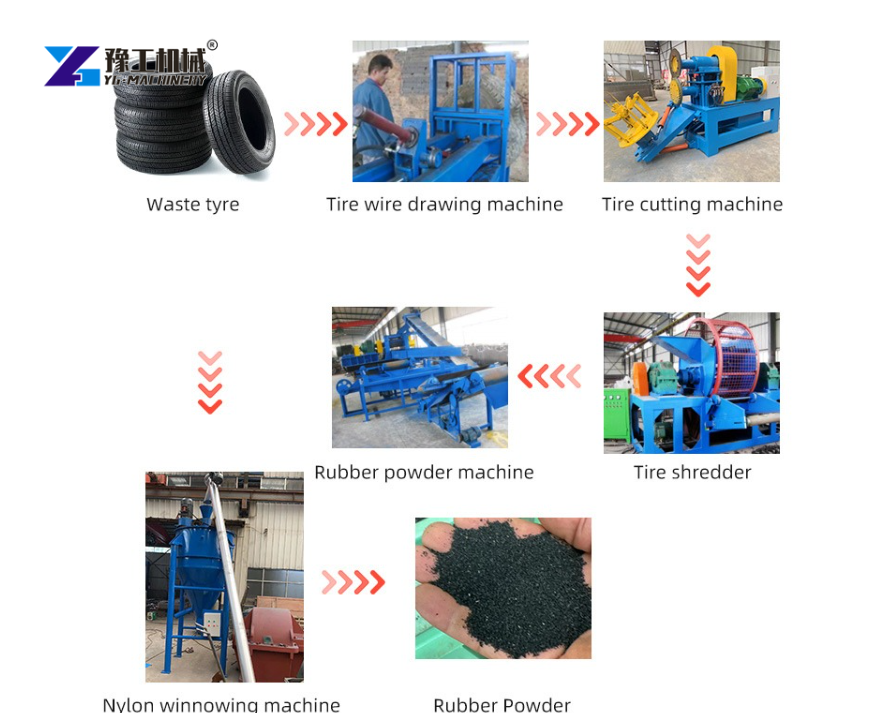
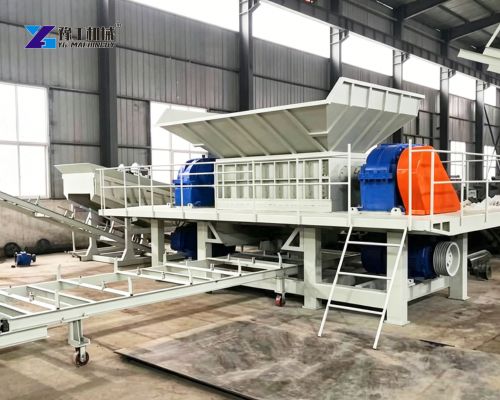
First, whole car or truck tires are loaded into the extra-wide feed hopper, either manually or via a heavy-duty conveyor belt. Directly underneath the hopper sit two massive steel shafts lined with specially designed alloy knives.
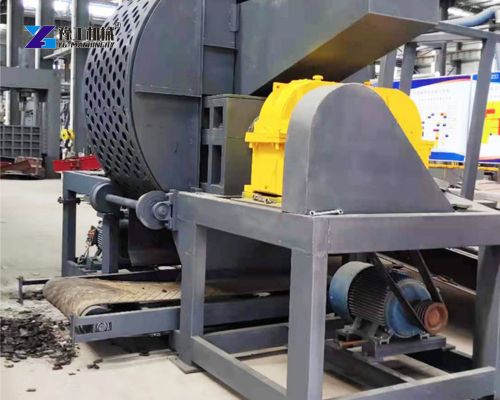
Instead of spinning fast, these two shafts rotate counter to each other at a controlled speed with immense torque. When a tire drops between them, the aggressive hooks on the blades instantly grab the rubber, pulling it downward into the cutting chamber. The blades cross paths to shear, tear, and slice through both the thick tread and the tough internal steel wires simultaneously. Pieces that are cut smaller than the bottom screen mesh pass through automatically, while larger pieces are carried back up by the knives for a second round of shredding.
Find the Ideal Tyre Shredder for Sale: Full Specifications
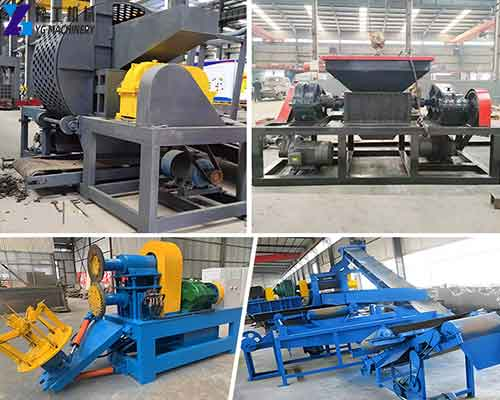
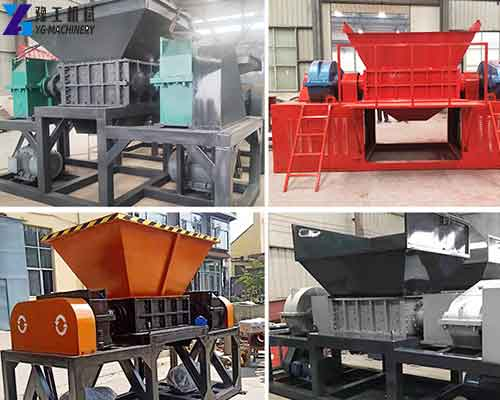
Choosing the right equipment depends heavily on your daily target volume and the specific size of the tires you plan to process. YG offers five major commercial models of tyre shredder for sale to match different scale operations and budget requirements.
YG High-Output Series Technical Parameters
| Model | YG-600 | YG-1000 | YG-1200 | YG-1500 | YG-1800 |
| Knife size(mm) | Φ200*20 | Φ300*30 | Φ300*40 | Φ500*50 | Φ600*60 |
| Power (kW) | 11*2 | 37*2 | 45*2 | 75*2 | 90*2 |
| Capacity(t/h) | 0.3-0.5 | 1-1.2 | 2.5-3 | 3.8-4.5 | 6-7 |
| Knife quantity(pcs) | 30 | 26 | 30 | 38 | 45 |
| Machine size(m) | 2.6*1*2.1 | 3.4*1.25*2.2 | 3.8*1.25*2.2 | 4.4*1.5*2.5 | 5.3*2 |
For small workshops or starting businesses, the YG-600 or YG-1000 offers an excellent balance of low power consumption and space-saving dimensions. If you are operating a large-scale industrial recycling center that works multiple shifts, the heavy-duty YG-1500 or YG-1800 is highly recommended. Powered by dual motors up to 90kW*2, these top-tier units effortlessly deliver up to 7 tons of shredded rubber per hour.
Ask for a Detailed Product Catalog & Video Demostration
Core Engineering Features That Define YG Quality
The reliability of an industrial tire shredder comes down to its internal components and structural engineering. Our machines are built with premium materials to guarantee long-term operation under extreme loads.
- Ultra-Wear Alloy Steel Blades: The cutting knives are the most critical part. We use specialized, multi-alloy steel that undergoes advanced heat treatment. This ensures the blades stay sharp for thousands of hours and can repeatedly cut thick steel wires without chipping.
- Smart PLC Reverse Automation: Our machines feature an intelligent Siemens PLC control panel. If an oversized tire or an un-shreddable object enters the chamber and causes a jam, the system automatically detects the pressure spike, reverses the shafts to clear the block, and then resumes forward shredding automatically.
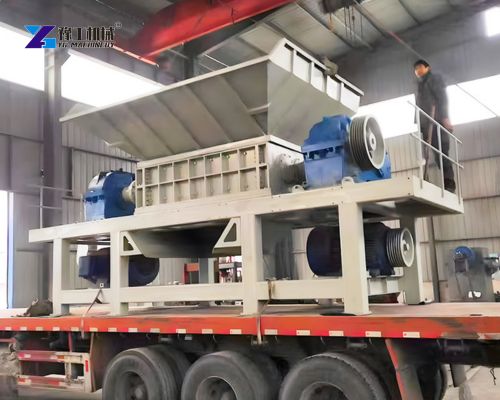
- Independent Dual-Motor Drive System: High-capacity models use two separate heavy-duty motors and twin planetary gearboxes. This layout delivers balanced power directly to each individual shaft, maximizing cutting efficiency and reducing strain on the drivetrain.
- Heavy Welded Frame Structure: The machine body is constructed from ultra-thick, reinforced steel plates. This massive frame absorbs operational vibrations, keeps the noise level down, and keeps the shafts perfectly aligned even after years of continuous heavy use.
Pro Maintenance Tips to Keep Your Equipment at Peak Performance
A rubber tire shredder machine works under intense friction and pressure every single day. Following a strict, simple maintenance routine prevents unexpected breakdowns, protects your investment, and keeps your production running smoothly.
To get the absolute longest life out of your machinery, make sure your team follows these basic operating rules. First, conduct a quick visual inspection of the cutting knives before every shift to ensure all locking bolts are perfectly tight. Second, grease the main bearings and gearboxes every single week to prevent overheating and premature wear from friction.
Additionally, you should install a magnetic separator or instruct workers to keep heavy stones, structural iron beams, or large concrete blocks away from the feed hopper, as these foreign objects can dull or crack alloy blades instantly. Lastly, always keep an eye on the motor temperature gauges on the control panel; if the machine has been working through an exceptionally hot summer day, a short break will protect the electrical components from overheating.