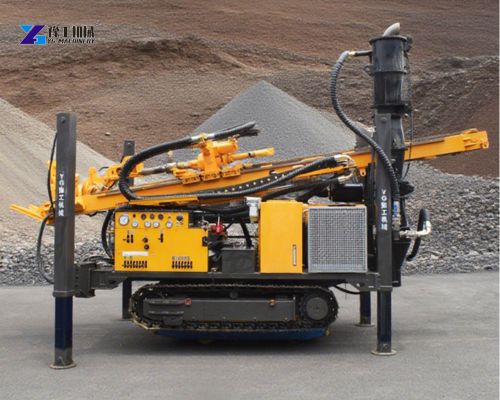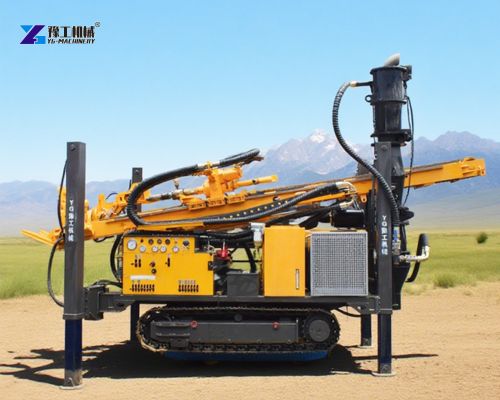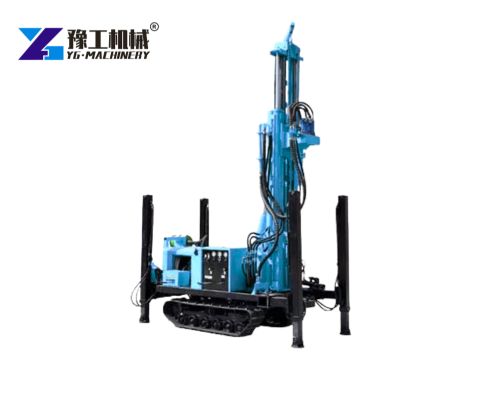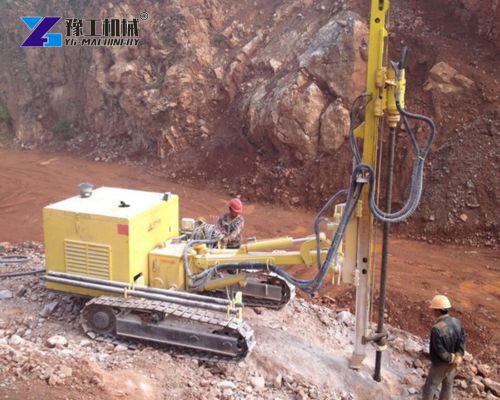
An RC drilling machine uses a dual-wall drill pipe system to bring rock cuttings to the surface. Compressed air travels down between the outer and inner pipes, then returns up through the center, carrying samples directly from the bit face . This reverse circulation method delivers cleaner, more accurate samples than conventional drilling .
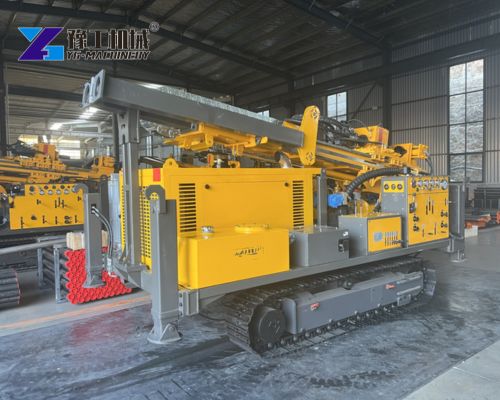
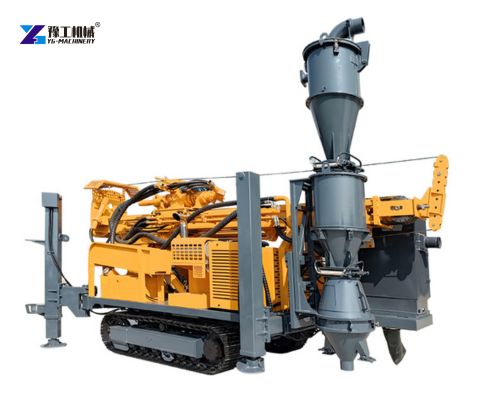
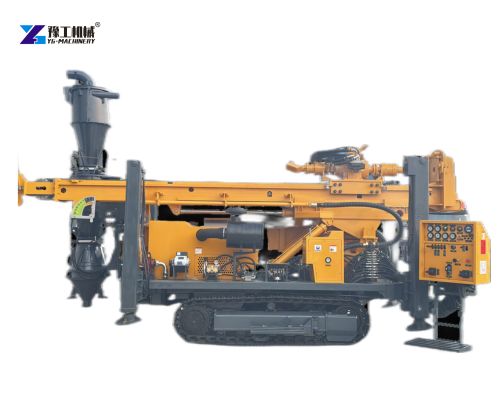
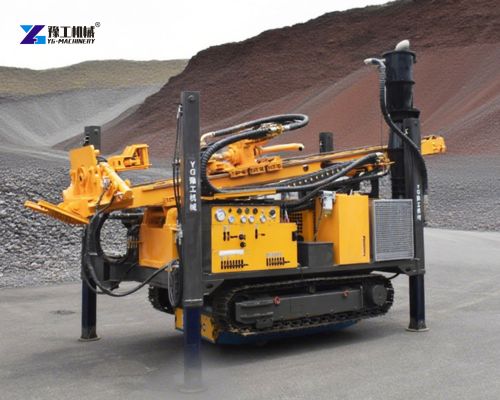
The YG150RC is a crawler-mounted reverse circulation drilling machine built for water well drilling, foundation projects, and mineral exploration. It handles holes from 110mm to 250mm in diameter and reaches depths up to 150 meters—specifications that make it suitable for medium to large-scale drilling operations.
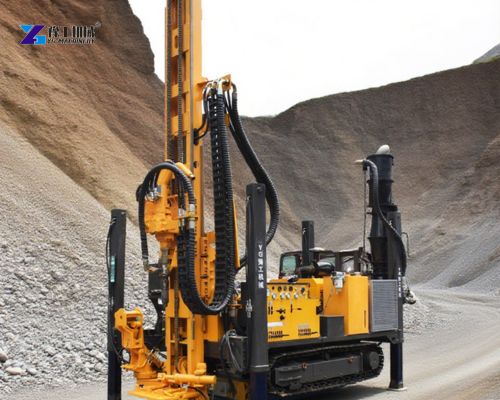
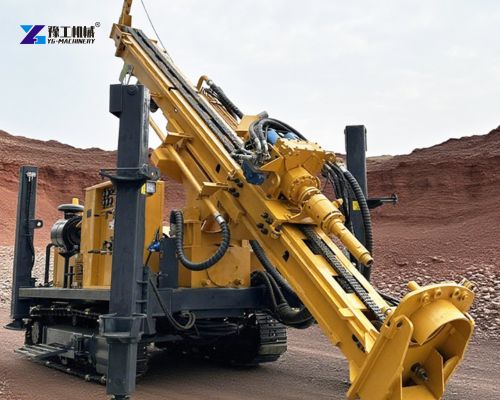
Key Performance Specifications of the YG150RC RC Drill Rig
The YG150RC reverse circulation drill rig combines power with practical design. The table below summarizes its core technical parameters.
| Model | YG150RC |
| Rig Weight (crawler-mounted) | 9000 kg |
| Engine (Cummins) | 6BTA5.9-C125, 125 kW |
| Dimensions (L×W×H) | 6750×2200×2950 mm |
| Operating Temperature | -10°C to 38°C |
| Nominal Drill Depth | 150 m |
| Hole Diameter Range | 110-250 mm |
| Drill Angle Range | -10° to 90° |
| Feed Stroke | 3500 mm |
| Max Output Torque | 8000 N.m |
These specifications show that the YG150RC reverse circulation drilling machine handles diverse geological conditions. The wide drill angle range (-10° to 90°) allows for angled drilling, which is often necessary for exploration and slope stabilization projects.
Power and Drilling Performance
The YG150RC RC drilling machine is powered by a Cummins 6BTA5.9-C125 engine, delivering 125 kW of reliable power. Cummins engines are known for durability and fuel efficiency, reducing downtime on job sites.
Drill head output:
- Maximum torque: 8000 N.m for hard rock penetration
- Continuous rotation speeds: 30/60 rpm and 54/108 rpm
- Interval rotation speeds: 62/124 rpm and 105/210 rpm
This range of rotation speeds allows the reverse circulation drill rig to adapt to different ground conditions.
Feeding System, Lifting, and Mobility
The YG150RC reverse circulation drilling machine offers a feed stroke of 3500mm, thrust force of 45 kN, and lifting capacity of 65 kN. The crawler chassis provides a walking speed of 1.2 km/h with ground pressure under 0.05 MPa, ensuring stable operation on various terrains.
The pipe puller delivers 30,000 N.m torque with a 370mm hole-through diameter, and the auxiliary winch offers 11 kN pull force with 60m rope capacity.
Reverse Circulation Drilling Machine Features
The YG150RC RC drilling machine offers practical advantages for drilling contractors and mining companies.
- Sample quality: The reverse circulation method brings cuttings up through the inner tube, which prevents contamination from the hole walls . This is critical for mineral exploration where accurate grade control depends on clean samples.
- Depth and diameter range: With a nominal depth of 150 meters and hole diameters from 110mm to 250mm, the YG150RC reverse circulation drill rig can handle water well drilling and construction foundation projects.
- Angled drilling capability: The -10° to 90° drill angle range allows for horizontal drilling when needed . This flexibility expands the types of projects this reverse circulation drilling machine can take on.
- Durable construction: The 9000 kg weight provides stability during drilling, reducing vibration and wear on components. The crawler tracks distribute this weight effectively over the ground.
- Simple operation: The YG150RC is designed with the operator in mind. Controls are straightforward, and the machine requires minimal maintenance compared to more complex drilling systems.
RC Drill Rig Common Applications
Case Study 1: Gold Grade Control in Western Australia
- Location : Infill drilling contractor, Australia.
- Geology: Highly abrasive, fractured Banded Iron Formation (BIF); rock hardness 120–180 MPa.
- The Challenge: Standard rotary drilling caused severe air loss and wall collapse, leading to sample cross-contamination.
- YG150RC Performance: Operating at a controlled 30 rpm continuous rotation speed to output a high 6,500 N.m torque via the Cummins 125 kW engine, the dual-wall pipe system isolated fractured walls entirely. It achieved a penetration rate (ROP) of 18 m/h and a 98.4% sample recovery rate, meeting strict JORC compliance.
Field Note: In abrasive BIF, we weld a sacrificial AR400 wear plate inside the cyclone entry port, extending its lifespan by 240 operating hours.
Case Study 2: Deep Water Exploration in Northern Kenya
- Location: Infrastructure NGO, Kenya.
- Geology: Alternating loose dry sand, heavy gravel, and deep basalt aquifers.
- The Challenge: Severe local water scarcity ruled out mud drilling; loose gravel threatened immediate borehole collapse.
- YG150RC Performance: Utilizing pure air circulation (no water needed), its 45 kN thrust force advanced through shifting gravel without washouts. Hydrogeologists identified the exact aquifer depth at 118 meters via instant dry cuttings. The crawler’s low ground pressure (<0.05 MPa) kept the 9,000 kg rig from bogging down in loose sand dunes.
Case Study 3: Angled Micro-Piling in Santiago, Chile
- Location: Geotechnical firm, Chile Foothills highway expansion.
- Geology: Steep, unstable slopes with erratic granite boulders embedded in weathered soil.
- The Challenge: Heavy vertical rigs couldn’t drill inclined anchor holes on steep slopes; random boulders caused drilling bit deflection.
- YG150RC Performance: The mast was tilted precisely to the required -15° and -30° angles (perfectly utilizing the rig’s -10° to 90° range). When hitting boulders, the operator maximized torque to its limit of 8,000 N.m at 30 rpm. Backed by the 9,000 kg rig stability, it crushed boulders without alignment deviation, finishing the project 4 days ahead of schedule.
Operating Environment and Considerations
The YG150RC reverse circulation drill rig is designed to operate in ambient temperatures from -10°C to 38°C. This range covers most working conditions, from cold climates to hot summer sites.
What this means for your operation:
- Hydraulic systems maintain performance in cold weather
- Cooling systems prevent overheating in warm conditions
- The engine starts reliably across the temperature range
Understanding Reverse Circulation Drilling
Unlike conventional rotary drilling—where drilling fluid or air travels down the drill pipe and returns up the outside—Reverse Circulation (RC) drilling reverses this flow to completely eliminate sample contamination.
How the YG150RC Executes RC Drilling
- Dual-Wall Isolation: Compressed air travels down the annular space between the inner and outer drill pipes.
- Bottom-Hole Power: The air drives a down-hole hammer to fracture the rock.
- Contamination-Free Return: High-pressure air forces the fresh cuttings straight UP through the central inner tube, bypassing the borehole wall entirely.
- Cyclone Collection: Samples exit directly into a cyclone system at the surface for instant, pristine logging.
Core Benefits vs. Conventional Drilling
- Zero Cross-Contamination: Samples never touch the borehole walls, ensuring JORC-compliant, highly accurate grade control.
- Faster Penetration: Constant dry-air pressure clears the bit face instantly, boosting ROP (Rate of Penetration) in hard rock.
- No Washouts: Ideal for fractured formations or shifting sands where fluid drilling causes borehole collapse.