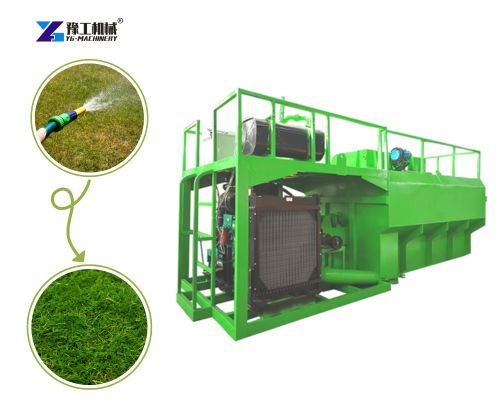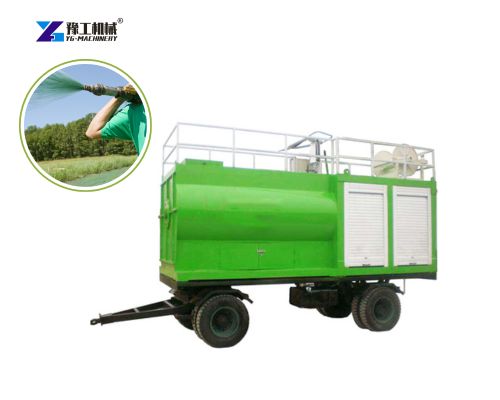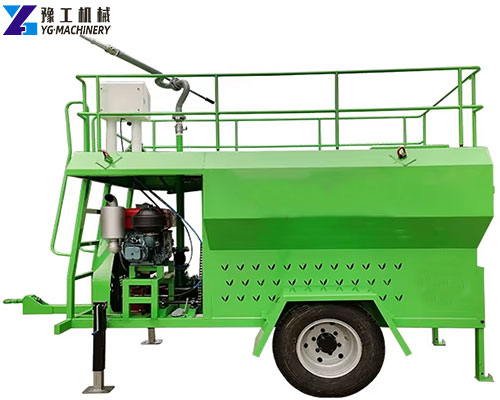
Commercial landscapers always look for efficient, budget-friendly ways to finish grass planting and erosion control tasks. Between hydroseeding and sodding, hydroseeding stands out for most large-scale commercial sites. A professional commercial hydroseeder simplifies the whole grass planting process, mixes seeds, water, mulch and fertilizer evenly, and sprays the mixture on target land quickly. This hydroseeder equipment cuts down manual work and shortens project cycles greatly, which directly boosts project benefits for landscaping teams.
Many new landscapers doubt whether hydroseeding can replace traditional sodding. The answer depends on project scale, terrain conditions and long-term site maintenance. For sloped land, large open fields and road greening projects, hydroseeding with reliable hydroseeding machines shows obvious advantages in construction speed and adaptability. Even for regular commercial lawn renovation, hydroseeding creates thicker and more uniform grass layers than manual sowing.
How Do Core Costs Differ Between Hydroseeding And Sodding?
Cost control is the top priority for commercial landscaping contractors. Every project needs clear cost planning to ensure stable returns. Hydroseeding and sodding have totally different cost structures in material, labor and equipment use. Understanding these differences helps you pick the most cost-effective construction method for each project.
1. Material Cost Differences
Sodding needs finished turf grass, soil base and fixing tools. Turf production and transportation take high costs, and fresh sod has strict storage time limits. If construction delays happen, sod may wither and cause material waste. Hydroseeding uses common grass seeds, organic mulch, water and liquid fertilizer. These materials are easy to buy and store, with almost no waste risk.
2. Labor Cost Differences
Sodding requires many skilled workers to lay turf flat, trim edges and fix gaps. Large sites need dozens of workers working for days. Hydroseeding relies on a grass hydroseeder to finish spraying work. Only 2–3 workers can operate the whole machine, complete mixing and spraying. It greatly reduces long-term labor input on commercial projects.3. Time Cost DifferencesTime cost equals actual profit for commercial contractors. Sodding finishes surface greening instantly but needs long follow-up maintenance to help turf root. Hydroseeding takes 4–6 weeks to form full grass coverage, but it needs less later maintenance. The hydroseeding process forms a protective mulch layer to lock soil moisture, which cuts down watering and trimming frequency.
What ROI Advantages Does Hydroseeding Bring To Commercial Landscapers?
ROI is not only about one-time construction cost, but also about long-term project quality, after-sales maintenance and secondary construction risks. Commercial projects have strict standards for landscape durability and anti-erosion ability. Traditional sodding often has hidden problems that increase later costs, while projects using a commercial hydroseeder bring more stable long-term returns.
- Lower rework rate: Sodded turf may have hollow soil layers and dead grass patches due to uneven laying. Hydroseeding mixture fits the soil surface perfectly, with no gaps. It effectively avoids local grass death and rework caused by poor fitting.
- Strong terrain adaptability: Sodding is hard to construct on steep slopes, uneven ground and narrow zones. Hydroseeding machines can spray mixtures to high and far areas, covering complex terrains completely. It meets the greening needs of road slopes, mine restoration and park hillside projects.
- Better long-term growth effect: The mixed nutrients of hydroseeding wrap grass seeds tightly. Seeds germinate evenly and grow strong roots. The final lawn has higher density and better drought resistance than sodded lawn, reducing long-term maintenance investment.
What Key Specifications Of YG Hydroseeding Machines Suit Commercial Projects?
Not all hydro seeders for sale can meet commercial construction standards. Small household hydroseeders have low tank capacity and short spraying distance, which cannot support large-scale continuous construction. Professional commercial hydroseeder models focus on large coverage, stable performance and diverse scene adaptation. YG series hydroseeding machines have four mainstream models to match different project scales.
- YG-2 Model: It has a 2m³ tank volume, with a spraying area of 200–500㎡. The horizontal spraying distance reaches 20–30m, and the vertical spraying distance is 10–20m. With a weight of 1000KG and a dimension of 2.5*1.5*1.4m, it is compact and flexible. It fits small commercial projects, community greening and local lawn repair work.
- YG-4 Model: Equipped with a 4m³ large tank, its spraying area covers 500–1500㎡. The horizontal spraying distance is 20–35m, and the vertical spraying distance is 10–25m. Weighing 1300KG and sized 3.3*1.5*2.4m, it supports medium-sized park greening and road side slope greening projects with stable continuous operation.
- YG-6 Model: This model has a 6m³ tank volume and a spraying area of 700–2000㎡. Its horizontal and vertical spraying distances are the same as YG-4, but the pipe head spraying range is wider. Sized 3.6*1.8*2.4m and weighing 1600KG, it is the most cost-effective choice for most conventional commercial landscape projects.
- YG-8 Model: It is the high-power commercial model with an 8m³ tank volume and a maximum spraying area of 2500㎡. The horizontal spraying distance reaches 24–40m, and the vertical spraying distance is 15–30m. The pipe head can spray 30–80m horizontally, suitable for large-scale mine restoration, highway slope greening and large park construction projects.
All YG hydroseeder equipment adopts integrated mixing and spraying design. It can mix seeds, mulch and nutrients evenly in a short time, avoiding material precipitation and uneven spraying. The whole machine runs stably for a long time, which greatly improves the construction efficiency of commercial landscaping teams.
When Should You Choose Hydroseeding Instead Of Sodding For Commercial Jobs?
Each landscaping method has its applicable scenarios. Mastering the usage scenarios of hydroseeding and sodding can help contractors maximize project profits and reduce construction risks. Hydroseeding with professional hydroseeding machines is more suitable for the following commercial project types.
- Large-area open greening projects: For urban parks, industrial park greening and large lawn reconstruction, hydroseeding covers a wider area with faster speed. It avoids the high labor and material costs of large-area sodding.
- Slope and erosion control projects: Road slopes, river banks and mine slopes need anti-erosion greening. The mulch layer formed by hydroseeding can fix soil quickly and prevent rainwater erosion. Sodding is easy to slide on slopes and cannot achieve stable anti-erosion effects.
- Budget-controlled mass projects: Government greening projects and community supporting landscape projects usually have strict budget limits. Hydroseeding cuts total project costs while meeting greening standards, bringing better ROI for contractors.
- Long-term ecological restoration projects: Ecological restoration focuses on vegetation sustainability. Hydroseeding seeds grow with local soil, with stronger root systems and higher survival rates than transplanted sod, which reduces later renewal costs.
What Hidden Risks Will Sodding Bring To Commercial Landscape Projects?
Many new contractors prefer sodding because of its instant greening effect. But they often ignore the hidden risks that affect long-term project quality and ROI. These hidden problems will increase later maintenance costs and even cause project acceptance failures.
- Low environmental adaptability: Sod is transplanted mature turf. It needs a stable growth environment to adapt to new soil and climate. In dry, windy or high-temperature seasons, sod is easy to wither and turn yellow, affecting project acceptance effect.
- High later maintenance pressure: Sodded lawns need frequent watering, rolling and trimming in the early stage to ensure root fixing. Commercial projects with large areas need continuous maintenance investment in the early stage, which occupies labor and time resources.
- Uneven landscape effect: Manual laying is affected by worker experience and site conditions, leading to uneven turf gaps and height differences. It reduces the overall flatness and beauty of the commercial landscape.
How To Maximize Project ROI With Commercial Hydroseeder?
Buying suitable hydro seeders for sale is the first step to improve project revenue. Correct equipment use and project matching can further amplify the cost advantages of hydroseeding. Commercial landscapers can follow these simple and practical methods to optimize project returns.
- Match model with project scale: Small community repair projects choose YG-2 and YG-4 models with flexible operation. Large-scale slope and park projects choose YG-6 and YG-8 models with large tank volume and long spraying distance to improve single-day construction volume.
- Optimize material proportioning: Use the supporting mixing system of hydroseeder equipment to adjust the proportion of seeds, mulch and fertilizer according to local soil conditions. It improves seed germination rate and avoids material waste.
- Arrange construction time reasonably: Hydroseed in spring and autumn with mild temperature. It ensures fast seed germination and uniform lawn growth, shortening the cycle of project delivery and acceptance.
- Reduce manual dependence: Give full play to the high-efficiency spraying ability of the commercial hydroseeder. Reduce redundant manual auxiliary work, let workers focus on site finishing and quality inspection, and improve overall project efficiency.