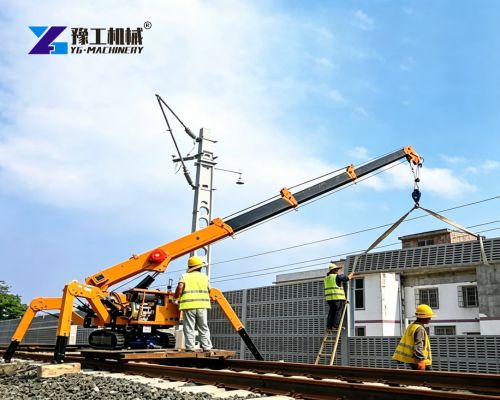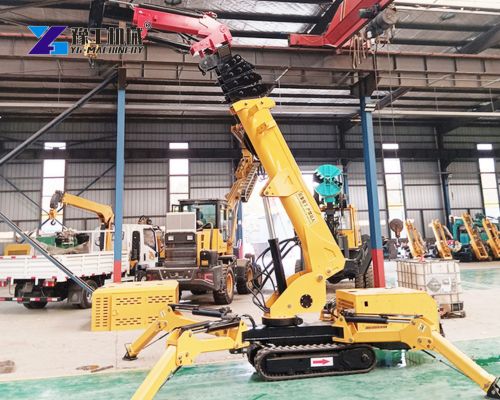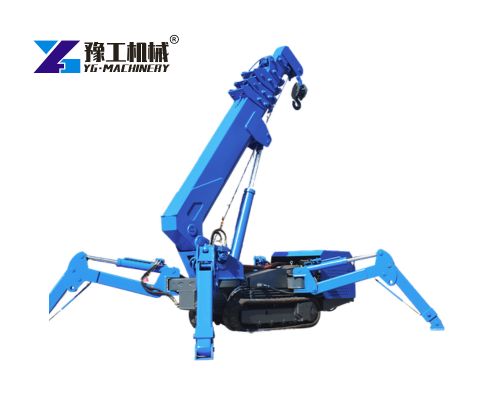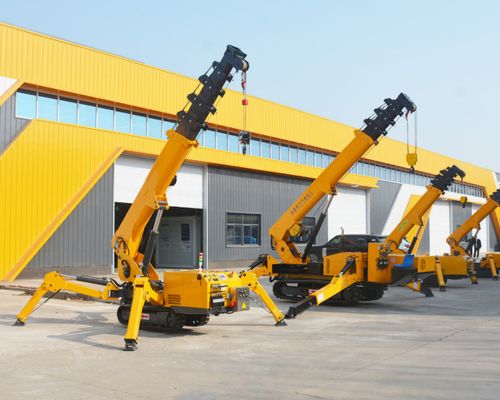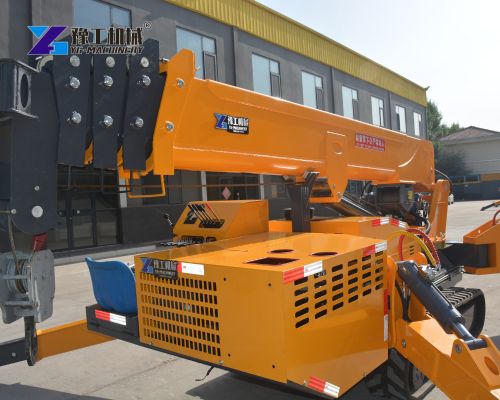
Installing glass curtain walls and glazing facades requires precision, safety, and access to tight spaces. Traditional cranes often fail in these conditions. YG electric spider crane solves these problems. It fits through doorways, works on finished floors, and runs quietly on battery power. With vacuum lifters, it handles fragile glass panels without damage.
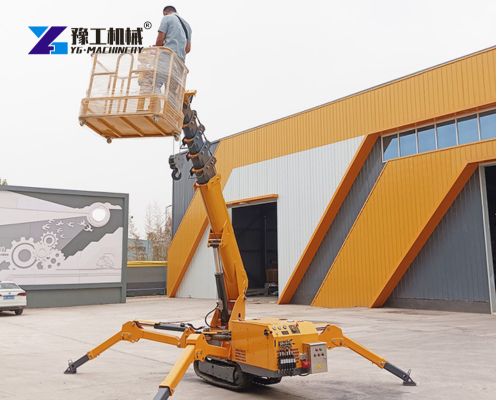
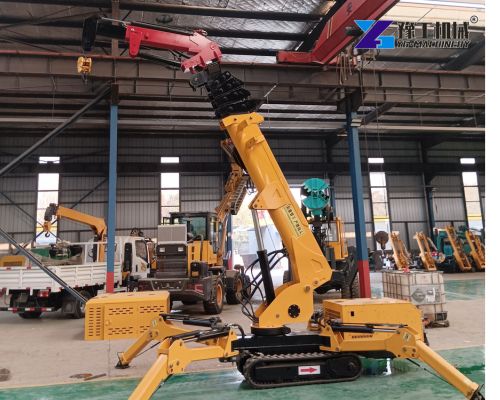
Small Spider Crane Parameters
| Model | YG-3t | YG-5t | YG-8t | |
| Specification | 3t | 5t | 8t | |
| Maximum working radius | 8.83m×0.15t | 14m×0.5t | 16.5m | |
| Maximum above-ground head | 9.9m×0.7t | 16.8m | 18m | |
| Winch device | Hook Speed | 0-8m/min(4 rope) | 12m/min(4 rope) | 12m/min(4 rope) |
| Rope diameter | φ8mm×45m | Φ11mm×80m | Φ11mm×80m | |
| Telescopic system | Boom Type | 5-section boom, pentagonal structure | 5-section boom, pentagonal structure | 5-section boom, pentagonal structure |
| Boom Length/Time | 3.1m-9.2m/20sec | 12.3m/54sec | 12.3m/54sec | |
| Up and down | Boom Angle/Time | 0°~78°/13sec | 0°~78°/13sec | 0°~78°/13sec |
| Slew system | Slew Angle/Speed | 0-360°continuous/60sec | 0-360°continuous/38sec | 0-360°continuous/38sec |
| Traction system | Walking Way | Hydraulic motor drives | Hydraulic motor drives | Hydraulic motor drives |
| Walking Speed | 0~2.5km/h | 0~2.5km/h | 0~2.5km/h | |
| Grade Ability | (25°)36% | (25°)36% | (25°)36% | |
| Operating system | Operation type (Boom/outrigger) | Manual operation, manual walking(remote control option) | Manual operation, manual walking(remote control option) | Manual operation, manual walking(remote control option) |
| Operating characteristics | Manual operation, remote control | Manual operation, remote control | Manual operation, remote control | |
| Transport parameters | L*W*H(mm) | 2950*980*1560 | 5000*1500*1900 | 5000*1600*2180 |
| Total weight(kg) | 2700 | 6200 | 7200 | |
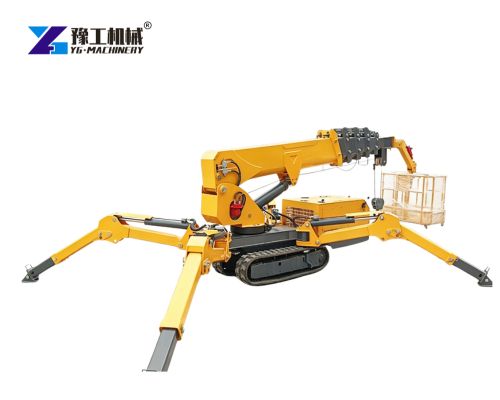
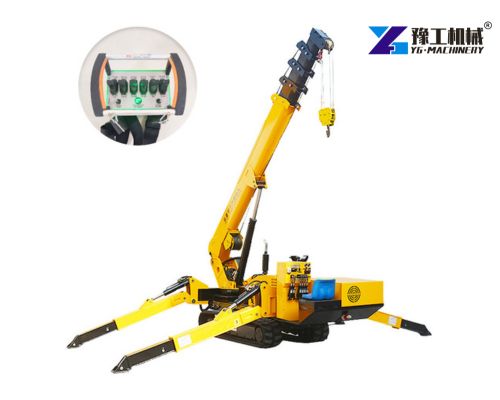
Choosing The Right Equipment Configuration For Your Project
Every architectural glazing project has unique structural demands, ceiling heights, and glass panel dimensions. Selecting the correct machine size saves valuable construction time and prevents costly site accidents. Here is a practical selection guide based on standard lifting capacity requirements:
Contractors should evaluate their maximum load requirements carefully before committing to equipment rental or purchase:
- 1 to 2 Ton Models: Best suited for interior retail store renovations, office glass partitions, and small storefront glazing tasks.
- 3 to 5 Ton Models: Ideal for mid-rise building curtain walls, exterior window replacement, and standard architectural glass panels.
- 6 Ton And Above Models: Recommended for heavy structural glazing, double-glazed insulated units, and large commercial skyscraper facade projects.
A reliable mobile spider crane allows project teams to change working positions quickly between different floor levels. Its non-marking rubber tracks ensure smooth transit over outdoor pavement and delicate indoor surfaces alike.
Contact Our Engineers For Model Selection
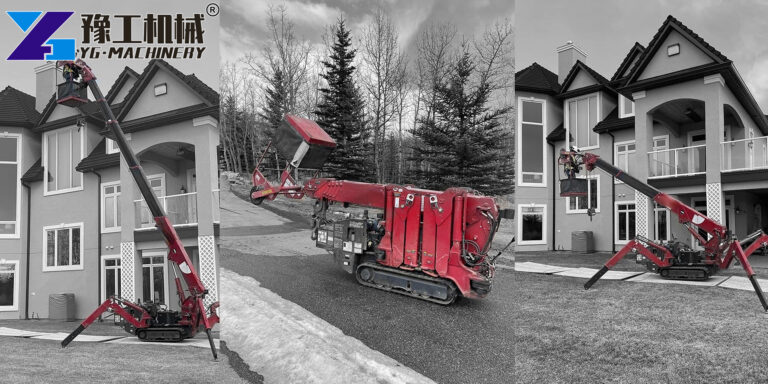
3 Advantages Of Electric Spider Cranes
Glass installation requires absolute precision and stability. Even a tiny millimeter of error or sudden movement can crack an expensive architectural glass panel. The electric spider crane offers specialized design features engineered specifically to support high-precision glazing operations.
Modern contractors rely heavily on advanced electric configurations and lifting attachments:
- Zero exhaust emissions allow operators to work safely inside enclosed buildings without installing expensive temporary ventilation pipes.
- Quiet electric motors enable crystal-clear communication between the crane operator and the ground installation crew during high-stakes lifts.
- Integrated vacuum suction cup attachments grip large glass panels securely at any installation angle, preventing slippage or panel damage.
Furthermore, utilizing a small tracked crane helps distribute the overall machine weight evenly across a large surface area. This critical weight distribution protects delicate ground surfaces such as indoor marble tile, terrazzo, and polished wooden floors in high-end commercial lobbies.
Request Our Latest Equipment Catalog
Site Access And Setup For Mini Crawler Cranes In Tight Spaces
Urban construction sites frequently present difficult obstacles such as narrow gates, low overhead clearances, uneven loading docks, and sloping terrain. A versatile mini crawler crane can fold its spider outriggers into a compact footprint to navigate extremely tight areas.
Field operators benefit from several smart mobility features during complex installation routines:
- Outriggers can adjust independently to multiple angle positions to fit around building pillars, stairwells, and permanent walls.
- Durable rubber tracks grip slippery, wet ground securely during outdoor rain or muddy winter construction conditions.
- Advanced wireless remote control systems allow operators to stand right next to the glass panel for an optimal viewing angle.
Inquire About Custom Machine Specifications
Glass Installation: Spider Cranes Vs Traditional Cranes
Installing large glass panels on modern commercial and residential buildings is extremely challenging. Architects love huge floor-to-ceiling glass walls, but contractors face major physical limitations on site. Traditional construction cranes are massive, heavy, and rigid. They simply cannot enter indoor spaces, shopping malls, or cramped urban construction sites where modern glazing work takes place.
| Comparison Factor | Electric Spider Crane | Traditional Crane |
| Space Requirement | Fits through standard doorways and passenger elevators; needs minimal setup area | Requires large flat ground and wide outrigger space; often blocks streets and sidewalks |
| Indoor Access | Drives directly into finished buildings, shopping malls, and basements | Cannot enter indoor spaces or low-clearance structures |
| Floor Protection | Lightweight with rubber tracks; safe on finished floors and sensitive surfaces | Very heavy; can crack tiles, damage flooring, and exceed floor load limits |
| Emissions and Noise | Battery-powered, zero exhaust fumes, and quiet operation | Diesel engine produces loud noise and dirty smoke; not allowed indoors |
| Maneuverability | Moves easily through narrow corridors, doorways, and tight corners | Large turning radius; cannot work in confined urban sites |
| Setup Time | Quick setup in 10–15 minutes with automatic outrigger leveling | Takes hours to set up, rig, and break down |
| Operator Control | Radio remote control allows one-person operation from safe position | Requires multiple crew members and signal persons |
| Project Independence | Owned by glazing subcontractor; works independently without waiting for tower crane | Usually controlled by main contractor; scheduling conflicts cause delays |
Get A Quote For Your Glass Project Today
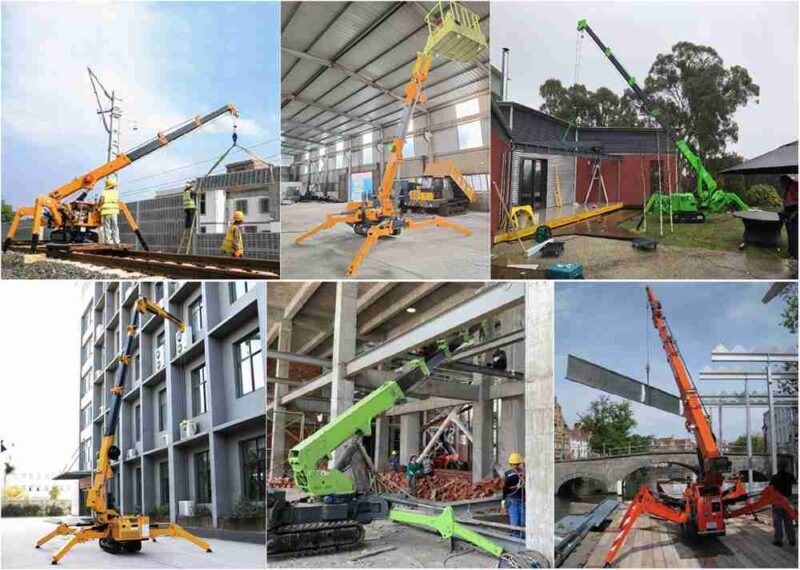
Frequently Asked Questions (FAQ)
1. What is the main benefit of an electric spider crane for indoor glazing?
An electric spider crane produces zero exhaust emissions and operates very quietly. This makes it safe, legal, and environmentally friendly to use inside finished indoor spaces like offices, airports, and shopping malls.
2. Can a small tracked crane work on delicate indoor flooring?
Yes. The wide rubber tracks spread the machine weight over a large contact area. This prevents physical damage to sensitive indoor floors such as marble, tile, and polished concrete.
3. How do operators control a mobile spider crane during glass installation?
Operators use a wireless remote control pendant or console. This allows them to walk around the glass panel and monitor the installation angle closely for maximum safety and precision.
4. What power sources do electric spider cranes use?
They typically use rechargeable high-capacity lithium-ion batteries or direct AC power connection cables, delivering consistent electrical power all day long without needing diesel fuel.
5. Are mini crawler cranes difficult to transport to different job sites?
No. Their compact folded dimensions allow them to fit easily onto standard flatbed trucks, shipping containers, or small trailers for fast transport between city job sites.