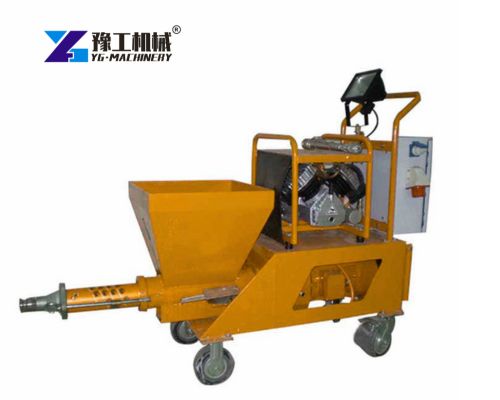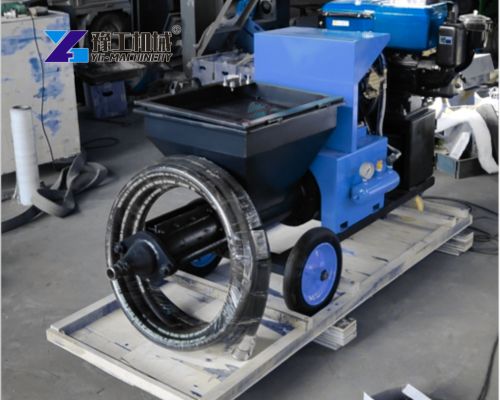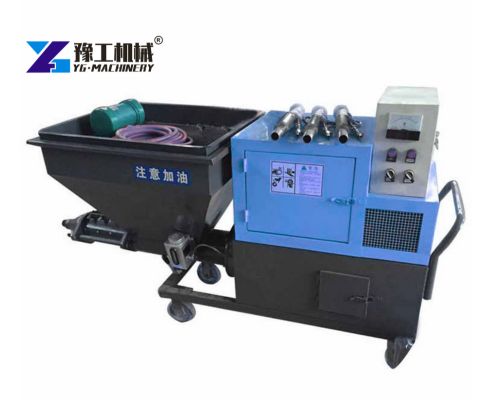
Concrete spraying equipment is a machine that uses air pressure or a pump to spray concrete, mortar, or cement onto walls, ceilings, and other surfaces. Instead of placing concrete by hand, workers use a concrete sprayer machine to apply material quickly and evenly.
These machines are used on many job sites. Some are small and easy to move. Others are large and mounted on trucks or rails. The main goal is to save time and reduce hard physical labor. YG cement slurry spray machine can cover large areas in hours instead of days.
There are two main types of spraying:
- Dry mix: Dry materials are mixed with water at the nozzle.
- Wet mix: Materials are pre-mixed and pumped through a hose.
Both types are useful for different projects. Your choice depends on the material, the job site, and the finish you need.
Inquire Now – Get YG Series Price & Free Consultation
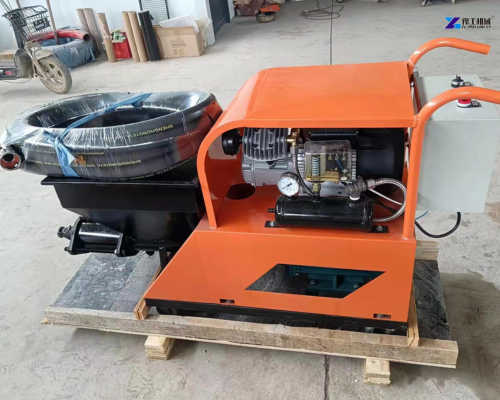
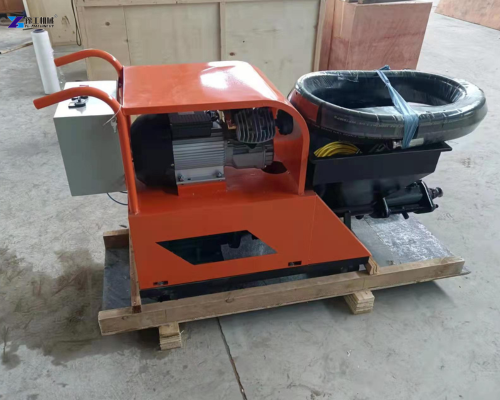
YG Mortar Spraying Machine Parameters
| Model | YG-311 | YG-318 | YG-711 |
| Capacity | 3m³/h | 3-5m³/h | 4-6m³/h |
| Pressure | 3 Mpa | 3 Mpa | 3 Mpa |
| Material Ratio | 0.7-1:1:3 (Water, Ash, Sand) | 0.7-1:1:3 (Water, Ash, Sand) | 0.7-1:1:3 (Water, Ash, Sand) |
| Voltage | 220V/380V 50Hz | 380V three-phase 50Hz | 380V three-phase 50Hz |
| Main Motor Power | 4kw | 7.5kw | 7.5kw |
| Particle Size | Below 4mm | Below 8mm | Below 8mm |
| Convey Distance | Horizontal 30m | Horizontal 50m | Horizontal 50m |
| Vertical 20m | Vertical 30m | Vertical 30m | |
| Volume | 60L | 80L | 100L |
| Air Consumption | 0.3m³/min | 0.3m³/min | 0.3m³/min |
| Weight | 200kg | 320kg | 340kg |
Get Mortar Spraying Machine Price & Specifications
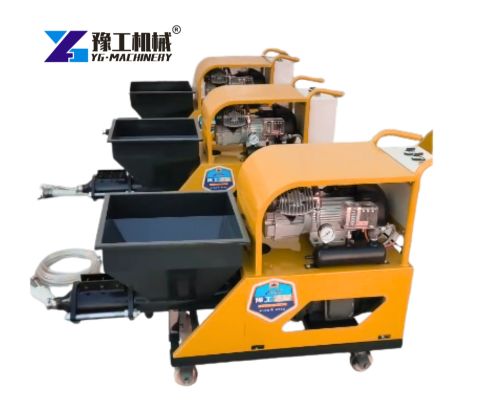
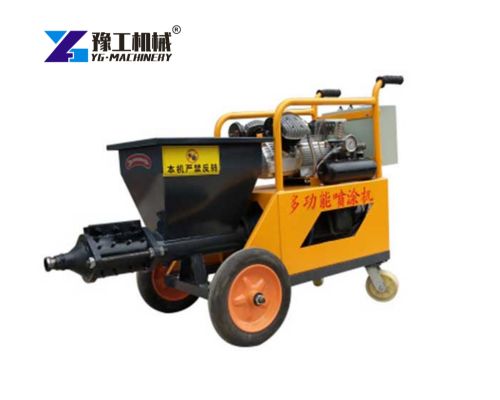
5 Main Applications of Concrete Spraying Equipment
Concrete spraying equipment is used in many industries. It is not just for building walls. Here are the most common uses:
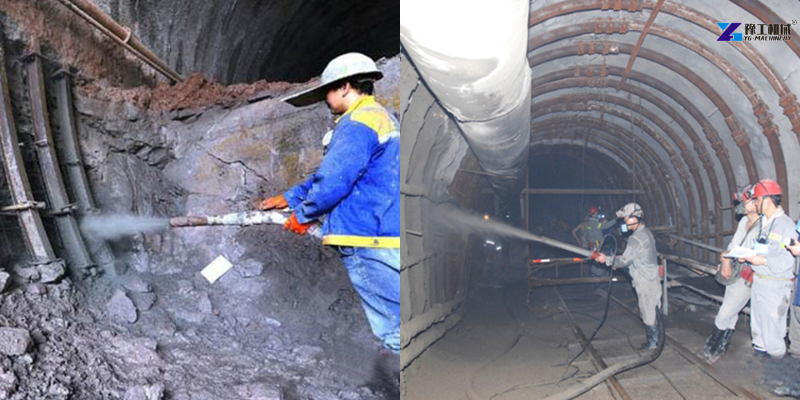
- Tunnel construction: Workers spray concrete to line tunnels and prevent rock falls.
- Mining: Sprayed concrete supports the roof and walls of mine shafts.
- Swimming pools: Gunite or shotcrete creates strong pool shells.
- Slope protection: Sprayed concrete stops soil from sliding on hills.
- Building repairs: It fixes damaged concrete on bridges, buildings, and dams.
- Refractory work: Special mixes are sprayed on furnaces and kilns to protect them from heat.
A mortar spraying machine can also be used for plastering walls in housing projects. Studies show that mechanical spraying can save labor costs compared to hand plastering . The savings in workforce cost can be close to the cost of the equipment itself.

Mortar Spraying vs. Hand Plastering
Many construction workers still use hand tools to apply mortar. This method is slow and hard on the body. A worker can only cover a small area each day. The finish may be uneven, and rework is common.
Using a mortar spraying machine changes everything. Here is a simple comparison:
A concrete sprayer machine also reduces physical strain. Workers do not need to lift heavy loads repeatedly. This means less fatigue and fewer injuries on site. Contractors who switch to spraying often finish projects faster. They also get fewer complaints about quality.
Get OEM Mortar Spraying Machine Now
2 Types Of Concrete Hopper Spray Guns
The spray gun is the part you hold in your hand. It controls how the material comes out. Different jobs need different guns. Here are the main types:
Single Jet Guns
This is the most common type. It has one nozzle that shoots a single stream of material.
Best for:
- Small to medium jobs
- Filling cracks and holes
- Applying a thick layer to one spot
- Easy to control and aim
Multi-Jet Guns
These guns have 2 to 4 nozzles. They spread material over a wider area. In some small sprayers, multi-jet heads feature 4 spray holes per head, delivering up to 100 CFM at 120 PSI .
Best for:
- Large walls and ceilings
- Fast coverage
- Smooth, even layers
- Big commercial projects
Your choice depends on your project size. Single-jet guns are cheaper and simpler. Multi-jet guns are faster but use more air and material.
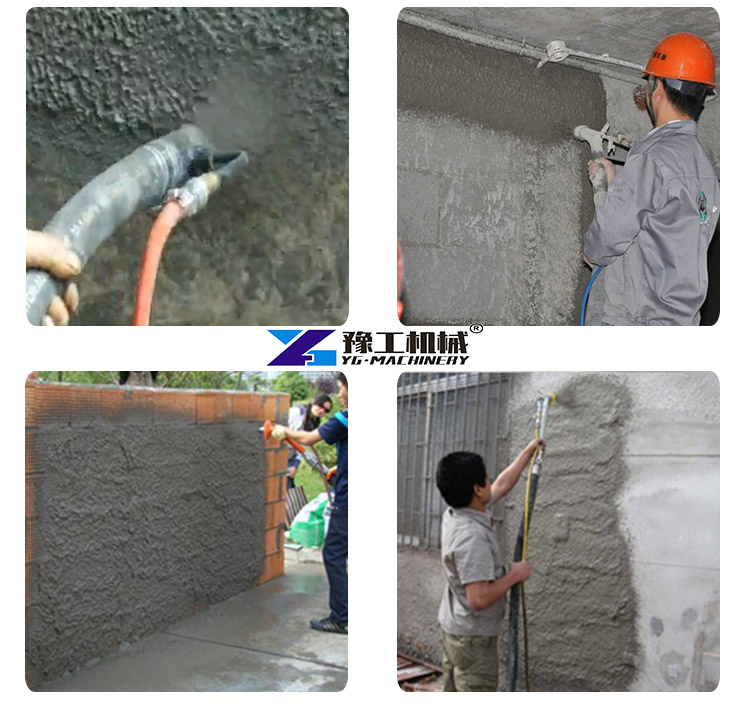
Materials Used In A Mortar Spraying Machine
Not all materials work well in sprayers. You must know what your machine can handle. Most machines work best with specific mixes.
Smooth Materials (No Aggregates)
These are fine materials with no stones or sand.
Examples:
- Cement slurry
- Lime
- Plaster
- Putty
These materials flow easily. They do not clog the hoses. A cement slurry spray machine is ideal for this type of work. It gives a thin, smooth coating.
Standard Mortar And Plaster Mixes
These mixes have sand and other fine particles.
Examples:
- Pre-mixed mortar
- Gypsum
- Stucco
- Repair mortars
Many machines can handle standard mixes. You need to check the maximum aggregate size. Most machines accept particles up to 4-6mm . If the material is too rough, it can damage the pump or clog the nozzle.
Send Inquiry – Tell Us Your Material & Project Size
Industrial Concrete Sprayer Parts
Every concrete spraying equipment unit has key parts. Knowing these parts helps you buy the right machine and keep it running. Here are the most important components:
- Rotor or Pump: This moves the material from the hopper to the hose. Rotor machines use a spinning rotor to move dry mix. Piston pumps move wet mix with pressure. Output rates vary from 3 m³/h to 21 m³/h depending on the model .
- Hopper: This is the funnel where you pour the material. It must be large enough to hold a steady supply. Some hoppers have agitators to keep material from sticking.
- Spraying Nozzle: This is at the end of the hose. It shapes the spray. The nozzle must be wear-resistant because material can erode it over time.
- Air Compressor: This supplies the air pressure for dry mix sprayers. It pushes the material through the hose at high speed. Air consumption is often listed as cubic feet per minute (CFM) .
- Control System: Modern machines have controls to adjust the speed and output. This helps you get the right mix every time .
Real-World Selection Example
A mining company in Peru needed a machine for narrow tunnels. The tunnels were only 2.5 meters wide . They could not use large equipment.
They chose a compact concrete sprayer with a robotic arm. The machine had these features:
- Small size that fit in the tunnel
- Remote control for safety
- Electric motor to reduce fumes
- An output of 5 m³/h at 3 Mpa
This choice helped them work faster. It also kept workers safe from roof falls. The machine was custom-made for narrow spaces. This shows why you should match the machine to the job site.
4 Key Benefits Of Using Concrete Spraying Equipment
- Speed: Spraying is much faster than manual application. Some machines can spray over 20 m³ per hour . This means shorter project times and more jobs per year.
- Consistency: A machine gives a uniform layer every time. There are no gaps or thick spots. This means less rework and better quality .
- Safety: Spraying keeps workers away from dangerous areas. They can operate the machine from a safe distance, especially when using remote controls .
- Cost Savings: You need fewer workers to do the same job. Labor costs are often the biggest project expense. A machine pays for itself over time.
FAQ
Q: What is the difference between a mortar spraying machine and a concrete spraying machine?
A: A mortar spraying machine is usually for fine materials like plaster and putty. Concrete spraying equipment handles larger aggregates and is heavier. The main difference is the material size and pump power.
Q: Can I use a concrete sprayer machine for both wet and dry mixes?
A: No. Most machines are designed for one type only. Dry-mix machines use air to push material. Wet-mix machines use a pump. Check the manual before changing materials.
Q: How do I clean concrete spraying equipment after use?
A: Run clean water or air through the system to remove leftover material. Some machines have a cleaning system built-in. Do not let material dry inside the hoses.
Q: What size aggregate can a mortar spraying machine handle?
A: Most machines accept up to 4-6mm aggregates. Larger stones can clog the hose. For concrete sprayers, some handle up to 15mm . Always check the spec sheet.
Q: Is concrete spraying equipment expensive to maintain?
A: Maintenance costs are moderate. You need to replace wear parts like nozzles and hoses. Regular cleaning helps parts last longer. Many machines have easy maintenance access