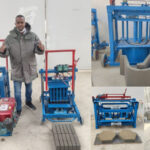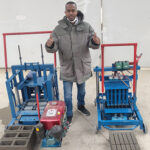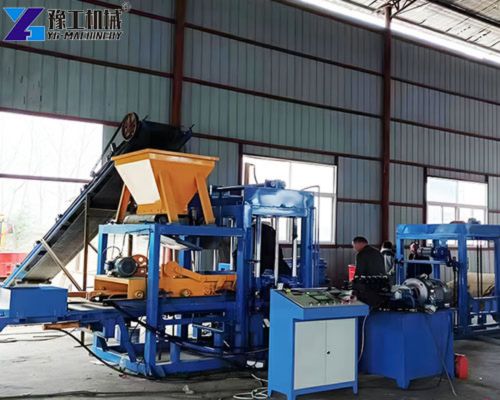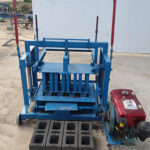
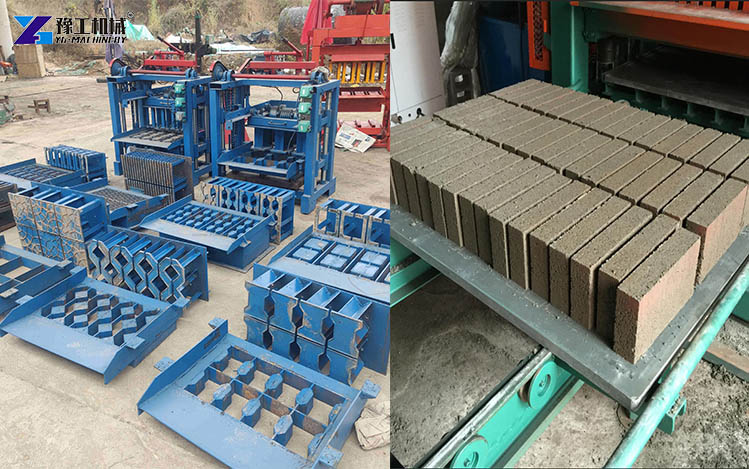
Importing pavers from Mexico used to work fine for Robert H. in the USA. Then freight rates doubled and landed cost jumped 35% in one year. He started shopping for brick making equipment he could run himself, found YG through a Google search in March 2025, and five months later had a YG4-40A Hopper producing 24,000 bricks a shift. Here’s the full story — planning, spec, shipping, and what changed after six months.
Get a Quote for Your Own Brick Line
Why a Texas Paver Producer Needed Brick Making Equipment
Robert’s company supplies landscape pavers and hollow blocks to builders and landscapers around Waco. Every order came from Mexico by truck — 8 to 10 weeks, no quality control.
Three problems pushed him to manufacture locally:
- Cost. Landed cost per paver rose from $0.38 to $0.52 in 18 months.
- Lead time. A 10-week wait lost him two jobs in 2024.
- Quality drift. Color and dimension changed between shipments.
He wanted a machine that could make 8-inch pavers and 4-inch hollow blocks on one frame, run by two or three people, and fit under a 40-foot shed.
Business Planning Before Choosing a Brick Maker Machine for Sale
Before choosing a brick maker machine for sale, Robert ran the numbers on paper — the step most buyers skip.
Daily output target. He needed 20,000 pavers a day to replace imports and take on new work.
Labor cost. Two operators at $22/hour, 8 hours, came to $352 a day. Every extra operator added $176.
Payback math. Machine, molds, freight, and installation totaled about $19,000. At a $0.24 saving per brick, he needed roughly 79,000 bricks a month to break even — under four working days of output.
Space. A 40-foot covered shed with a flat concrete pad, plus 3 days of curing area.
That math pointed to a mid-range hydraulic machine with automatic feeding.
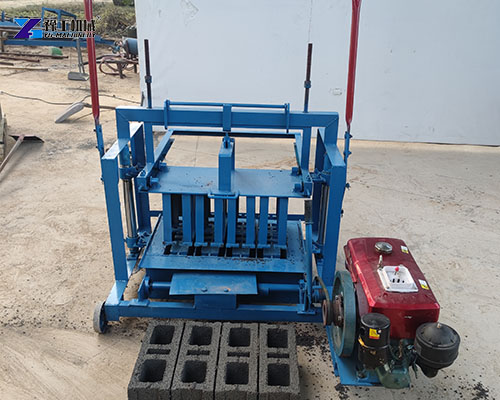
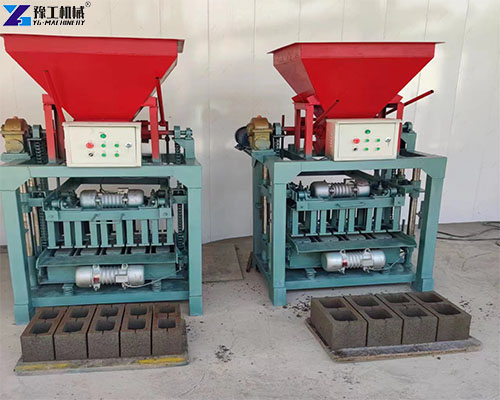
Technical Configuration for the Cement Brick Manufacturing Machine
US power was the first thing we checked. American sites run 220V/60Hz; Chinese machines ship at 380V/50Hz. Get this wrong and the motor burns out in weeks.
What we configured for this cement brick manufacturing machine order:
- Motor and control: 60Hz configuration with a 220V step-up transformer
- Molds: 8-inch paver mold, 4-inch hollow block mold, one spare set of each
- Pallet: 600 wooden pallets for the first production run
- Spare kit: seals, hydraulic hoses, limit switches, one full set of wear plates
- Manual and labels: English, with imperial conversions on the panel
If you’re buying from the US or Canada, tell us your voltage first — it’s the most common cause of start-up failure.
Brick Making Equipment Specifications
Here is the full YG range. Robert chose the YG4-40A (Hopper) for its 24,000-brick shift capacity and automatic feeding.
| el Features | YG4-35A | YG4-35A (Hopper) | YG4-35B | YG4-35B (Hopper) | YG4-40A | YG4-40A (Hopper) |
| Molding Cycle | 35s | 35s | 35s | 35s | 35s | 35s |
| Power (kw) | 4.8 | 4.8 | 6.3 | 6.3 | 7.5 | 7.5 |
| Standard Bricks/Shift | 15,000 | 20,000 | 15,000 | 20,000 | 20,000 | 24,000 |
| Hollow Blocks/Shift | 2,400 | 3,200 | 2,400 | 3,200 | 3,200 | 3,600 |
| Machine Weight | 750kg | 780kg | 800kg | 830kg | 1100kg | 1150kg |
| Operators Needed | 2-3 | 2-3 | 2-3 | 2-3 | 2-3 | 2-3 |
Get Brick Making Equipment Quote


Manufacturing, Factory Inspection, and Export Preparation
Production took 25 days from deposit. We ran three checks before the machine left the factory, and sent Robert the video of each.
Check 1 — No-load run. Two hours of cycling to confirm hydraulic pressure and clean mold lift.
Check 2 — Load test. 200 pavers pressed at full pressure, then measured and checked for cracks.
Check 3 — Pressure report. Pressure logged at start, mid-run, and end, signed and shipped with the machine.
Export prep: anti-rust coating on machined surfaces, mold sets bolted to a separate pallet, moisture barrier, and container loading photos. The shipment left Shanghai for Houston.
Arrival, Installation, and Operator Training in the USA
Sea freight took 32 days to Houston, and customs clearance another 5. Robert’s team handled unloading with a forklift — the machine ships in two crates, the heaviest at 1,150kg.
Installation took two days: level the pad, set the machine on anchor bolts, connect the hydraulic lines, and wire the transformer.
Training took three days over video call, with a YG engineer online from 8am to 11am Texas time:
- Day 1: mix ratio for paver and block, and how water content changes with local sand
- Day 2: mold change, cycle tuning, and pressure setting for each product
- Day 3: curing schedule, daily maintenance, and the four most common faults
We also sent a 40-minute English operation video for training new hires.
Production Results After the Brick Machine Went Live
Week one was slow — Robert’s crew ran 12,000 bricks a day while learning the mix. By week four they hit 22,000 a day, close to the rated 24,000.
At month two:
- Daily output: 22,000 pavers
- Reject rate: 2% , down from 8% during the learning curve
- Cost per paver: $0.28 against $0.52 imported
- Monthly saving: about $9,600
- Payback: on track for 6 months
The reject rate drop came from one change: checking sand water content every morning with a moisture meter.
Client Feedback Six Months After Start-Up
By month six Robert had produced 2.8 million bricks, hired two more staff, and ordered a second machine — another YG4-40A Hopper — to run a night shift.
“The first month I thought we’d made a mistake. The mix was wrong and half the pavers cracked. YG stayed on video with us until we got it right, and after that the machine just ran. We’re buying a second one.” — Robert H., the USA
His advice: budget three weeks of learning time, and don’t switch sand suppliers without re-testing the mix.
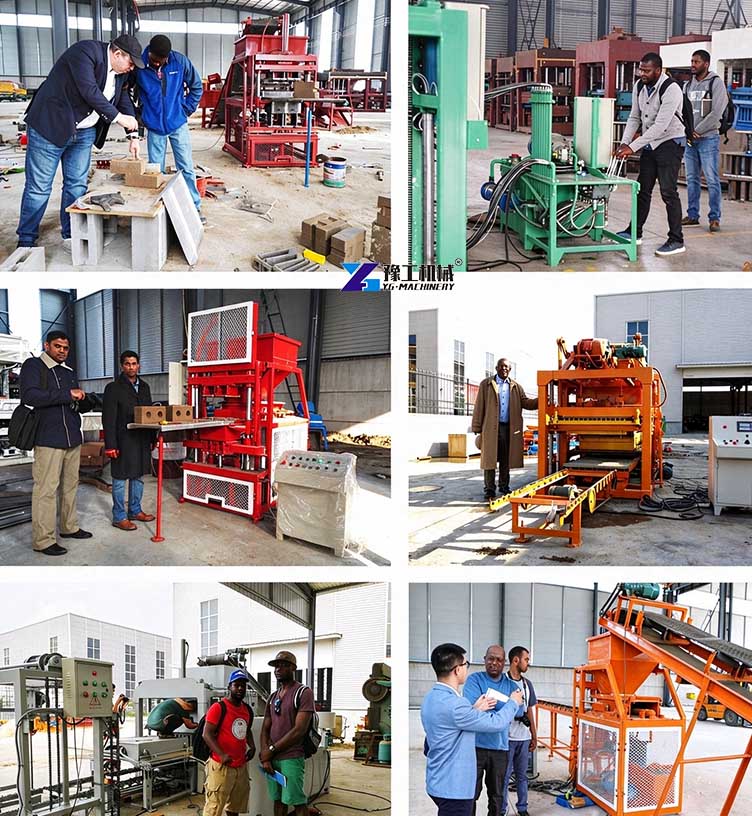
Why International Buyers Choose YG Machinery
YG has built brick and block machines for 20 years and shipped to more than 60 countries. Four things matter most to overseas buyers:
- Voltage and frequency customization — 220V/60Hz for North America, 380V/50Hz for most of Asia and Africa, 440V/60Hz on request
- Mold flexibility — pavers, hollow blocks, solid bricks, and curb stones on the same frame
- Spare parts stock — wear plates, seals, and hoses held for 5 years after delivery
- Video support — engineers on WhatsApp and video call, scheduled around your shift
Request a Quote for Your Brick Making Machine
Send us four things and we’ll reply with a model recommendation and landed cost within 24 hours:
- Your target output per day
- The brick or block type and size you want to make
- Your site voltage and frequency
- Your nearest port
If you’re still deciding whether to manufacture or keep importing, say so — we’ll run the payback math before you spend anything.
Get Brick Making Equipment Quote
Frequently Asked Questions About Brick Machines
FAQ 1: Can You Supply a 220V 60Hz Version for the USA?
Yes. We configure the motor and panel for 220V/60Hz and supply a step-up transformer where needed. Tell us your voltage before ordering.
FAQ 2: How Long Does Shipping to the USA Take?
About 30-35 days by sea to Houston or Los Angeles, plus 5-7 days for customs. Door-to-door is typically 45-55 days.
FAQ 3: How Many Molds Should I Buy at the Start?
Two to three. One main product mold, one alternate size, and one spare of the fastest-wearing design.
FAQ 4: What’s the Minimum Crew to Run It?
Two people — one feeding and pressing, one stacking and moving pallets. A third speeds up curing but isn’t required.
FAQ 5: What Happens If a Part Breaks?
We hold wear parts for 5 years and ship by air within 5-7 days. Common faults are covered in the training video.