
For contractors and overseas buyers, choosing between traditional concrete leveling and a concrete laser screed machine can affect labor costs, floor quality, and project schedules. Traditional methods are familiar and affordable for small jobs, but large concrete slabs require faster and more consistent leveling. So, which method offers better value for modern construction projects?
YG Concrete Floor Leveling Machine Parameters-OEM Support
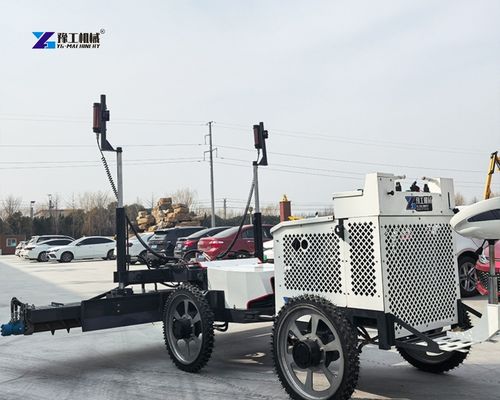
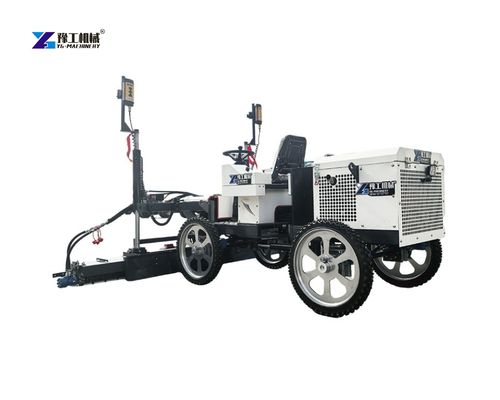
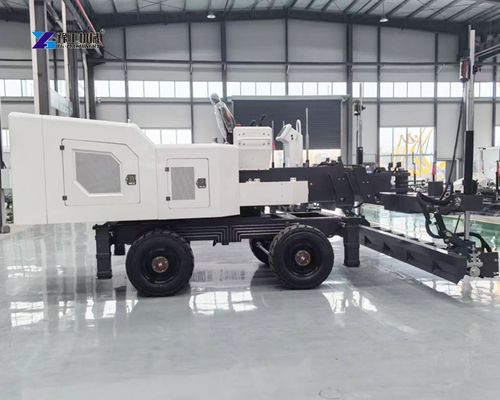
Before you buy a laser screed machine for sale, it is smart to review the specifications. Understanding these numbers will help you choose the right concrete floor leveling machine for your job. YG offers four models: YGJX31, YGJX32, YGJX33, and YGJX34. Here are the key specs based on our actual product data.
| Model | YGJX31 | YGJX32 | YGJX33 | YGJX34 |
|---|---|---|---|---|
| Engine | ||||
| Model | Generator set | GX390 Electric start | GX390 Electric start | GX390 Electric start |
| Power | 2.0kW | 13hp/3600rpm | 13hp/3600rpm | 13hp/3600rpm |
| Fuel tank (L) | 14.5 | 6.5 | 6.5 | 6.5 |
| Running device | ||||
| Drive | Motor | Hydraulic motor | Hydraulic motor | Hydraulic motor |
| Running mode | Infinitely variable speed | Handle control, stepless speed | Handle control, stepless speed | Handle control, stepless speed |
| Running speed(m/min) | 0-36 | 0-45 | 0-65 | 0-45 |
| Suggest working speed(m/min) | 5 | 5 | 5 | 5 |
| Screed head | ||||
| Type | Self-leveling | Electric control, self-leveling | Self-leveling | Hydraulic control, self-leveling |
| Width | 2500mm | 2500mm | 2500mm | 2500mm |
| Exciting force | 500N | 500N | 500N | 500N |
| Vibration frequency | 50Hz | 50Hz | 50Hz | 50Hz |
| Laser control system | ||||
| Control type | Microcomputer laser scan | Microcomputer laser scan | Microcomputer laser scan | Microcomputer control |
| Operation mode | Walk-behind | Walk-behind | Walk-behind | Walk-behind |
| Forward and reverse | Handgrip control, stepless speed-walking | Hydraulic control | Handgrip control, stepless speed-walking | Hydraulic control |
| Size and weight | ||||
| Working size(mm) | 2758*2622*1980 | 2740×2659×1980 | 2578×2643×1980 | 2780*2622*1980 |
| Weight(kg) | 295 | 365 | 380 | 410 |
[Get YG’s Concrete Laser Screed Recommendation →]
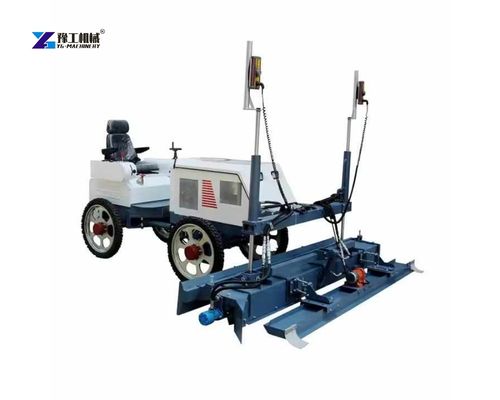
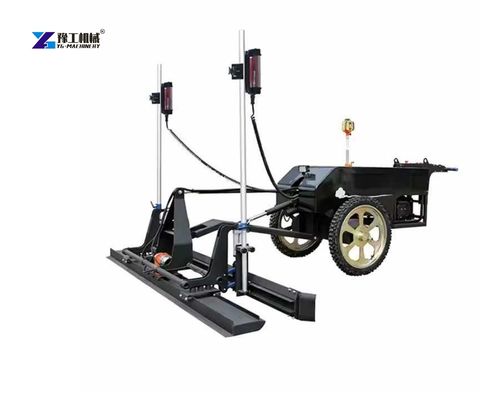
Traditional Concrete Leveling vs. Laser Screed Machine
Traditional concrete leveling normally depends on workers using reference lines, straightedges, vibrating screeds, and manual measurements. It requires experience and continuous adjustment to maintain the correct elevation.
For small slabs, this approach can be economical. However, labor requirements increase quickly as the working area becomes larger.
A laser screed machine uses a laser reference plane and a control system to maintain the required screed elevation. At the same time, the screed head vibrates and levels the fresh concrete.
This creates a more controlled process with less manual elevation checking.
Which Method Fits Your Project?
Traditional leveling may be better when:
- The concrete area is small.
- The slab has an irregular shape.
- Site access is restricted.
- Floor-flatness requirements are relatively low.
- You already have an experienced leveling crew.
Laser screeding is usually more attractive when:
- The project involves thousands of square meters.
- Labor costs are high.
- Consistent floor elevation is important.
- You regularly work on warehouses, factories, or commercial floors.
- Project schedules are tight.
Concrete Laser Screed Machine Productivity and Cost
The main advantage of laser screeding is not simply higher machine speed. It is the combination of labor reduction, consistent leveling, and improved workflow.
For example, YG’s YGJX series has a 2,500 mm screed width and a recommended working speed of 5 m/min. Actual daily output depends on concrete supply, slab thickness, site conditions, finishing operations, and crew coordination.
For a 10,000 m² warehouse, even a modest improvement in daily productivity can reduce project duration.
When comparing equipment prices, overseas buyers should calculate:
Cost per m² = Total leveling cost ÷ Completed area
Include labor, fuel, maintenance, equipment depreciation, rework, and potential rental costs.
A machine with a higher purchase price can still be the more economical option if it significantly reduces the cost per square meter.
[View YG Small Laser Leveling Machine Project Case Studies →]
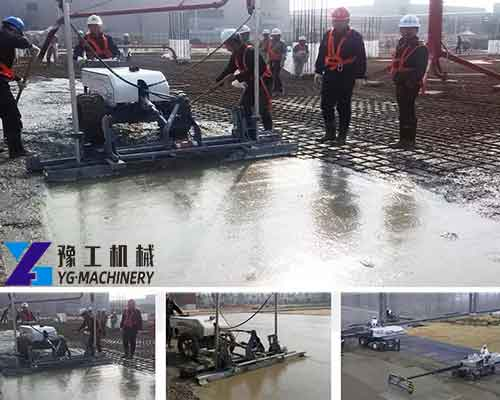
Laser Screed Machine Accuracy and Floor Quality
Floor quality is another major consideration.
Manual leveling depends heavily on worker experience and frequent elevation checks. Skilled crews can produce excellent results, but maintaining consistent elevation across a large slab is more difficult.
A laser-controlled system provides a consistent reference level for the screed head.
However, buyers should understand that a laser screed does not guarantee a specific floor-flatness result by itself. Concrete mix, placement, finishing, joints, operator skill, and site management all affect the final floor.
Before purchasing, ask the supplier about:
- Laser control accuracy
- Screed width
- Vibration performance
- Recommended slab thickness
- Suitable concrete conditions
- Operator training
- Spare parts and technical support
Small Laser Screed or Larger Model?
Choosing the right machine is more important than simply choosing the most powerful machine.
A small laser screed is useful for contractors who work on medium-sized commercial floors or sites where maneuverability is important.
Larger equipment is more suitable for extensive open slabs where productivity is the priority.
| Project | Suggested Choice |
| Small repair project | Traditional leveling |
| Small commercial floor | Small laser screed |
| Medium warehouse | Walk-behind laser screed |
| Large factory floor | Higher-output model |
| Restricted access | Compact model |
For overseas buyers, pay attention to machine dimensions, working width, weight, control system, engine, and after-sales support, not horsepower alone.
[Find the Right Small Laser Screed for Your Project →]
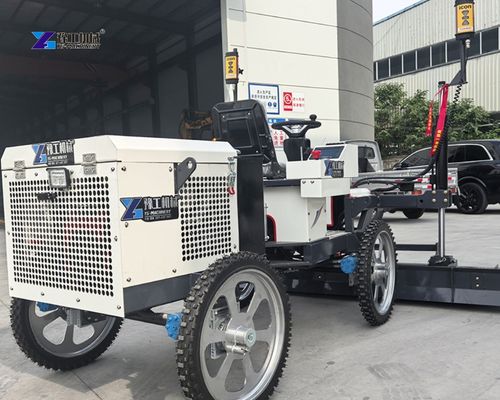
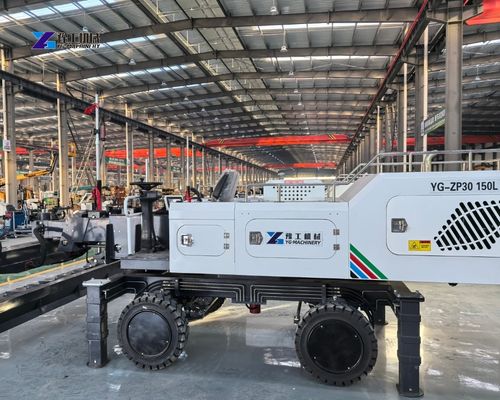
Laser Screed Machine Buying Checklist
Before placing an order with a manufacturer, confirm these points:
- Complete specifications — engine, drive, laser system, vibration, dimensions, and weight.
- Laser control system — control method and included components.
- Working width and speed — make sure they match your normal projects.
- Spare parts — check availability and delivery time.
- Warranty — confirm coverage and claim procedures.
- Technical support — manuals, videos, remote assistance, or training.
- OEM support — logo, color, packaging, and nameplate customization.
- Shipping details — machine dimensions, gross weight, and container loading quantity.
For international buyers, a reliable supplier should provide clear specifications and practical after-sales support rather than only a low quotation.
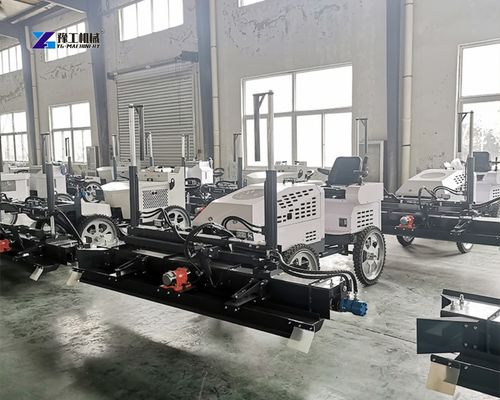

When Traditional Concrete Leveling Is Still Better
Laser screeding is not automatically the right solution for every contractor.
If you only complete occasional small slabs, purchasing a machine may not provide a fast return on investment. Traditional tools and an experienced crew may be more practical.
The decision becomes different for contractors handling regular large-scale projects.
A simple ROI formula is:
Payback Period = Machine Investment ÷ Monthly Savings
For example, a $20,000 machine generating $4,000 in monthly savings would have a theoretical five-month payback period. Actual results depend on labor rates, utilization, maintenance, project volume, and operating conditions.
The best way to evaluate ROI is to provide the manufacturer with your monthly concrete area, labor cost, slab thickness, and typical project type.
FAQ About Concrete Laser Screed Machines
1. Is a laser screed better than traditional concrete leveling?
For large, open concrete slabs, laser screeding can provide higher productivity and more consistent elevation control. Traditional leveling can remain economical for small or irregular projects.
2. How much area can a laser screed machine level per day?
There is no fixed daily output. Concrete supply, slab thickness, site layout, crew size, finishing requirements, and operator experience all affect productivity. Machine speed should not be used as the only production indicator.
3. Is a small laser screed suitable for a small warehouse?
Yes. A small laser screed can be a good choice when the working area, required accuracy, machine dimensions, and expected production match the project.
4. What should I check before buying from China?
Check specifications, laser components, engine, hydraulic system, spare parts, warranty, technical support, required certifications, shipping dimensions, and OEM options.
5. How can I calculate the machine’s ROI?
Compare the total machine investment with expected monthly savings from labor, productivity, reduced rework, and equipment rental.
Final Thoughts
Traditional concrete leveling remains useful for small and irregular projects. But for large warehouses, factories, and commercial floors, a concrete laser screed machine can provide a more efficient and controlled leveling process.
The right choice depends on your project area, floor requirements, site access, labor costs, and expected equipment utilization.
YG offers four YGJX models—YGJX31, YGJX32, YGJX33, and YGJX34—with different engine, drive, control, and operating configurations.
If you are comparing suppliers, send YG your project area, slab thickness, required floor standard, and monthly workload. This information will help determine the most suitable machine configuration.