An oil tank cleaning robot is a remote-controlled machine that removes sludge, sediment, and residues from large storage tanks. It eliminates the need for workers to enter dangerous confined spaces. This technology makes tank cleaning safer and faster.
Manual tank cleaning has been a problem for decades. Workers face toxic gases, slippery surfaces, and explosion risks. The oil tank cleaning robot solves these issues. Operators control the robot from outside the tank. The robot moves along the tank floor and breaks up heavy sludge. It removes the waste through a suction system.
This approach cuts cleaning time significantly. In one project, a 10,000 m³ crude oil tank was cleaned in 3 days instead of 8 days. This means less downtime and more production.


YG Small Oil Tank Cleaning Robot Parameter-OEM Support
| Model | YG-500 | YG-600 | YG-700 | YG-800 | YG-900 | YG-1200 |
| Robot dimensions | 1500*500*650mm | 1500*600*650mm | 1600*700*650mm | 1600*850*700mm | 1650*960*750mm | 1900*1200*750mm |
| Dredging width | 500mm | 600mm | 700mm | 800mm | 900mm | 1200mm |
| Track travel speed | 3-15m/s | 3-15m/s | 3-15m/s | 3-15m/s | 3-15m/s | 3-15m/s |
| Robot weight | 320kg | 350kg | 380kg | 400kg | 420kg | 500kg |
| Pump output diameter | 3inch | 3inch | 4inch | 4inch | 4inch | 4inch |
| Pump flow rate(cubic meters/ hour) | 100 m³ | 100m³ | 200m³ | 200m³ | 200m³ | 200m³ |
| Hydraulic station dimensions(mm) | 2200*1200*1700 | 2200*1200*1700 | 2200*1200*1700 | 2200*1200*1700 | 2200*1200*1700 | 2120*1240*1200 |
| Main motor power | 22kw | 22kw | 30kw | 30kw | 30kw | 45kw |
| Hydraulic system pressure | 0-16Mpa | |||||
| Particle size | 15mm | 15mm | 38mm | 38mm | 38mm | 60mm |
| Reeling system speed | 0-10r/min | |||||
| Hydraulic hoses | 50m (Standard configuration) | |||||
| Control system | Wireless remote control | |||||
| Lighting system | Underwater LED lights *2 | |||||
These specs help buyers match the robot to their tank conditions. It is important to check the tank size and sludge type before purchase.
Download Full Specification Sheet
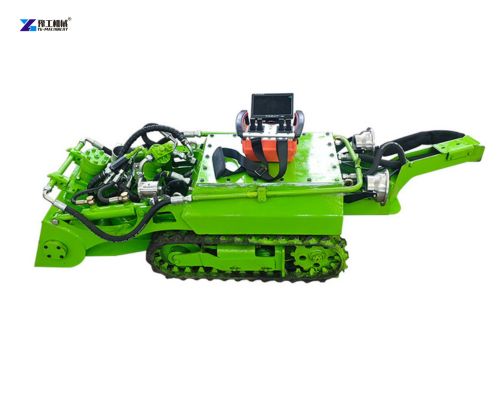
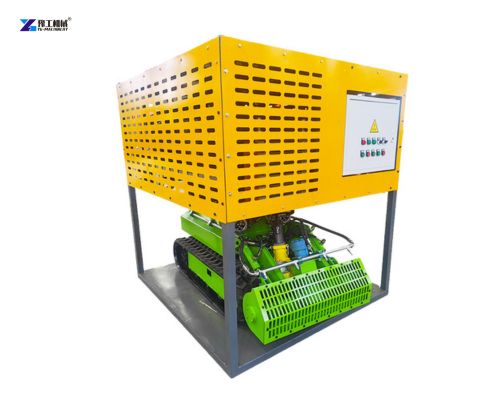
How An Industrial Tank Cleaning Robot Works
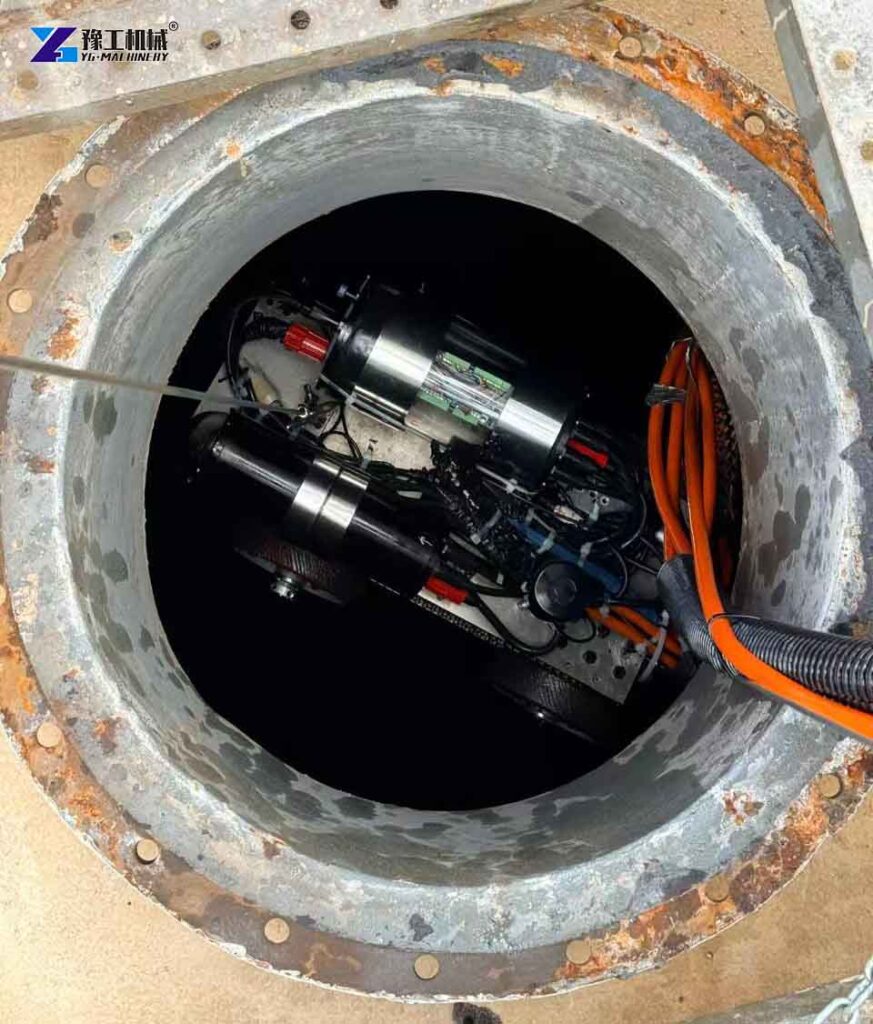
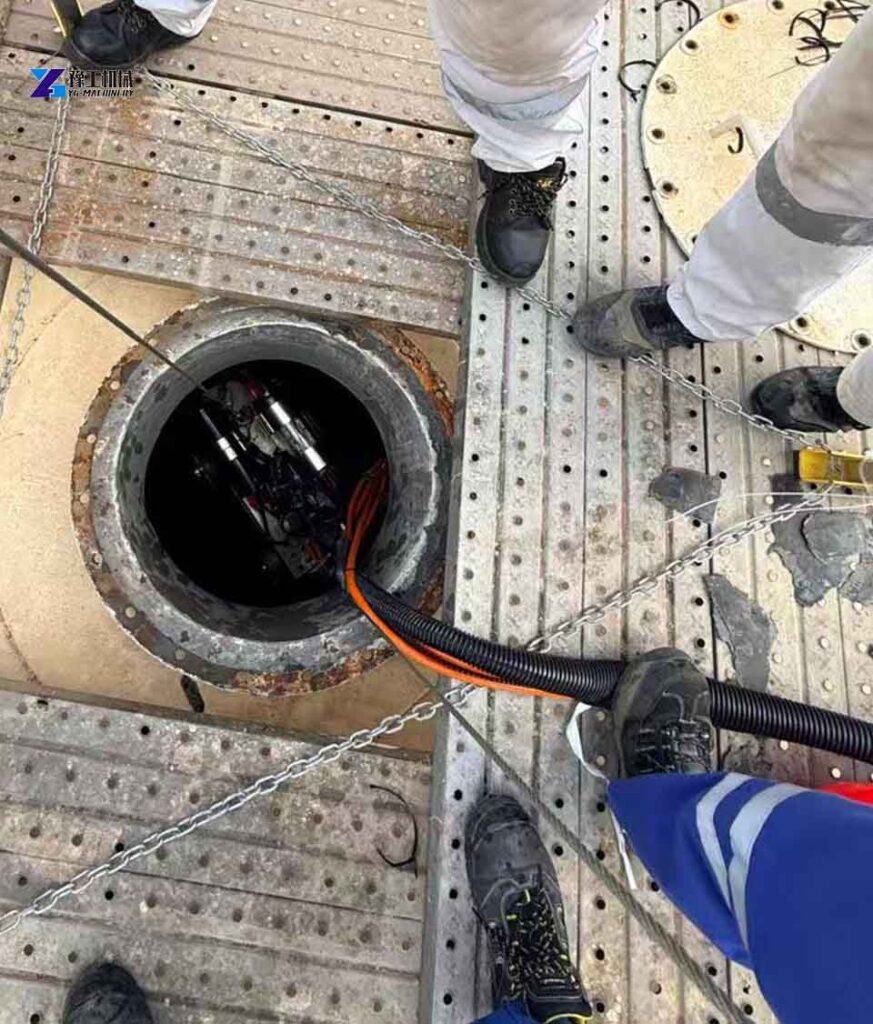
The industrial tank cleaning robot enters the tank through a standard manhole (≥600mm diameter). Once inside, the crawler system moves it across the tank floor.
Key components of the system:
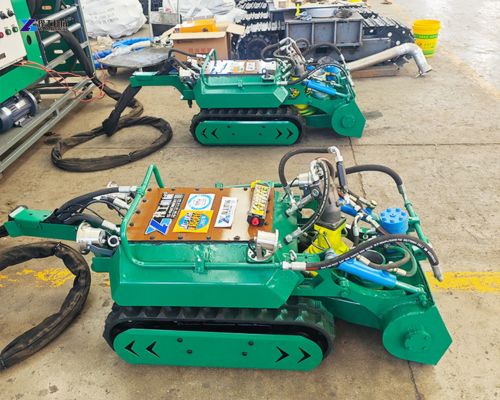
- Crawler drive: Moves on sticky or uneven surfaces
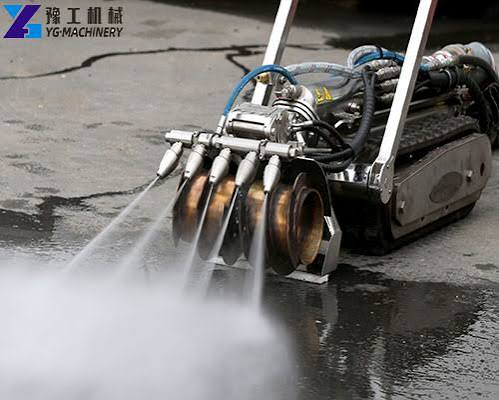
- High-pressure pump: Breaks up hardened sludge (pressure up to 50 MPa)
- Suction system: Removes waste from the tank
- HD camera: Provides real-time video feed
- Remote control: Operator works from a safe distance (up to 300 meters)
The robot uses high-pressure water jets to break down deposits. The suction hose removes the material from the tank. The entire process is controlled remotely. No human entry is required.
Why Tanks Need Robotic Cleaning Equipment
Oil storage tanks naturally collect sludge over time. This buildup reduces storage capacity and can damage equipment. Traditional cleaning methods are slow and unsafe.
Here are the main challenges with manual tank cleaning:
- Workers must enter confined spaces with toxic gases
- High risk of explosions from flammable vapors
- Inconsistent cleaning quality
- Long shutdown periods
- High labor costs
Robotic tank cleaning equipment offers a better solution. The robot handles the dangerous work. Workers stay safe outside the tank.
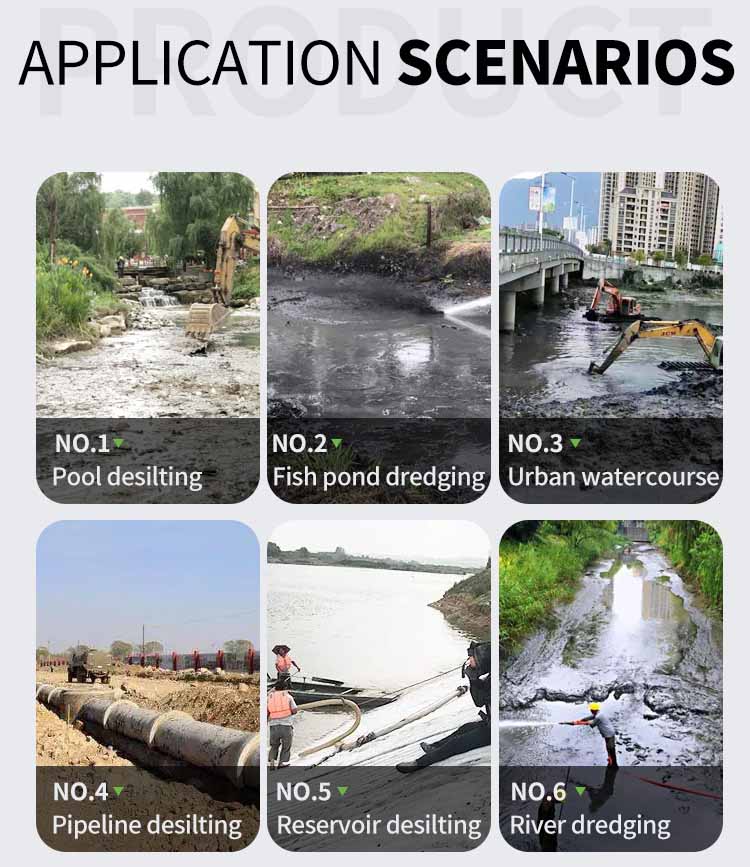
6 Applications of Oil Tank Cleaning Robot
The oil tank cleaning robot is built for one main job — removing sludge from the inside of large storage tanks. But its applications go beyond just one type of tank or one type of sludge.
Here are the most common applications for this robot:
- Crude oil storage tanks: Removes heavy bottom sludge that builds up over years of operation. This sludge is thick and hard to break down. The robot’s high-pressure system handles it well.
- Fuel oil and diesel tanks: Cleans lighter but still sticky residues. These tanks need regular cleaning to maintain fuel quality. The robot works without draining the tank completely in many cases.
- Chemical storage tanks: Handles various chemical residues. The robot can be fitted with corrosion-resistant materials for these jobs.
- Refinery intermediate tanks: Cleans tanks that hold partially processed products. These tanks often have complex sludge mixtures. The robot adapts to different conditions.
- FPSO vessel tanks: Works on floating production storage and offloading units. The robot handles the movement and confined spaces of offshore environments.
- Pipeline pigging receiving stations: Removes debris collected from pipeline cleaning operations. The robot keeps these stations clear and operational.
Real-World Performance: Results From The Field
The numbers show that robotic tank cleaning equipment delivers real results. A UAE refinery reported a 300% increase in cleaning efficiency after using the robot. The system reduced worker risk to zero.
In another case, a petrochemical plant in South Africa saved 35% on cleaning costs. The robot finished the job in 3 days compared to 8-10 days for manual work. Production continued without shutdown.
“We used to shut down for two weeks every year just for tank cleaning. With this robot, we cut it to four days. Our operators don’t have to enter the tank anymore — that alone made the decision easy.” — Maintenance Manager, UAE Refinery
Common performance improvements:
- Cleaning time reduced by 60%
- Labor costs reduced by 45%
- Zero safety incidents in confined spaces
- Consistent sludge removal across multiple tanks
These results show why many facilities are switching to robotic solutions.
Calculate Your Potential Savings
Frequently Asked Questions About Oil Tank Cleaning Robot
Q1: Can this robot clean my 50-meter diameter crude oil tank?
Yes. The robot handles tanks up to 50 meters in diameter and 30 meters high. It enters through any manhole 600mm or larger.
Q2: How much faster is robotic cleaning compared to manual work?
About 60% faster. A 10,000 m³ tank takes 3-5 days with the robot versus 8-12 days with manual cleaning. Less downtime means more production for you.
Q3: Is it really safe to use in a tank with flammable vapors?
Yes. The robot has Ex d IIB T4 explosion-proof certification. All electrical parts are sealed to prevent sparks. No human entry means zero risk to your workers.
Q4: What happens if the robot gets stuck inside the tank?
The robot has a backup recovery cable. Operators can pull it out manually if needed. The crawler tracks are designed to handle sticky sludge and uneven floors.
Q5: How long does the robot last with regular use?
8-10 years with proper maintenance. Spare parts like nozzles, seals, and filters are easy to replace. Most maintenance takes only a few hours on-site.