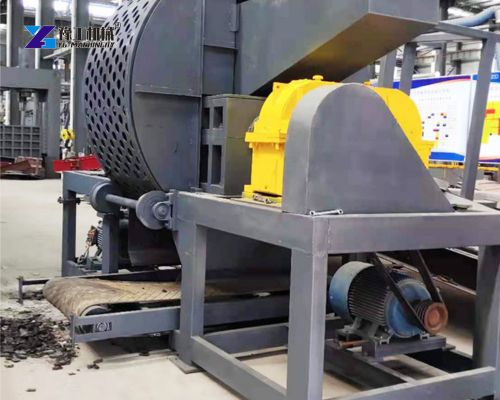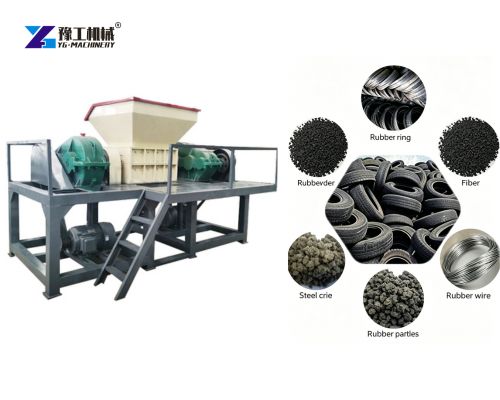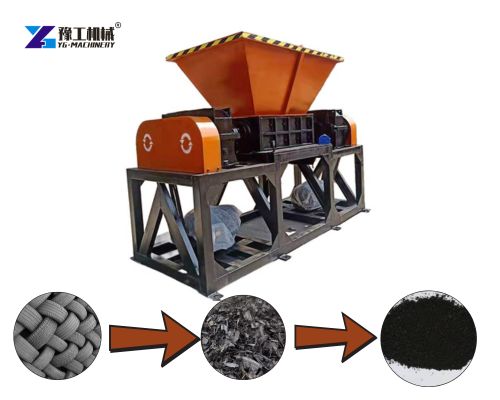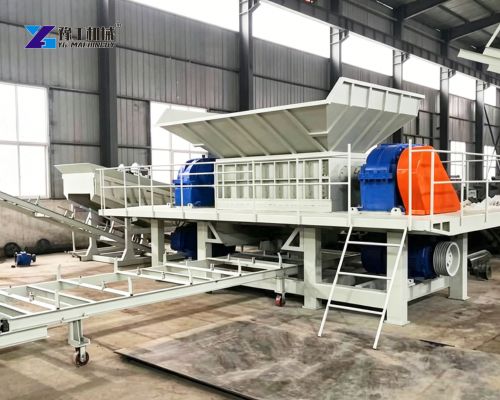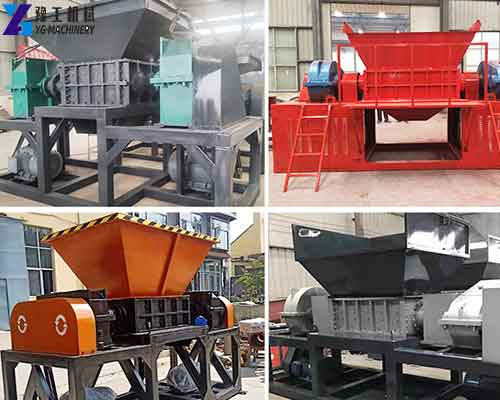


A waste tyre recycling machine is a practical solution for turning discarded tires into useful recyclable materials. It is mainly used to shred waste tires and prepare rubber, steel, and other materials for further processing. For recycling companies, waste management businesses, and scrap tire collectors, the machine can reduce tire storage pressure, improve processing efficiency, and create additional material value. If you are planning to start or expand a tire recycling business, YG can help you select a suitable machine according to your tire supply, processing capacity, and final product requirements.
Request Waste Tyre Recycling Machine Pricing
Waste Tyre Recycling Machine Technical Parameters
| Model | YG-600 | YG-1000 | YG-1200 | YG-1500 | YG-1800 |
| Knife size(mm) | Φ200*20 | Φ300*30 | Φ300*40 | Φ500*50 | Φ600*60 |
| Power (kW) | 11*2 | 37*2 | 45*2 | 75*2 | 90*2 |
| Capacity(t/h) | 0.3-0.5 | 1-1.2 | 2.5-3 | 3.8-4.5 | 6-7 |
| Knife quantity(pcs) | 30 | 26 | 30 | 38 | 45 |
| Machine size(m) | 2.612.1 | 3.41.252.2 | 3.81.252.2 | 4.41.52.5 | 5.3*2 |
Request Waste Tyre Recycling Machine Pricing

How a Rubber Tire Shredder Machine Works
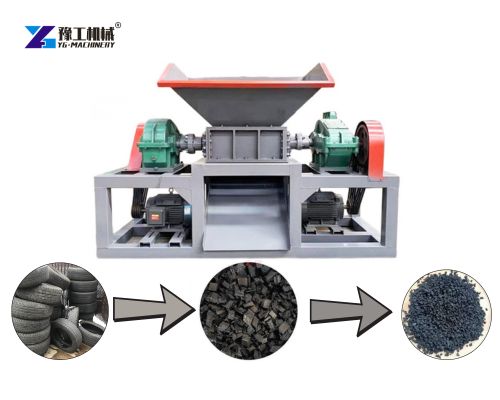
The working principle of a rubber tire shredder machine is straightforward. Waste tires are fed into the cutting chamber, where rotating knives work against fixed knives to tear the tires into smaller pieces.
The actual processing result depends on tire size, tire construction, knife configuration, and the required output size. Passenger tires are generally easier to process than very large truck or off-road tires.
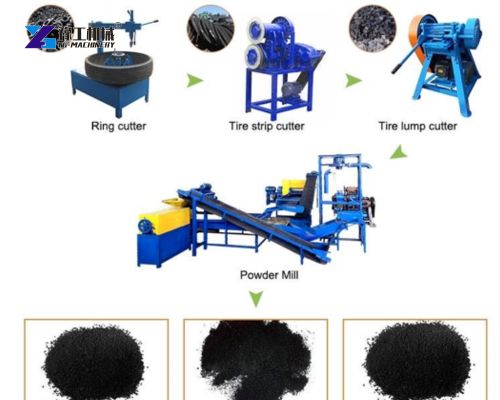
The shredded material can then enter the next recycling stage. Depending on the complete production line, this may include magnetic separation, screening, fiber separation, rubber granulation, or other processing steps.
This makes shredding an important first stage in a complete waste tire recycling project.
Key Benefits of a Waste Tyre Recycling Machine
Reduce Waste Tire Storage Pressure
Waste tires take up a surprising amount of space. Their hollow structure also makes stacking inefficient.
A recycling machine reduces the size of the tires before storage or further processing. This allows recycling businesses to handle more raw material within the same site area.
For companies that collect tires from garages, tire shops, transport companies, or municipal waste stations, this can make daily material handling much easier.
Lower Transportation Costs
Whole tires are bulky. A truck can reach its available space before reaching its maximum weight.
Shredding tires before transportation can improve loading efficiency. More processed material can be moved within the same logistics system.
For a business handling several truckloads of tires each week, even a small improvement in transportation efficiency can have a noticeable effect on operating costs.
Turn Waste into Valuable Materials
A major advantage of tire recycling is that waste tires contain materials with further commercial value.
The main recoverable components include rubber, steel, and fiber.
Recycled rubber can be used in products such as rubber mats, modified asphalt, playground surfaces, and other rubber-based products. Recovered steel can also enter metal recycling channels.
The exact value depends on local market demand and the quality of the recovered material.
Improve Processing Efficiency
Manual tire cutting is slow and requires significant labor. A rubber shredding machine provides a much more consistent mechanical process.
For example, the YG high-output series covers capacities from 0.3 to 0.5 tons per hour on the YG-600 to 6 to 7 tons per hour on the YG-1800.
This range allows buyers to select equipment according to actual tire availability instead of purchasing a machine that is unnecessarily large.
Support Business Expansion
A tire recycling business may start with a limited supply of waste tires and expand later.
Choosing equipment with an appropriate capacity gives the company room to develop. Larger models can support higher processing volumes when stable tire supplies are available.
However, bigger capacity is not always better. A machine should match the actual amount of tires that can be collected and processed every day.
Rubber Shredding Machine Applications
Tire Recycling Plants
Professional tire recycling plants are one of the main applications for rubber shredding equipment.
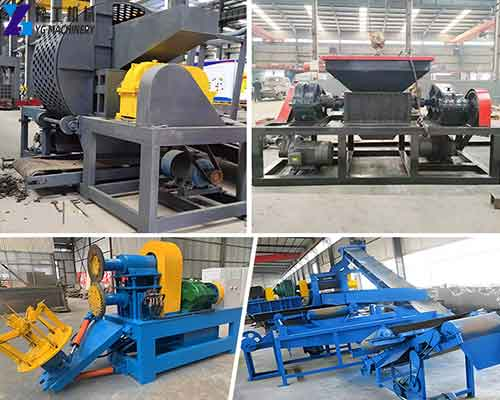
The shredder can serve as the front-end machine in a larger recycling system. After shredding, the material can be transported to separation and size reduction equipment.
Waste Management Companies
Waste management companies often collect different types of solid waste.
Adding tire recycling equipment can create a new processing service. Instead of simply storing or transporting discarded tires, the company can reduce their volume and recover useful materials.
Scrap Tire Collection Centers
Collection centers may receive tires faster than they can send them to downstream recyclers.
A rubber tire shredder machine can reduce the volume of accumulated tires. This is especially useful where storage space is limited.
Rubber Processing Businesses
Some rubber processors purchase shredded tire material as feedstock for further processing.
In this case, the buyer should pay close attention to the required output size and material quality. The correct shredder configuration should be selected according to the next production stage.
How to Choose the Right Rubber Tire Shredder Machine
Choosing the right machine starts with the raw material rather than the machine price.
Buyers should evaluate several factors before placing an order.
| Buying Factor | What to Check |
| Daily tire volume | Average tons of tires available each day |
| Tire type | Passenger, truck, OTR, or mixed tires |
| Output requirement | Required size for the next processing stage |
| Working hours | Planned operating hours per day |
| Site conditions | Available installation and feeding space |
| Power supply | Local voltage and electrical requirements |
| Future demand | Expected increase in tire collection volume |
A useful rule is to avoid selecting equipment only according to its maximum capacity.
For example, a company with 15 tons of tires available per day does not necessarily need a machine rated for 6 or 7 tons per hour. A smaller model may provide better equipment utilization and lower initial investment.
The right choice depends on the relationship between raw material supply, working hours, production capacity, and future demand.

Waste Tyre Recycling Machine Investment Considerations
Machine capacity is only one part of the investment calculation.
Raw material supply is equally important. A high-capacity machine cannot generate good returns if there are not enough waste tires available to keep it running.
Electricity, labor, maintenance, transportation, and downstream processing should also be included in the business calculation.
Another important factor is the selling price of recovered materials.
If recycled rubber and recovered steel have strong local demand, the same amount of waste tires may generate greater economic value.
For this reason, buyers should investigate the local recycling market before purchasing equipment.
A simple business assessment can start with four questions.
- How many waste tires can you collect each day?
- How many days will the machine operate each month?
- What materials will you sell after processing?
- What are the local prices for recycled rubber and steel?
These answers provide a more realistic basis for equipment selection than capacity alone.
Waste Tire Recycling Case Example
Consider a recycling business that can collect around 20 tons of waste tires per day.
If the company operates for eight hours, it needs an average processing capacity of around 2.5 tons per hour to process the daily supply within one working shift.
In this situation, a machine with a capacity around 2.5 to 3 tons per hour may be more practical than selecting a much larger model.
The actual choice should still consider tire type, feeding method, working conditions, and future expansion.
This example shows why production planning should come before machine selection.
Practical Buying Tips Before Ordering
Before purchasing a waste tyre recycling machine, overseas buyers should confirm the following information with the manufacturer.
First, provide the tire types you plan to process.
Second, estimate the average daily tire supply.
Third, explain the output size required by your next processing stage.
Fourth, confirm your local electrical standard.
Fifth, check the available installation space.
Sixth, ask about knife replacement and other wear parts.
Seventh, confirm technical support and after-sales service.
Finally, request a complete quotation that includes the machine configuration, shipping information, installation requirements, and recommended auxiliary equipment.
Why Choose YG Waste Tyre Recycling Machine
YG provides different waste tire shredding solutions for projects with different processing requirements.
The available models cover a wide capacity range, allowing buyers to choose equipment based on their actual material supply.
As a manufacturer, YG can also discuss machine configuration according to tire type, output requirements, working conditions, and future production plans.
For overseas buyers, this approach is more useful than choosing a machine only from a standard catalog.
Before making an investment, you can send YG information about your waste tire source, expected daily capacity, local power supply, and desired final product. The technical team can then recommend a suitable configuration.
Frequently Asked Questions about Waste Tyre Recycling Machine
What types of waste tires can a waste tyre recycling machine process?
The machine can be used for various waste tire materials, including passenger car tires and truck tires. Large or special tires may require a suitable machine configuration. Buyers should provide tire dimensions and types before ordering.
How much waste tire can the machine process per hour?
The YG high-output models listed above range from 0.3 to 0.5 tons per hour for the YG-600 to 6 to 7 tons per hour for the YG-1800. Actual output can vary according to tire type, feeding conditions, and operating practices.
Can a rubber tire shredder machine separate steel from rubber?
The primary function of the shredder is size reduction. Steel separation is normally handled by downstream equipment such as magnetic separators in a complete tire recycling line.
How do I choose the right rubber shredding machine?
Start with your daily tire supply, tire type, working hours, required output size, and future production plan. Do not select a machine based only on its maximum capacity.
Can YG provide a complete tire recycling solution?
Yes. YG can discuss the required equipment configuration according to the customer’s raw materials, processing capacity, and final product requirements. Buyers can contact YG for a complete project recommendation.