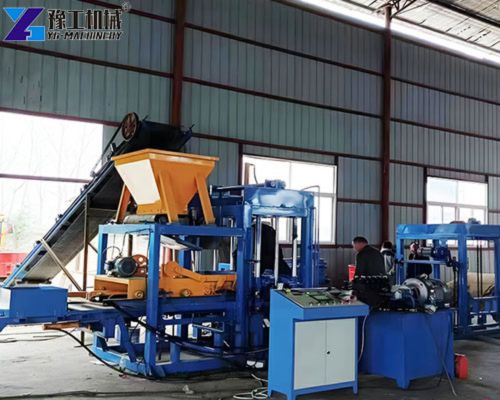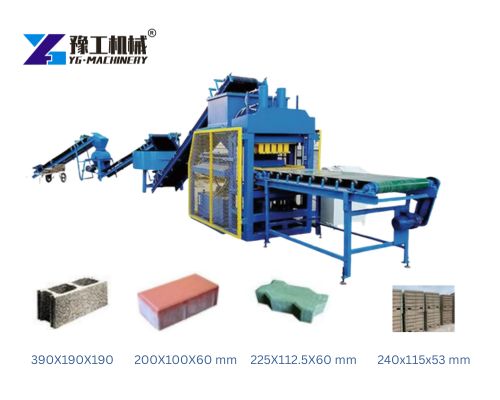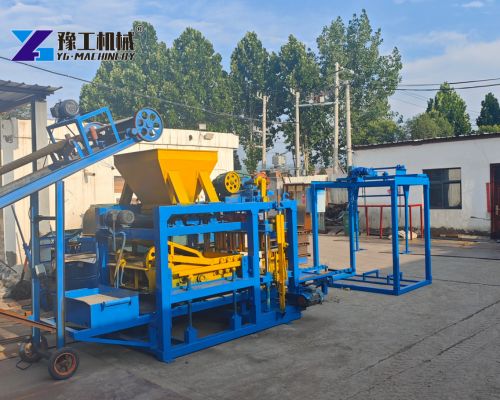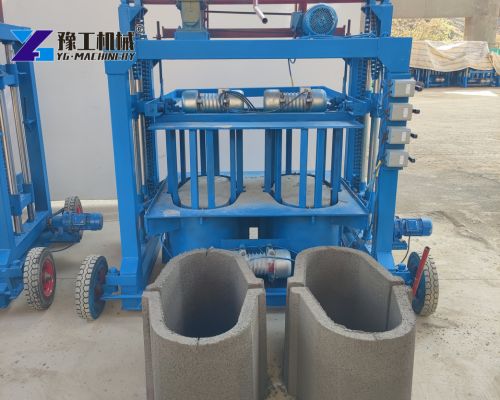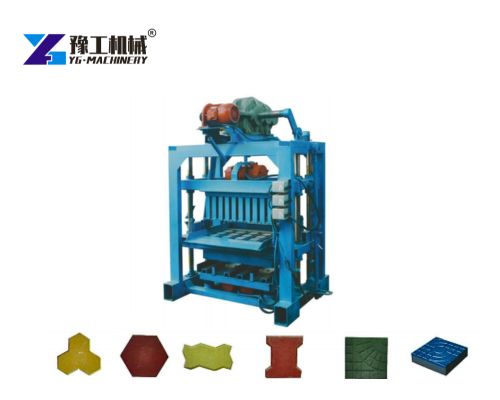
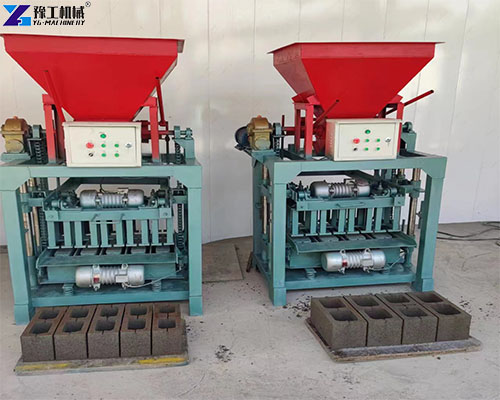
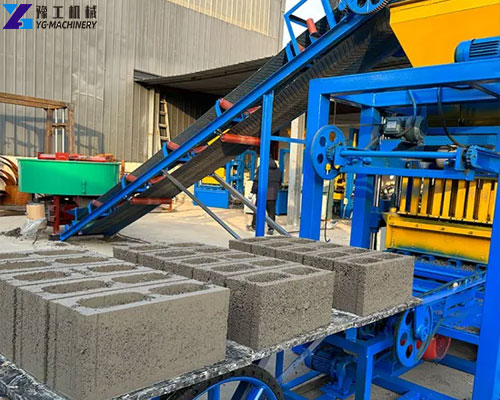
A concrete brick making machine is equipment that produces bricks from cement, sand, and aggregate. It uses vibration and hydraulic pressure to compact raw materials into strong, uniform bricks. The machine works by filling a mold with mixed concrete, vibrating it to remove air bubbles, and pressing it to achieve the required density.
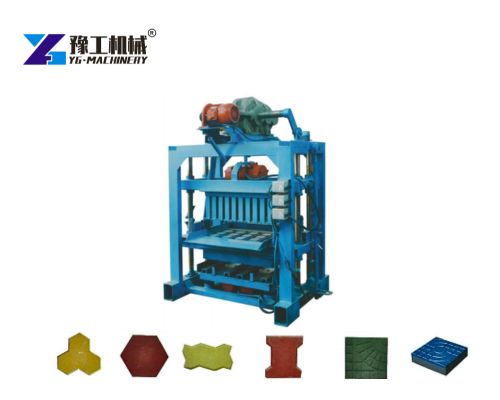
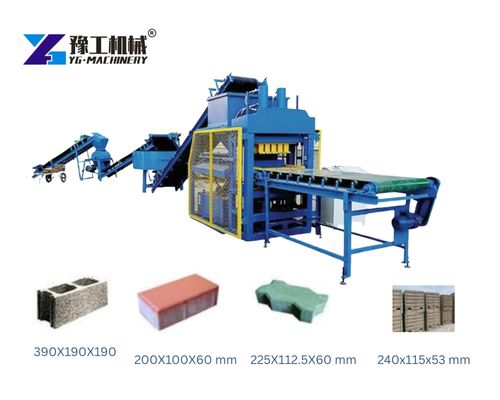
YG concrete block brick making machine comes in different sizes and automation levels. Fully automatic models have PLC control systems. They need fewer workers and produce more bricks per day. Semi-automatic models are more affordable. They are good for small to medium production needs.
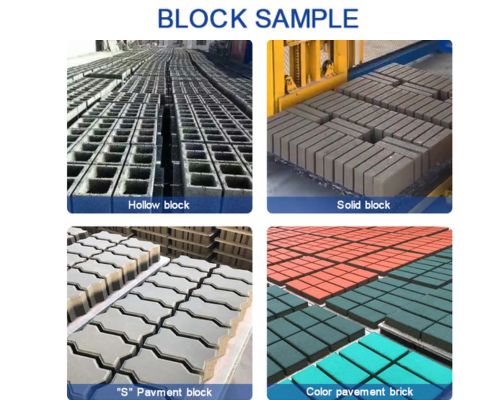
YG concrete brick machines produce many types of products. You can make hollow blocks, solid bricks, paving stones, and curb stones by changing the mold. This flexibility makes the machine useful for different construction projects.
Concrete Brick Making Machine Specifications-OEM Support
Choosing the right block brick machine starts with understanding the key technical parameters. Here are the most important specifications for a typical automatic model :
| Block Name | Size (L*W*H)mm | Molding Cycle | QTY/Mould | QTY/hour | Qty/8hr |
| Hollow block | 400*200*200 | 15-20s | 6pcs | 1080-1440pcs | 8640-11520pcs |
| Hollow block | 400*150*200 | 15-20s | 7pcs | 1260-1680pcs | 10080-13440pcs |
| Hollow block | 400*100*200 | 15-20s | 11pcs | 1980-3640pcs | 15840-21120pcs |
| Porous block | 240*115*90 | 15-20s | 15pcs | 2700-3600pcs | 21600-28800pcs |
| Standard brick | 240*115*53 | 15-17s | 30pcs | 6300-7200pcs | 50400-57600pcs |
| Paver | 225*112.5*60 | 20-25s | 15pcs | 2160-2700pcs | 17280-21600pcs |
The molding cycle is important because shorter cycles mean more output. A machine with 15-second cycle can produce more than one with 20-second cycle. The exciting force affects brick strength. Higher vibration force creates denser, stronger bricks. The pallet size limits the maximum brick size and number of bricks per mould.
For a concrete brick machine for sale, check the power requirement. Standard models use 36kW, while larger models need 86kW or more . Make sure your site has enough power capacity.
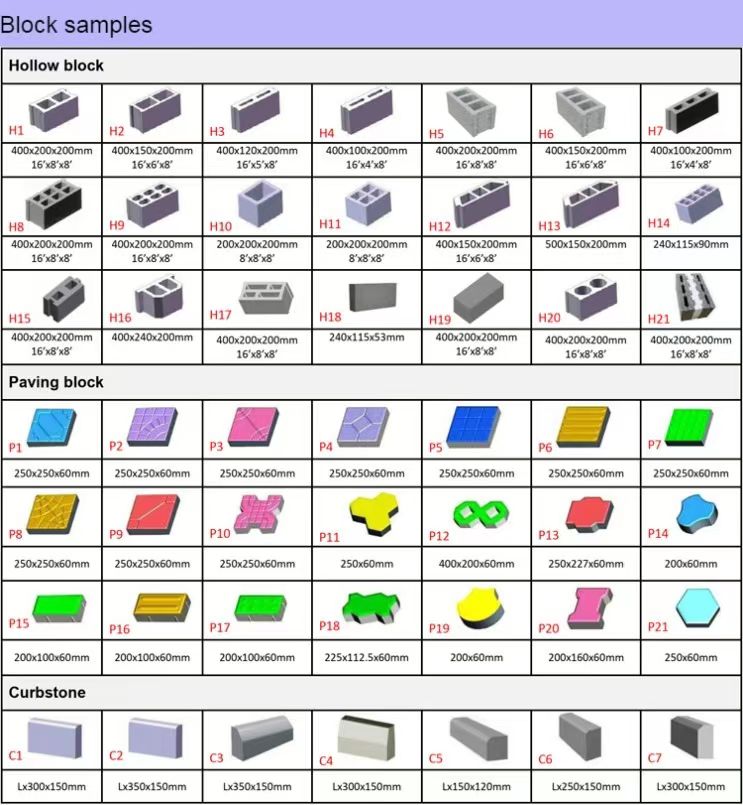
Automatic & Semi-Automatic Concrete Brick Making Machine Brick Making Machines
There are two main types of block brick machine. Each serves different needs.
1. Automatic Brick Laying Machine
This type uses a PLC control system for full automation. The machine handles material feeding, molding, and brick ejection automatically. It requires only 2-3 operators. Production capacity is high, making it suitable for commercial brick factories.
4 features of automatic machines:
- Siemens or Mitsubishi PLC control with touch screen
- Hydraulic system from brands like Yuken or Italy
- Dual vibration motors for better compaction
- Production of 5000-57000 bricks per 8-hour shift
2. Semi Auto Brick Making Machine
This type needs more manual labor. Workers feed materials and remove finished bricks manually. The machine handles the molding and vibration functions. It costs less than fully automatic models.
4 features of semi-automatic machines:
- Lower initial investment
- Suitable for small projects and new businesses
- Still produces quality bricks with proper operation
- Easy to maintain
For large construction projects or commercial sales, the automatic concrete block brick making machine is the better choice. It offers higher output and lower labor costs. For smaller operations, a semi-automatic machine provides good value.
5 Main Applications of Concrete Brick Making Machines
Block brick machines serve many construction and infrastructure projects. Here are the most common applications:
- Residential Construction – Build walls for houses and apartment buildings. Hollow blocks are popular for load-bearing walls because they are strong and lightweight.
- Commercial Buildings – Produce bricks for office buildings, shopping centers, and schools. Consistent quality ensures strong structures.
- Road and Pavement Projects – Make paving stones for sidewalks, driveways, and plazas. The paver molds can produce interlocking stones that are durable and easy to install.
- Infrastructure Projects – Supply bricks for bridges, tunnels, and drainage systems. The machine can produce special shapes like curb stones.
- Government Housing Programs – Large-scale affordable housing projects need millions of bricks. An automatic concrete brick machine can meet these volumes.
The concrete brick making machine also works in remote locations. You can set up a small production line at the construction site. This saves transportation costs and ensures bricks are available when needed.
7 Features of Concrete Brick Machine for Sale
A reliable concrete brick machine should have these important features:
- PLC Control System – Allows easy operation and monitoring. Operators can set parameters, track production, and troubleshoot through the touch screen.
- High Vibration Force – 70-120KN vibration force ensures good compaction. This produces dense bricks with low water absorption.
- Hydraulic System – Provides the pressing force. Quality hydraulic components from brands like Yuken or Italy ensure stable operation and long service life.
- Emergency Stop Function – Stops the machine instantly in case of problems. This protects workers and equipment.
- Mold Clamp Sensors – Detect proper mold closing before operation. This prevents damage from incomplete molding.
- Automatic Over-temperature Shutdown – Prevents hydraulic system overheating during long shifts.
- Anti-leakage Hydraulic System – Reduces oil leakage and environmental risk.
Safety features are important for long-term operation. Emergency stop buttons, pressure sensors, and automatic shutdown systems prevent accidents and equipment damage.
Raw Materials and Production Process
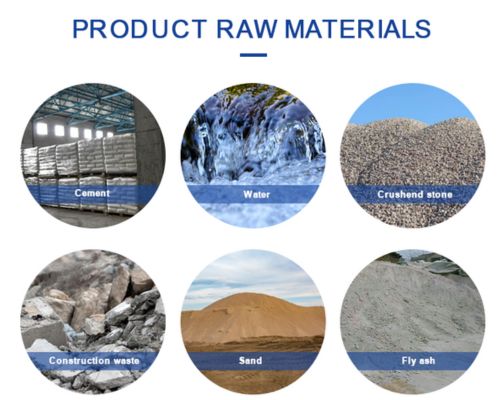
Concrete brick making uses simple raw materials that are available everywhere. The main ingredients are:
- Cement – Acts as the binder. Portland cement is the most common type.
- Sand – Fine aggregate that fills spaces between larger particles.
- Aggregate – Crushed stone or gravel provides strength to the brick.
- Water – Activates the cement and helps with compaction.
- Optional Additives – Fly ash, slag, or color pigments can be added for specific properties.
The production process has four main steps:
- Mixing – Raw materials are measured and mixed in a concrete mixer until uniform.
- Molding – The mix is fed into the mold. The machine vibrates and presses the mix to form a brick.
- Curing – Bricks are kept in a moist environment for 7-28 days to gain strength.
- Stacking – Once cured, bricks are stacked and stored for shipment.
Bricks produced by a concrete brick making machine typically reach strength grades of MU15 to MU40. This makes them suitable for both load-bearing and non-load-bearing walls.
Frequently Asked Questions About Concrete Brick Making Machine
1. What is a concrete brick machine?
A concrete brick machine is equipment that produces bricks from cement, sand, and aggregate. It uses vibration and hydraulic pressure to compact materials into strong, uniform bricks of various sizes and types.
2. How many bricks can a block brick machine produce per day?
Production depends on the model. A standard automatic machine can produce 10,000 to 57,000 bricks per 8-hour shift. Check the specific output table for the machine model you are considering .
3. What types of bricks can a concrete brick machine produce?
By changing molds, one machine can produce hollow blocks, solid bricks, paving stones, curb stones, and interlocking blocks. This makes it very versatile for different projects .
4. What is the difference between automatic and semi-automatic concrete brick making machines?
Automatic machines use PLC control systems and need fewer workers. They produce more bricks per hour. Semi-automatic machines need more manual labor but cost less upfront. Choose based on your budget and production needs.
5. Do you provide after-sales support?
Yes. We provide installation guidance, operator training, and technical support. We also offer spare parts supply. Most machines come with a 1-year warranty. Our team is available for remote support via video and online communication.