Many people use the words “concrete pump” and “concrete truck” the same way. But they are not the same machine. A concrete truck is a mixer truck. It carries wet concrete from the plant to your job site. Some people call it a ready-mix truck. It has a big rotating drum on the back. The drum keeps the concrete from hardening during the drive.
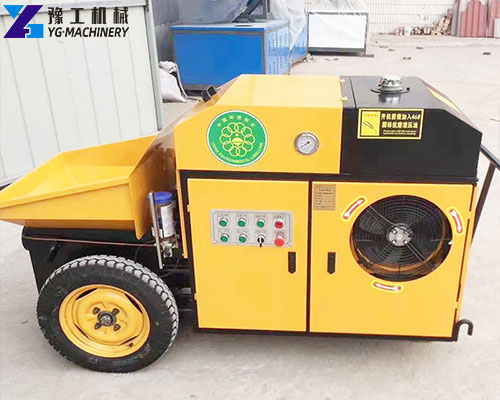
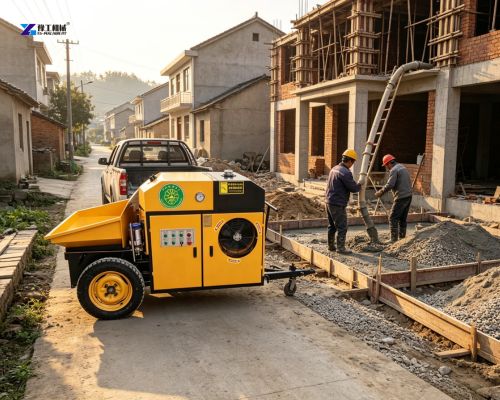
A towable concrete pump is a different machine. It pushes concrete through pipes and hoses. This lets you place concrete exactly where you need it. You can pump concrete over walls, across ditches, or up to high floors. A concrete pump does not mix the concrete. It only moves it from the truck to the pour area .
Here is the key point: a concrete truck delivers concrete to your site. A towable concrete pump places concrete into your forms.
Get Free Equipment Selection Advice: Towable Concrete Pump or Mixer Truck
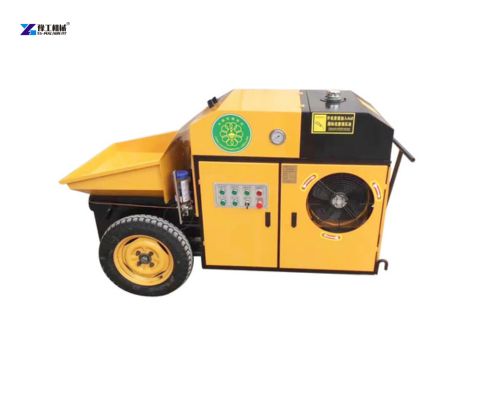
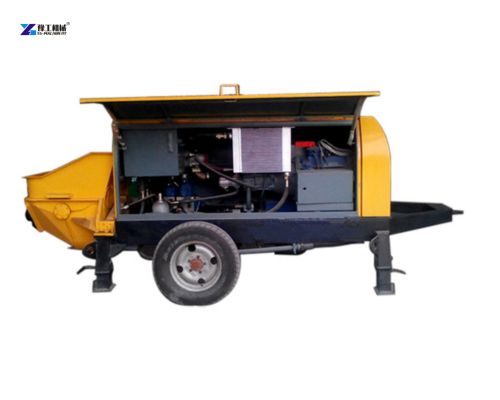
When Does a Concrete Truck Make Sense?
A concrete truck works well for simple pours. If your site is wide open and flat, a truck can pour directly from its chute. This works for slabs, sidewalks, and driveways.
However, a concrete truck has limits:
- Short reach. The chute on a truck only extends a few meters. You cannot reach far or high.
- Access issues. The truck is big and heavy. It needs a solid road to drive on.
- Slow placement. The driver controls the chute. Pouring takes time and labor.
Some truck mixers can carry a small conveyor or pump. But most standard trucks just dump concrete into wheelbarrows. This adds labor and slows you down .
Why a Towable Concrete Pump Is Often the Better Choice
A towable concrete pump solves the problems that a truck creates. It gives you power and precision. You can pump concrete across long distances. You can reach high floors. You can work in tight spaces .
Here is what a towable concrete pump can do:
- Horizontal distance: 100 to 300 meters or more
- Vertical height: 10 stories or higher
- Output: 30 to 80 cubic meters per hour
Reach and Access
A towable concrete pump can place concrete anywhere. You can run pipes through narrow hallways. You can pump over obstacles like walls or piles of materials. You can even pump into basements or inside buildings.
Speed and Efficiency
A towable concrete pump pours concrete fast. It keeps a steady flow. This reduces the risk of cold joints. Cold joints happen when concrete hardens before the next batch arrives. With a pump, you finish big pours in one day instead of two or three .
Cost Control
Many contractors think a towable concrete pump is expensive. But it can actually save you money. Here is why:
- Less labor. You do not need as many workers to move concrete.
- Faster pours. You finish jobs sooner and move to the next one.
- Less waste. Pumping places concrete accurately. You do not spill as much.
For small and medium projects, a trailer-mounted pump is a smart investment. You can recover the cost in one or two jobs .
Download Free Concrete Pumping Cost Saving Calculator
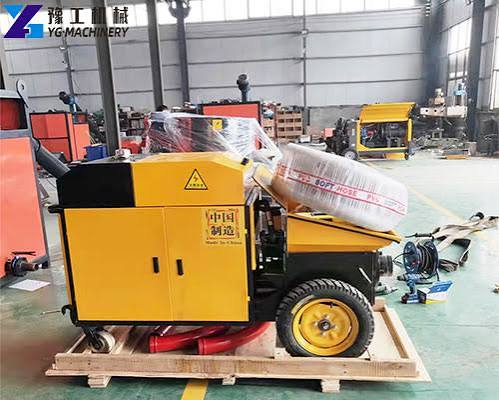
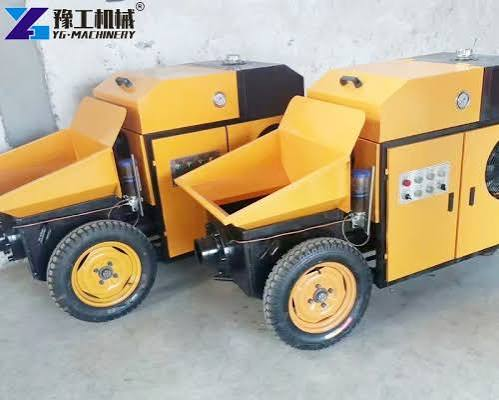
Two Main Types of Towable Concrete Pumps
If you decide a towable concrete pump is right for you, you have two main options. Each fits different job types.
Boom Pump (Truck-Mounted Pump)
A boom pump has a long robotic arm. The arm unfolds to reach high or far. You control the arm with a remote. This is very precise.
- Best for: High-rise buildings, large commercial projects, bridges
- Reach: Up to 60 meters or more
- Advantage: Fast setup, can reach over obstacles
Trailer-Mounted Towable Concrete Pump (Line Pump)
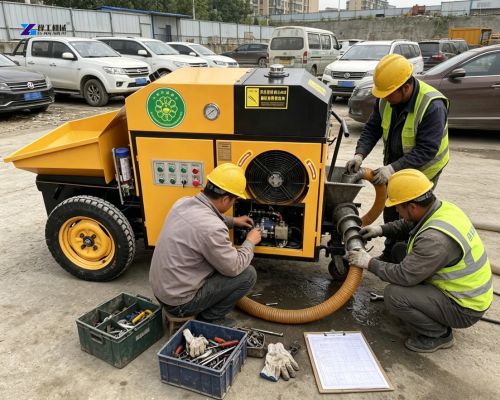
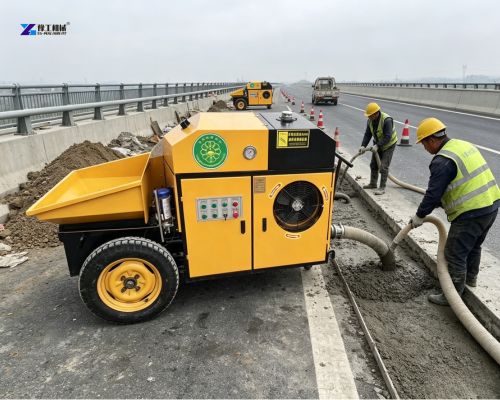
A trailer pump sits on wheels. You tow it behind a truck. You attach steel pipes and rubber hoses to the pump. You run the pipes to where you need the concrete.
- Best for: Small to medium projects, tight spaces, indoor work
- Reach: Over 300 meters horizontally, over 100 meters vertically
- Advantage: Cheaper than a boom pump, fits in small spaces
Request Quotation for Boom Pumps & Trailer Line Pumps
What About Small Projects? Consider a Small Cement Pump
You do not always need a big pump. For small jobs, a small cement pump is perfect. These machines are light and compact. They can fit through doorways. They work well for:
A small cement pump is easy to move. One person can set it up. It saves you from carrying heavy wheelbarrows. This type of pump is very popular for contractors who do residential work.
The Portable Mini Towable Concrete Pump: Mobility Matters
Sometimes you need to move the pump around the site. A portable mini concrete pump is the answer. You can tow it or move it manually. It is small and lightweight.
Why choose a portable mini concrete pump?
- It works in tight backyards and basements.
- It is easy to relocate as the job moves.
- It costs less to buy and maintain.
- It runs on electricity or a small diesel engine .
This type of pump is great for smaller crews. It does not require a lot of space or special training.
Mini Concrete Mixer with Pump: All-in-One Solution
What if you do not have a concrete truck on site? You can use a mini concrete mixer with pump. This machine mixes the concrete on site and pumps it directly. You do not need a separate truck.
Advantages of a mini concrete mixer with pump:
- You can make concrete right where you need it.
- You control the quality and mix design.
- It is self-contained and easy to use.
This is a good choice for remote sites. It also works well for small batches. If you only need a few cubic meters, you do not want to order a full truck.
Book On-site Test Run for Small & Mini Concrete Pumps
Towable Concrete Pump vs Concrete Truck: Side-by-Side Comparison
Let us look at the key differences.
| Primary job | Place concrete at the pour point | Transport concrete to the site |
| Reach | Long and high (up to 300m) | Short (only chute length) |
| Access needed | Pipes can fit anywhere | Needs wide, solid road |
| Labor required | Less labor | More labor (wheelbarrows) |
| Best for | Complex pours, high places, tight spots | Simple pours, flat open areas |
| Cost to buy | Varies (trailer pumps are cheaper) | High |
Key Factors to Consider Before You Choose
Before you pick a machine, ask yourself these questions. Your answers will guide your choice.
1. How far is the pour from the truck?
If the truck cannot get close, you need a pump. The pump pipes will bridge the gap.
2. How high do you need to pour?
For anything above ground level, a pump is usually needed. Concrete trucks cannot pour upward.
3. What is your budget?
If you have many jobs, buying a trailer pump saves money over time. Renting a pump for one job is also a good option.
4. What is your job site like?
Is the site crowded? Are there obstacles? Can a big truck fit inside? If the site is tight, you need a portable mini concrete pump or a line pump.
5. What is your concrete mix?
Some mixes are harder to pump. Make sure your pump can handle the aggregate size and slump. Most standard pumps work with typical concrete mixes .
Book Free On-site Survey by Our Engineers
Making the Smart Choice
Choosing between a towable concrete pump and a concrete truck is about matching the tool to the job. For simple, ground-level pours with easy access, a truck works fine. But for most projects, a concrete pump offers better speed, reach, and cost control.
A small cement pump or a portable mini towable concrete pump can be a great investment for smaller contractors. These machines give you the power of pumping without the big price tag.
If you often work in city areas, on residential jobs, or on projects with obstacles, a pump is the right choice. It pays for itself in saved labor and faster job completion.