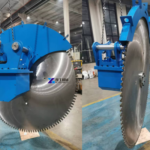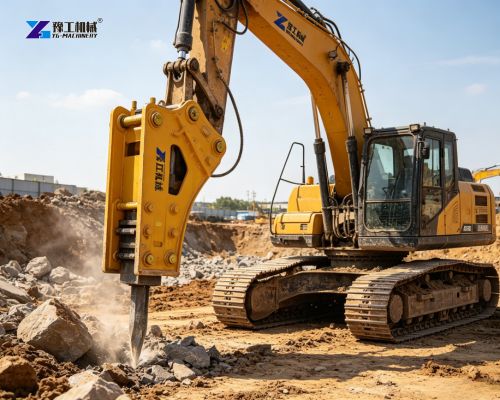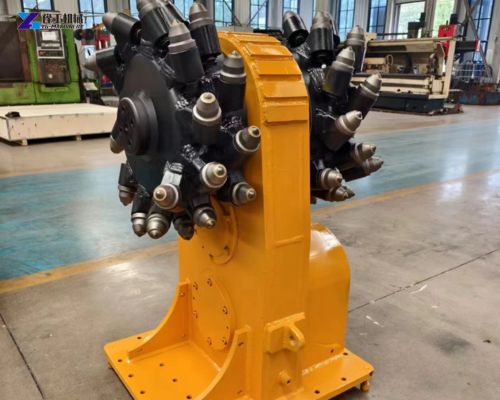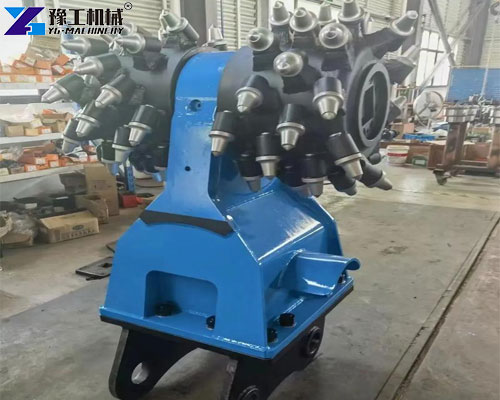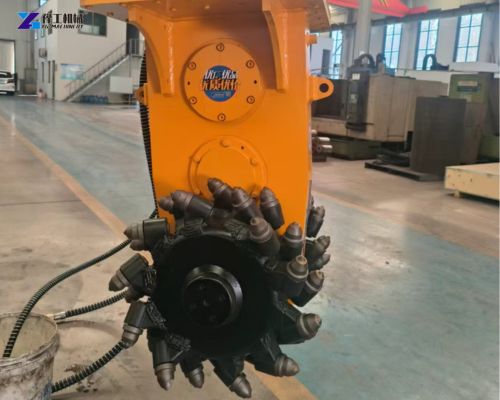
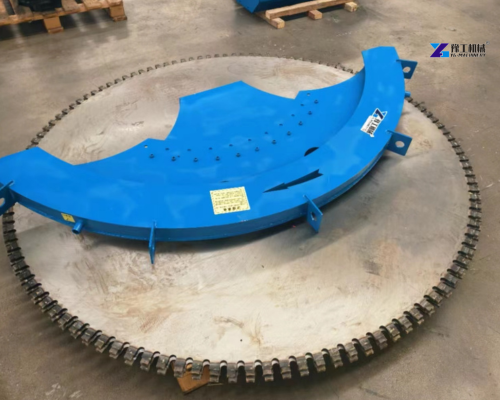
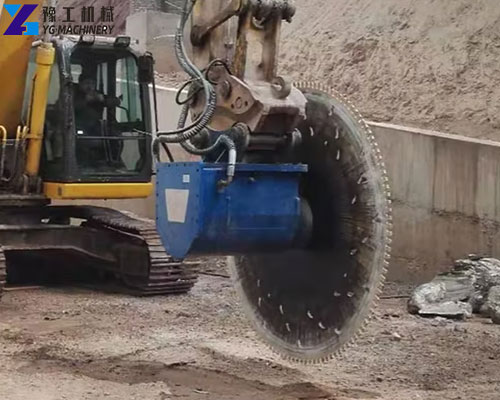
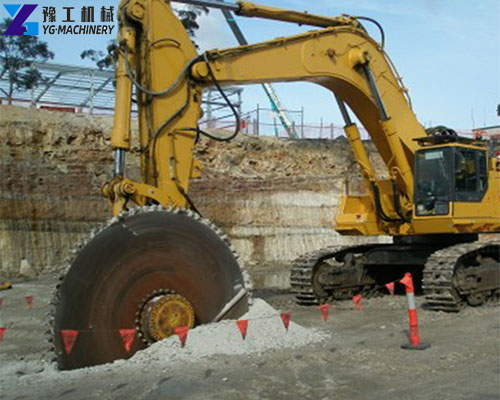
An excavator rock saw attachment is a hydraulic-powered cutting tool mounted on an excavator arm. It uses a diamond-tipped or tungsten blade to cut through hard materials like rock, granite, concrete, and asphalt. The attachment is driven by the excavator’s hydraulic system. This gives it strong cutting force and precise control.
The excavator mounted rock saw turns a standard excavator into a high-performance cutting machine. It works for mining, tunnel projects, road construction, and urban demolition.
Key components include:
- Hydraulic motor (imported high-quality brands)
- Diamond saw blade (artificial diamond material)
- Spring steel base
- Protective cover for safety
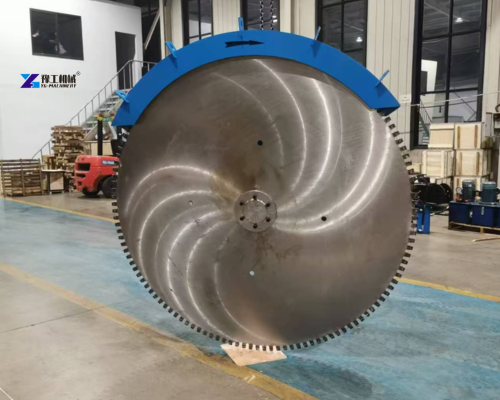
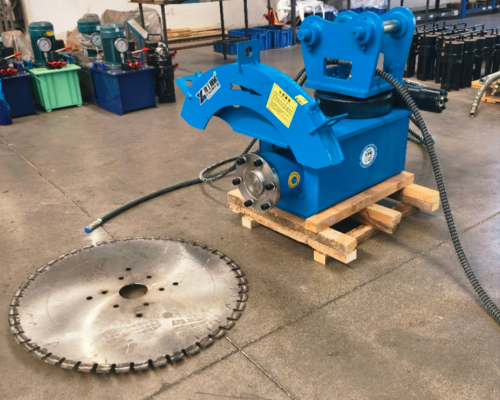
YG Excavator Rock Saw Attachment Specifications-Customized Support
Understanding the specifications helps you choose the right model. Below are typical parameters for different excavator sizes:
| Model | YG-CF1 | YG-CF2 | YG-CF3 | YG-CF4 |
| Suitable for excavators | 2~4T | 6~9T | 10~18T | 20~30T |
| Saw Disc Diameter | 0.4~0.8M | 1.2~1.6M | 1.8~2.2M | 2~2.8M |
| Cutting width | 5mm | 9mm | 14mm | 20mm |
| Cutting depth | ≤400mm | ≤800mm | ≤1100mm | ≤1400mm |
| Pressure | 30Mpa | 30Mpa | 30Mpa | 30Mpa |
| Flow | 30L/min | 80L/min | 120L/min | 190L/min |
The system pressure is typically 30MPa. Cutting width ranges from 5mm to 20mm depending on the blade.
Get a Quote for Your Excavator Size
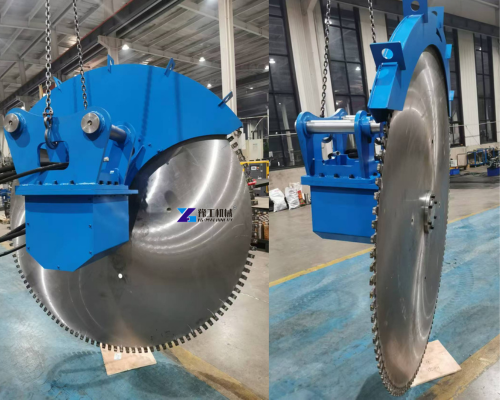
5 Main Applications of the Excavator Rock Saw
The excavator rock saw attachment is used across many industries. Here are the most common applications:
1. Tunnel Excavation
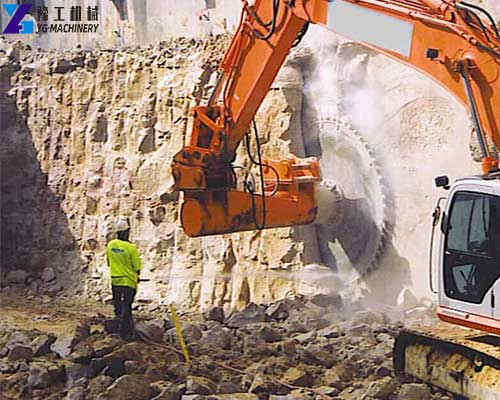
Rock saws cut through hard rock layers on tunnel faces. They create smooth, stable walls. This reduces the risk of collapse compared to blasting.
2. Urban Construction
In cities, noise and vibration are major concerns. The excavator mounted rock saw produces less vibration and noise than breakers or blasting. It is ideal for projects near hospitals, schools, or residential areas.
3. Quarrying and Mining
The attachment cuts granite, basalt, and bluestone with high precision. It reduces material waste and improves stone quality.
4. Trenching for Utilities
For pipelines, cables, or drainage systems, the rock saw cuts precise trenches in rocky ground. This speeds up installation and reduces manual labor.
5. Slope Stabilization
Road construction projects use rock saws to cut slopes. The clean cuts prevent overbreak and improve worker safety.
Explosive Blasting vs. Rock Saw Cutting
Many contractors ask: Should I use blasting or a rock saw? Here is a clear comparison:
| Factor | Explosive Blasting | Excavator Rock Saw |
| Vibration Level | 25~40 mm/s | ~8 mm/s |
| Dust Production | High (baseline) | 92% less dust |
| Setup Time | 4~8 hours | 15~30 minutes |
| Precision | Unpredictable fractures | ±2 mm tolerance |
| Safety Clearance | 12~48 hours delay | No clearance needed |
| Project Timeline | Standard | 17~23 days faster |
4 advantages of the rock saw:
- Safer: No explosives means no blast permits or delays.
- Cleaner: Less dust and noise pollution.
- More precise: You cut exactly where you want.
- Faster setup: Start cutting within 30 minutes of arrival.
For urban projects or sensitive environments, the excavator rock saw attachment is clearly the better choice.
How to Choose the Best Rock Saw for Your Project
Selecting the right excavator mounted rock saw requires careful thought. Use this guide to make the best decision:
1. Match Your Excavator Size
Check your excavator’s weight and hydraulic flow. Use the specification table above to find the right model. A mismatched attachment will reduce performance or damage your machine.
2. Consider the Rock Type
- Granite, basalt (Mohs 6-7): Use diamond-tipped blades for hard rock.
- Limestone, sandstone (Mohs 3-5): Tungsten blades work well and cost less.
- Reinforced concrete: Diamond blades are the best choice.
3. Check Cutting Depth Requirements
How deep do you need to cut? The YG-CF4 model cuts up to 1400mm deep. For shallower cuts (≤400mm), a smaller model like YG-CF1 will save money.
4. Look for Safety Features
Choose attachments with protective covers and low-vibration design. This protects both the operator and the equipment.
5. Verify Blade Quality
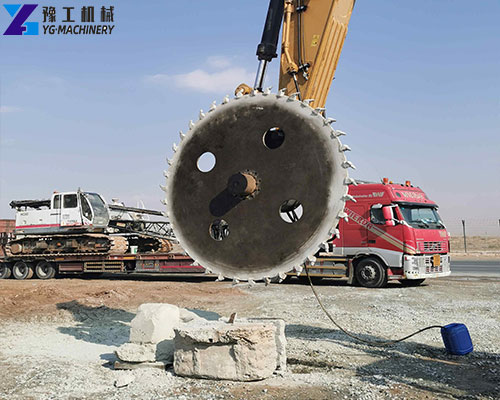
The blade is the core of the excavator rock saw attachment. Look for blades with artificial diamond segments. They last longer and cut faster.
6 Features That Make the Excavator Rock Saw Attachment Reliable
The excavator rock saw attachment offers several practical features:
- Strong Cutting Power: Easily cuts granite, bluestone, and steel plates.
- Energy Efficient: Hydraulic drive uses less fuel than electric saws.
- Easy Installation: Quick-connect systems allow attachment changes in under 15 minutes.
- Adaptable: Customize blade sizes for different excavator models.
- Low Maintenance: Simple structure and easy blade replacement reduce downtime.
- 360° Rotation Option: Some models offer full rotation for complex cutting angles.
Why Choose an Excavator Rock Saw Over Traditional Methods?
Traditional methods like pneumatic hammers cut only 10-12 cubic meters per day. A rock saw handles 18-22 cubic meters in the same 8-hour shift. That is nearly double the output.
The excavator mounted rock saw also reduces labor costs. A 3-person crew with a rock saw can replace an 8-10 person blasting team. This saves money and reduces on-site risks.
Ask About Custom Blade Options
Frequently Asked Questions About Excavator Rock Saw Attachment
A: Check three things: your excavator weight (2-4T, 6-9T, 10-18T, or 20-30T), the material you cut (diamond blades for granite/basalt, tungsten for limestone), and required cutting depth. Share these details with YG for a proper match.
A: Yes. Models with 360° rotation allow both vertical and horizontal cutting. This is useful for slope work, trench walls, and tunnel projects. Besides, our excavator rock saw attachment rotary function is included.
A: Yes. Special diamond blades are designed for reinforced concrete. They cut through both concrete and rebar. Tell YG manufacturer you need blades for “concrete with rebar” when ordering.
A: The steel blade body lasts for years. Only the diamond cutting segments wear out and can be re-welded. Check picks/teeth daily and replace them when worn to maintain cutting efficiency.
A: Daily blade and hose inspection; re-tighten bolts after first hour; grease every 8 hours; change gearbox oil after first 15-20 hours, then every 800-1000 hours; replace worn blades promptly.