When you plan a big construction or mining project, you must choose the right drilling method. Selecting between rotary piling rigs and DTH drilling rigs can change your project speed and cost. Both machines create holes in the ground, but they work in very different ways. This guide helps you understand their features, technical parameters, and applications so you can make the right decision.
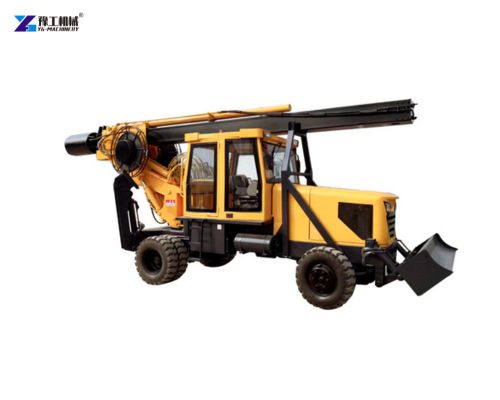
High-Torque Rotary Pilling Rigs For Large Piles (Up To 240kN.m Torque and 80m Depth)
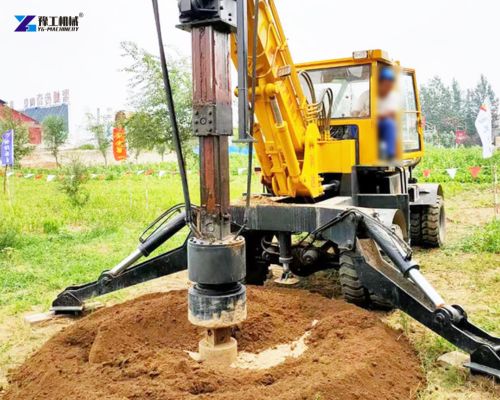
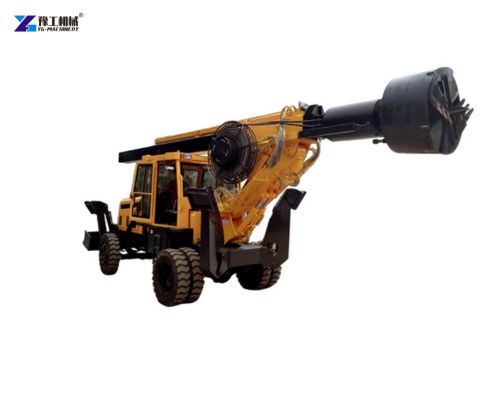
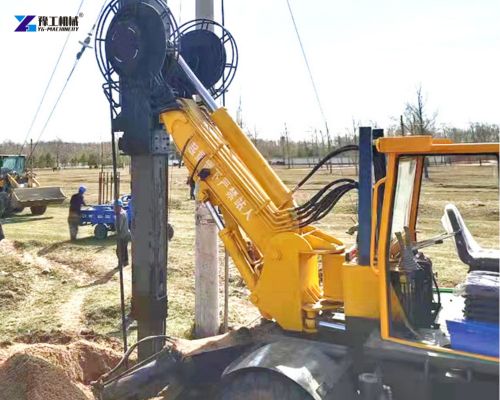
A rotary piling rig machine uses a large hydraulic power head to drive a heavy drill pipe and a bucket. The machine rotates the bucket to cut soil or rock. When the bucket fills up, the operator lifts it to dump the soil. This cycle repeats until the hole reaches the design depth.
You can configure our premium rotary pilling equipment in different sizes depending on your target project scale:
- Small Models: They offer 100-120kN.m torque and 100-170kW engine power. They drill 0.5-1.5m diameters up to 45m deep for slope protection and municipal jobs.
- Medium Models: They provide 180kN.m torque and 200kW power. They drill 0.8-1.8m diameters down to 60m deep, which fits bridge piles perfectly.
- Large Models: They deliver over 240kN.m torque and 300kW engine power. They easily handle 1.0-2.5m diameters and 80m depths for massive infrastructure.
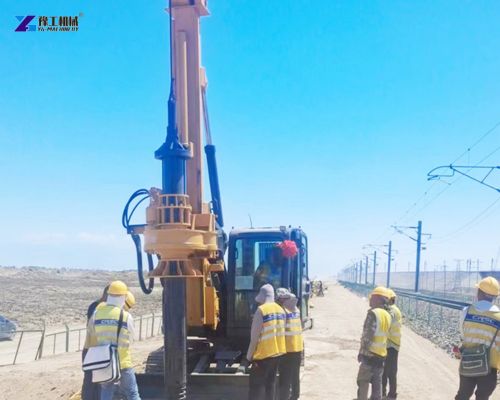
These powerful machines work efficiently in clay, silt, sand, gravel, and weathered rock. They excel in large-diameter foundation construction. Engineers choose them for big projects like sea-crossing bridges, urban highway overpasses, high-speed railways, commercial skyscrapers, and solar panel foundations.
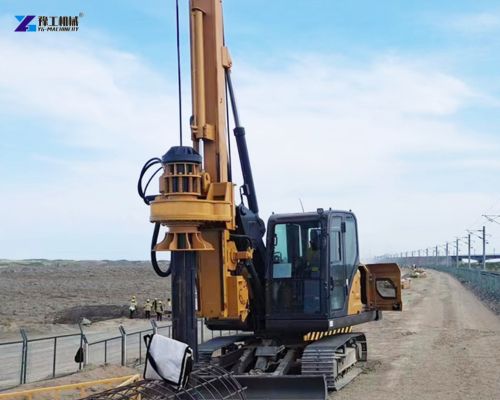
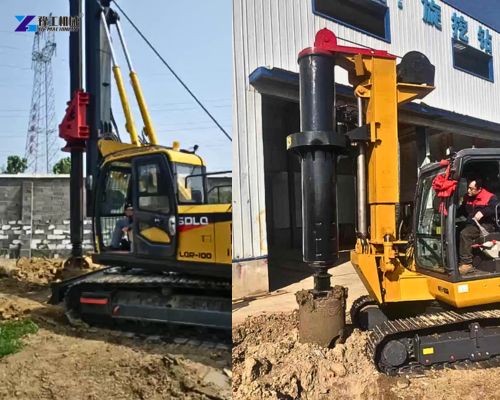
Hydraulic Rotary Rig Machine Parameters
To help construction engineers choose the right model, we list the official parameters of our hydraulic rotary rig machine below. These real specifications show why our machine can handle tough tasks in Saudi Arabia easily.
| Dimensions (mm) | 7900*2260*3100 |
| Vehicle mass (kg) | 8000 |
| Wheelbase (mm) | 3150 |
| Wheelbase (mm) | Front 1400 / After 1060 |
| Drilling depth (m) | 13 |
| Drilling diameter (mm) | 600-1600 |
| Rotation angle | 180 degree |
| Walking speed (km/h) | 50 |
| Gear pump model | CBJT2080 |
| Hydraulic system working pressure (Mpa) | 20-25 |
| Hydraulic system displacement (ml/r) | 80 |
| Engine model | 4108 |
| Engine power (kW) | 88 |
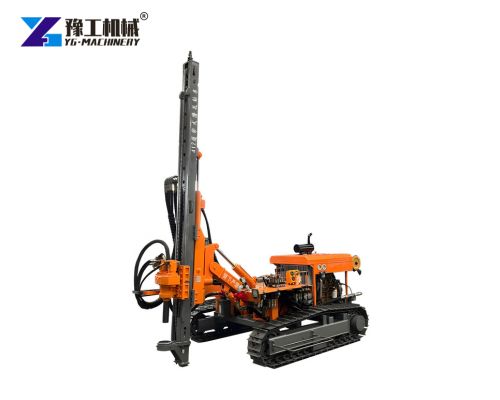
High-Speed Down The Hole Drilling Machine For Hard Rock (1.75m/min Drilling Speed)
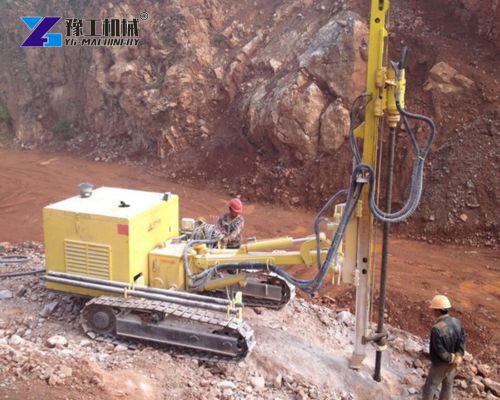
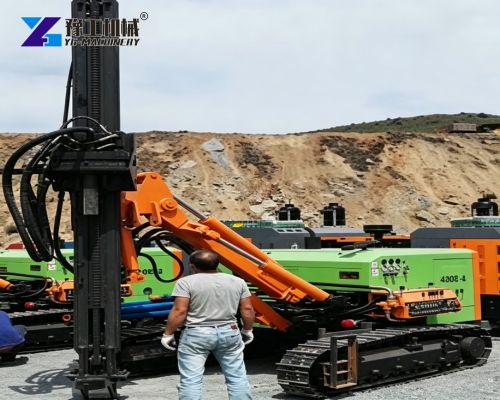
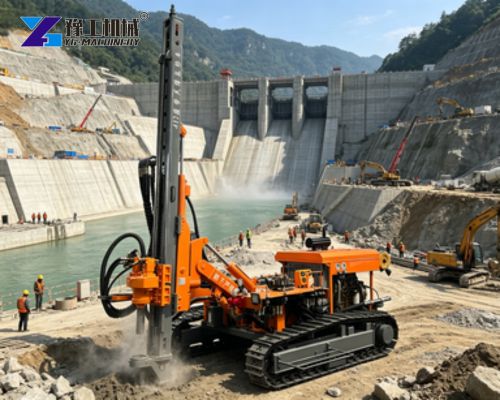
A down the hole drilling machine works differently than a rotary drilling rig machine. It relies on an air impactor at the bottom of the hole. The pneumatic impactor strikes the rock directly at high frequency, while the top power head provides rotation. This method crushes hard stone easily.
Our modern DTH drilling rig models feature excellent field parameters for mining operations:
- Hole Diameter Range: φ90mm to 165mm.
- Max Drilling Depth: 30m to 50m.
- Fast Drilling Speed: Up to 1.75m/min in medium-hard rock conditions.
- Strong Rotation Torque: 3000N.m to 3680N.m with 60kW to 80kW engine support.
- Excellent Mobility: High-quality crawler chassis moves at 2.5 to 3.75km/h and climbs 28-degree slopes.
This specialized machinery splits into two main types: split types and integrated types. Split models connect a wheel-type air compressor to the main rig body. Integrated models carry their own air compressor on one chassis. Operators use this robust dth rig machine for open-pit mining, metallurgy, building material quarries, water conservancy blasting holes, and national defense construction.
YG DTH Borewell Machine Specification
| Model | YGS100A | YGS153 | YGS180 | YGS300 | YGS350 |
| Total weight | 5.95T | 3.8T | 6.3T | 6.8T | 8T |
| Walking speed | 2.5km/h | 2.5km/h | 2.5km/h | 2.2/3.8km/h | 4km/h 2km/h |
| Diesel tank capacity | 85L | 70L | 85L | 85L | 225L |
| Shipping size | 6500*2100*2400mm | 4640*1980*2260mm | 6600*2110*2500mm | 6600*2220*2600mm | 7600*2350*2800mm |
| Drilling hole diameter | 90-146mm | 83-130mm | 90-146mm | 90-152mm | 90-165mm |
| Power configuration | YCD4R22T-80 | YC2108 33kw/2400rpm | YCD4R22T-80 55kw | YC4DK80-T302 | YC4DK100-T304 73.5kw/2200rpm |
| Highest horizontal hole height | 3.2m | 2.8m | 3.6m | 3.25m | 3.5m |
Rotary Pilling Rigs vs DTH Drilling Rigs: 5 Key Differences
To give you a clear comparison, we highlight the technical differences between rotary pilling rigs and DTH rigs across four operational areas:
Hole Dimensions and Scale
A large rotary pilling rig machine focuses on creating wide holes. It achieves a maximum diameter of 2.5 meters and goes down to 80 meters. In contrast, a down the hole drilling machine focuses on smaller, precise blasting holes. It maintains a maximum hole diameter of 165 mm and depths around 50 meters.
Working Mechanics and Tools
The rotary drilling equipment relies on high rotational torque and downward hydraulic pressure to scoop out soil. It uses diverse tools like friction kelly bars, interlocking kelly bars, augers, core barrels, and cleaning buckets. The DTH drilling rig relies on a high-pressure air compressor to drive the hammer head. It utilizes robust drill rods and button bits to smash hard boulders.
Geological Conditions
Soil conditions decide your machine choice. Rotary piling machines handle soft soil, mud, loose sand, and medium-hard rock. If your job site consists of extremely solid granite, quartz, or underwater reef rock, a compact DTH rig machine will offer a much faster penetration rate.
Supporting Site Equipment
Rotary rig machine operations often require mud circulation systems, cranes to lift heavy steel reinforcement cages, and concrete pumps to fill the foundation hole. DTH borewell rig operations require a reliable air compressor and an optional dust collector system to maintain a clean working environment.
How to Select the Right Rig for Your Next Project
You can follow these three simple steps to find the perfect machinery for your project needs:
- Check your soil type: Pick a rotary unit if your ground contains clay, sand, or gravel. Choose a DTH unit if your site contains solid, hard bedrock.
- Measure your hole size: If you need a foundation pile wider than 0.5 meters, go for a rotary model. If you need a blasting hole under 200mm, go for a DTH model.
- Verify site space: Crawler DTH units move easily around tight mountain paths and open-pit mines. Large rotary units need stable, wide flat ground to set up their tall masts safely.
YG factory manufactures both machine types with strict quality control. We supply heavy-duty crawler steel bases, durable hydraulic valves, and reinforced steel masts to guarantee a long machine lifespan.