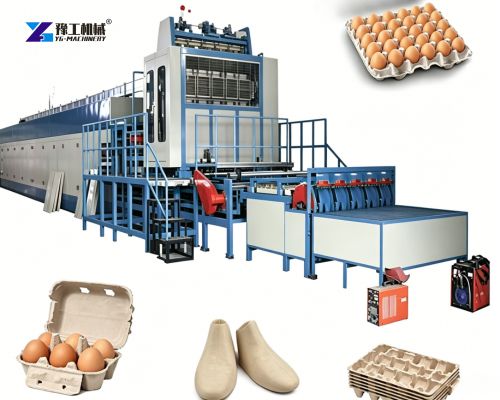
When you buy industrial equipment, clear technical data helps you make the right choice. Our machines are designed for medium-sized paper pulp molding projects. Below are the standard specifications of our hot-selling models:
| Model | YG-1000-3X1 | YG-1500-4X1 | YG-2500-3X4 | YG-3000-4X4 | YG-4000-4X8 | YG-5000-5X8 | YG-7000-6X8 |
| Capacity/hour | 1000pcs/h | 1500pcs/h | 2500pcs/h | 3000pcs/h | 4000pcs/h | 5000pcs/h | 7000pcs/h |
| Power/hour | 38kw | 38kw | 55kw | 60kw | 95kw | 95kw | 120kw |
| Voltage | 380V50Hz | 380V50Hz | 380V50Hz | 380V50Hz | 380V50Hz | 380V50Hz | 380V50Hz |
| Weight | 2500kg | 3000kg | 4000kg | 4800kg | 7000kg | 8000kg | 10000kg |
| Dimensions (main machine) | 2600*2200*1900mm | 2800*2200*1900mm | 2900*1800*1800mm | 3250*1800*1800mm | 3250*2300*2500mm | 3700*2300*2500mm | 3200*2300*2500mm |
| Paper consumption/hour | 80kg | 120kg | 200kg | 240kg | 320kg | 400kg | 480kg |
| Water consumption/hour | 160kg | 240kg | 400kg | 480kg | 640kg | 800kg | 960kg |
| Drying | Dry naturally | Dry naturally | Multi-layer drying | Multi-layer drying | Multi-layer drying | Multi-layer drying | Multi-layer drying |
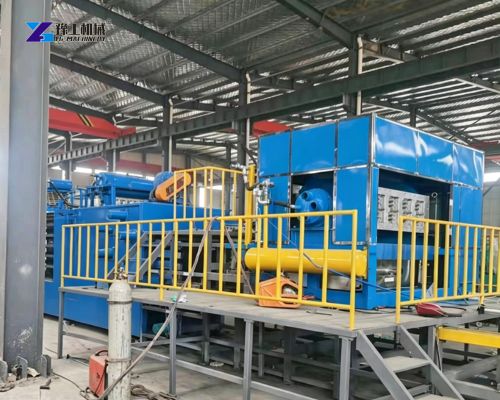
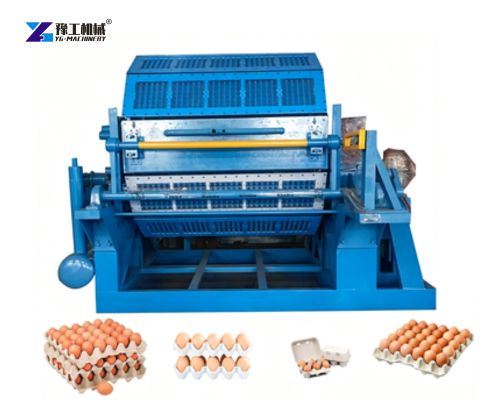
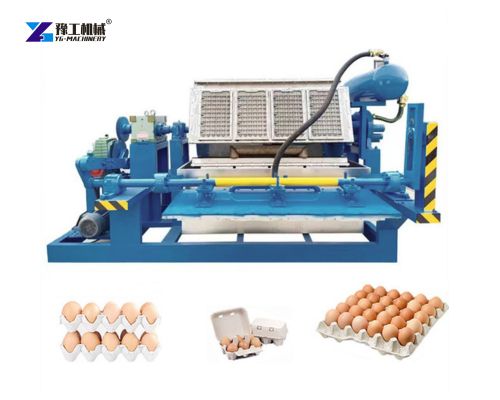
Every semi automatic egg tray machine comes with a high-efficiency hydraulic pulper, a standard pulp pump, and a vacuum pump system. The main framework uses heavy-duty channel steel with anti-corrosion painting to ensure a working life of over 10 years in wet environments.
Get A Detailed Technical Catalog & Quotation Now
How To Choose Molds For Semi Automatic Egg Tray Making Machine
The heart of a semi automatic egg tray making machine is the mold system. The molds decide what kind of final trays you can get. We provide two types of mold materials: plastic molds and aluminum molds.
Plastic molds are cheaper and lightweight. They are perfect for beginners who want to test the local market. Aluminum molds are much stronger. They can last for 5 to 8 years without deformation. If you want to produce premium packaging or work in hot weather, aluminum molds are the best choice.
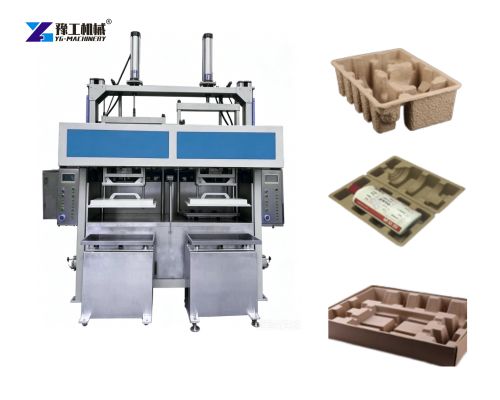
Our machine can produce different trays just by changing the molds on the forming platens:
- Standard 30-hole chicken egg trays
- 6-count, 10-count, and 12-count retail egg cartons
- Fruit protective trays for apples, pears, and oranges
- Industrial buffer packaging for electronic products and wine bottles
Our engineering team can customize the mold dimensions according to your local market eggs, including small, medium, large, and extra-large sizes.
How To Start Egg Tray Business?
Starting a pulp molding factory requires clear steps. Many people think it is too difficult, but it is simple if you follow a correct guide. Here are the 5 essential steps to start your production:
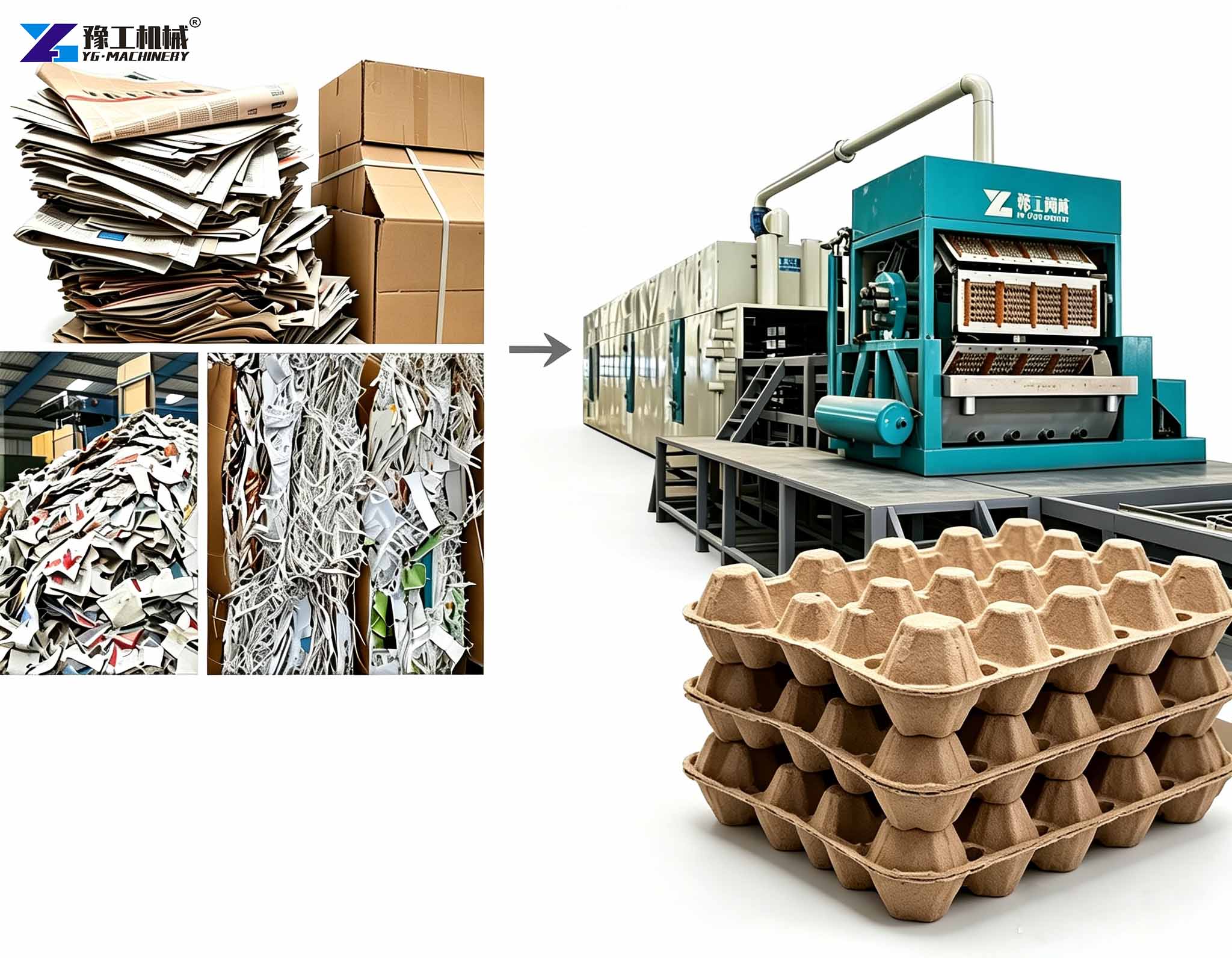
- Step 1: Secure Raw Material Supply. You need a stable source of cheap paper waste. Good sources include local printing factories, recycling centers, paper mills, and school book dumps. One ton of waste paper can produce about 10,000 pieces of standard 30-hole egg trays.
- Step 2: Prepare The Workshop Land. You need a flat concrete floor. A 1000 pcs/h line needs at least 800 square meters of space. This space must include a pulp mixing area, a machine forming zone, a natural drying yard or a brick drying tunnel, and a final product warehouse.
- Step 3: Choose The Drying Method. This is the main difference between manual, semi-automatic, and fully automatic setups. For a semi-automatic line, you can choose natural sun drying to save fuel costs, or build a traditional brick conveyor drying tunnel if your local weather has high humidity or frequent rain.
- Step 4: Connect Stable Power And Water. The machine requires a 3-phase industrial electricity supply. Water is recycled inside the system during production, so water consumption is very low, but you still need a water source to fill the storage pools for the first time.
- Step 5: Hire And Train Labor. A semi-automatic line needs 3 to 5 workers. One worker manages the pulping system, one operates the forming machine, and 2 or 3 workers move the wet trays to the drying area and pack the dry trays.
Ask Our Project Manager For A Free Business Feasibility Plan
Working Process Of Semi Automatic Egg Box Making Machine
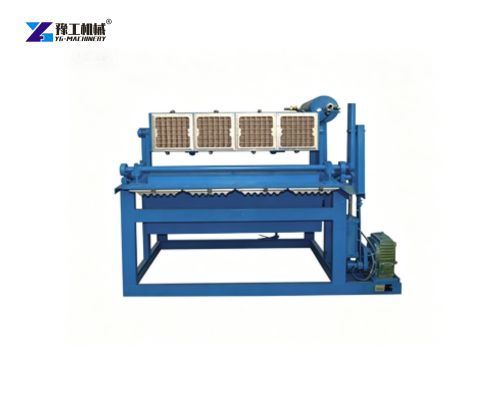
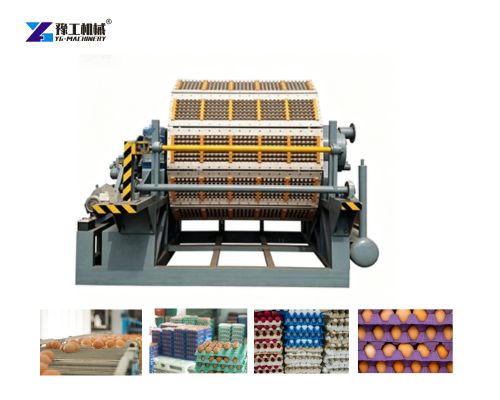
Understanding how a semi automatic egg box making machine operates helps you manage factory efficiency. The production flow includes three main stages: pulping, molding, and drying.
First, workers put waste paper and water into the hydraulic pulper in a 1:3 ratio. The pulp machine chops the paper into fine fibers within 15 to 20 minutes. Then, the pulp goes into the mixing pool. Here, water is added until the pulp concentration reaches about 1%. We can add waterproof agents or colored pigments at this stage if your buyers need colorful egg boxes.
Second, the pulp pump sends the uniform pulp to the forming machine. The forming molds dip into the pulp slurry. A strong vacuum pump sucks the water out from behind the mold, leaving the wet paper fibers on the mold surface to shape the egg boxes.
Third, the machine uses compressed air to blow the wet trays off the forming molds and transfer them onto the transfer molds. In a semi-automatic system, workers manually collect these wet trays using specialized trays and carry them to the drying carts or the conveyor belt of the drying kiln.
Watch Machine Operation Video & Get Latest Price List
Operational Costs and Factory Requirements
To run a semi automatic egg tray machine profitably, you must calculate your daily operational costs. The main costs come from raw paper, electricity, fuel for drying, and labor wages.
- Waste Paper Cost: This is usually the lowest cost. You can lower it further by signing long-term contracts with local packaging waste centers.
- Electricity Consumption: The vacuum pump and the pulp refiner use the most power. Our motors use energy-saving technology to reduce electricity bills by 15% compared to old models.
- Drying Fuel: If you build a brick drying kiln, you can burn coal, natural gas, diesel, or biomass wood pellets. The choice depends on which fuel is cheapest and legal under your local environmental laws.
We recommend a minimum order quantity (MOQ) of 1 complete line. The standard production lead time is 20 to 30 working days after receiving the deposit. We pack the main machine body in waterproof plastic film and fix it firmly inside standard 20ft or 40ft containers using steel wires to avoid shaking during ocean freight shipping.
Installation And After Sales Service Support
Buying a machine from overseas can cause worries about installation and repairs. YG provides complete engineering support to solve these problems for international buyers.
Every machine comes with detailed foundation drawings and pipe connection diagrams before the cargo arrives at your seaport. You can prepare the concrete foundations and water pools in advance to save time.
Our after-sales service package includes:
- Online Video Installation Guidance: Our engineers can guide your local mechanics step-by-step through WhatsApp or Zoom video calls.
- Worker Training Programs: We teach your operators how to adjust pulp thickness, how to wash molds, and how to do daily lubrication.
Our service team is online 24 hours a day. If you meet any problem during daily production, you can send us a short video, and our technical team will give you a solution within 12 hours.
Contact Our Engineers For Custom Layout Design & Pricing