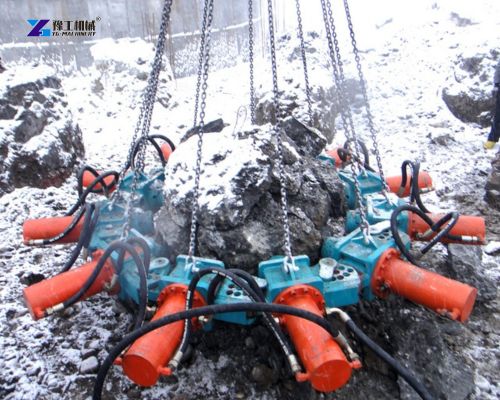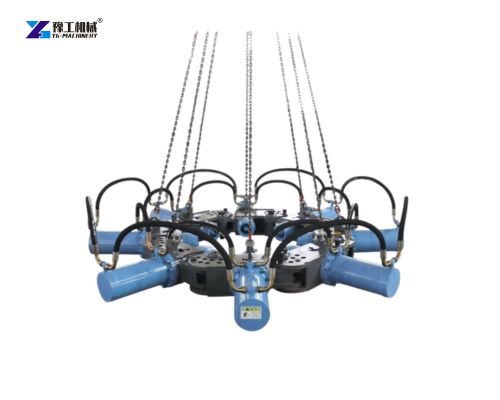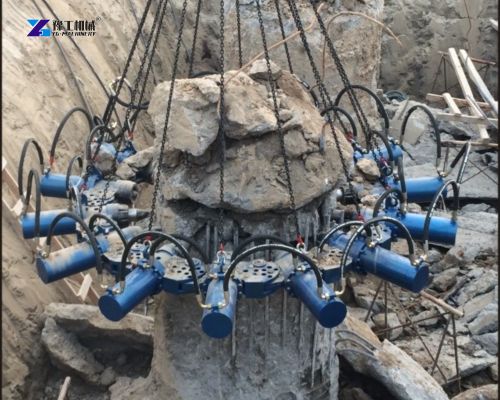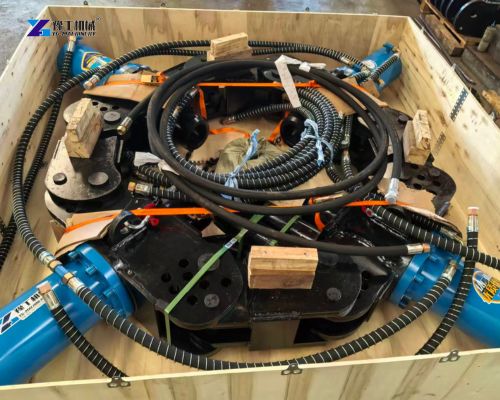
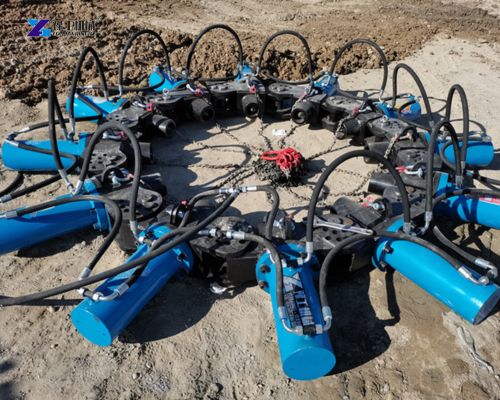
A pile breaking machine is a hydraulic attachment that removes unwanted concrete pile tops quickly and cleanly. It mounts onto an excavator and uses hydraulic power to break the pile head at a precise cutting line. This exposes the steel rebar inside, which then connects to the building foundation above. Compared to manual jackhammers, a pile breaker is safer, quieter, and much faster. It cuts pile heads in minutes without damaging the reinforcement bars. Construction crews use this equipment on bridge sites, high-rise buildings, and port projects. With the right pile breaking machine, contractors complete foundation work on schedule while reducing labor costs and improving job site safety for everyone involved.
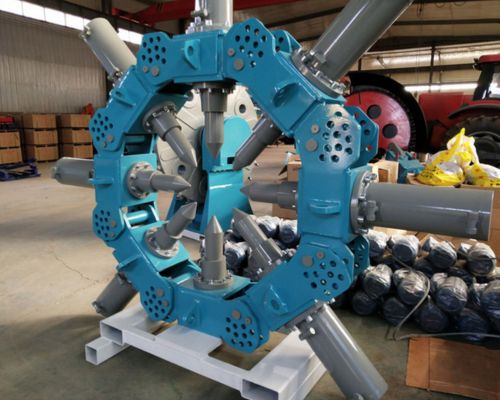
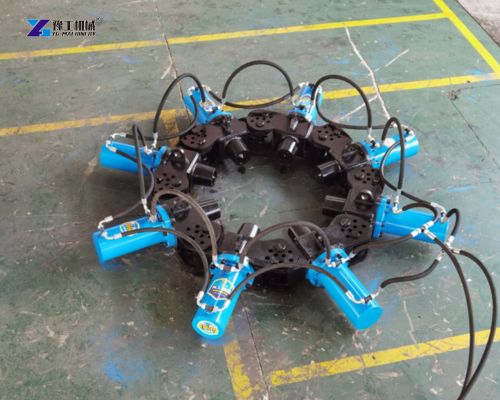
YG Concrete Pile Breaker Models
To ensure optimal structural integrity and precise matching with your carrier fleet, please refer to our official production data and modular configuration matrix below:
| Module Number | PCS | 4 | 8 | 9 | 10 | 11 | 12 | 13 | 14 | 15 | 16 | 17 | 18 |
| Combination of the total weight | KG | 1600 | 2640 | 2970 | 3300 | 3630 | 3960 | 4290 | 4620 | 4950 | 5280 | 5610 | 5940 |
| Pile diameter range | mm | 400-600 | 600-800 | 800-1000 | 1000-1150 | 1150-1300 | 1300-1500 | 1500-1650 | 1650-1800 | 1800-1970 | 1970-2200 | 2200-2360 | 2360-2500 |
| Hydraulic excavator | T | 20T-30T | 30T-40T | Hydraulic system/pump station | |||||||||
| Max.Thrust | 300KN | Max.Cylinder required | 20L/min | Machinery Tonnage | ≥20T | Location pinΦ35 | |||||||
| Max.Cylinder Trip | 300mm | Chisel diameter | 110mm | Singlemodule weight | 335KG | ||||||||
| Max.Cylinder Pressure | 300MPa | Max.Hoist Capacity | ≤500mm | Singlemodulesize | 1015*865*340mm | ||||||||
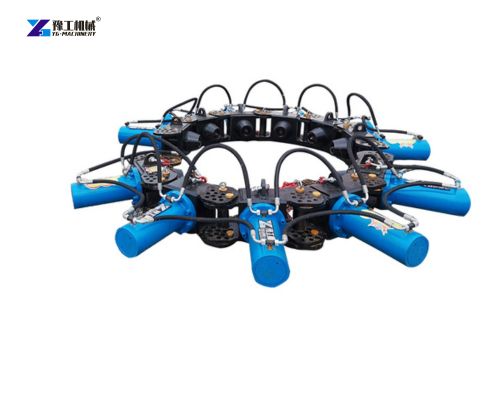
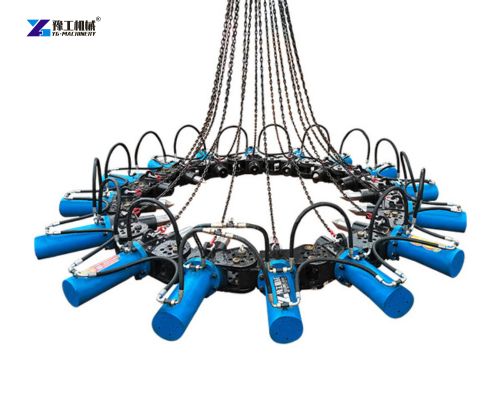
Types of Pile Breakers
Not all pile breakers are the same. They come in different designs for different jobs. Choosing the right type is important for efficiency. Here are the main types you will find on the market.
1. Round Pile Breaker
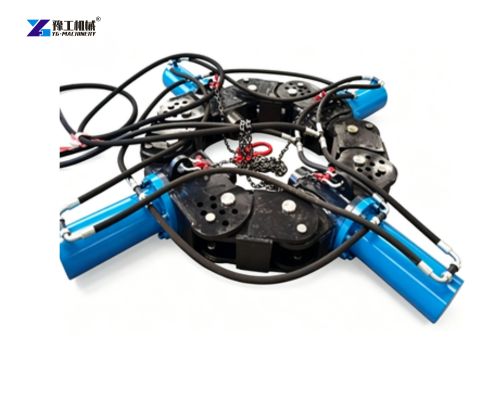
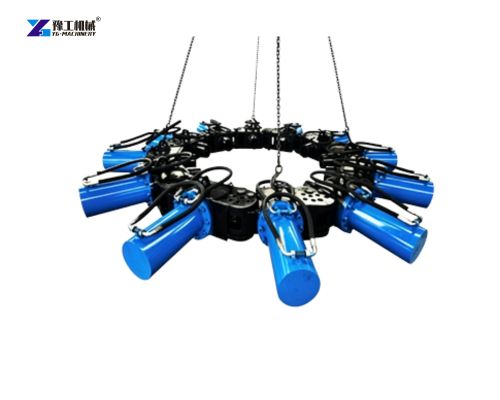
This type is the most common. It has a circular arrangement of modules. Each module contains a hydraulic cylinder and a chisel. The modules are connected in a ring. You can add or remove modules to fit the pile diameter. This type works well for cast-in-place piles and precast round piles.
Features:
- Handles diameters from 300mm up to 2500mm.
- Modular design allows quick size changes.
- Suitable for most foundation projects.
2. Square Pile Breaker
Square pile breakers have a fixed frame. The frame is shaped to fit square piles. They are less flexible than round breakers. But they are very efficient for standard square piles. The chisels press against all four sides at once. This gives a clean break.
Features:
- Fixed sizes from 250mm to 650mm.
- Simple and robust construction.
- Best for precast square concrete piles.
3. Handheld / Small Pile Breakers
These are smaller units. They are not attached to an excavator. Workers can move them by hand. They are useful for small projects. They are also good for tight spaces where an excavator cannot reach.
Features:
- Lightweight and portable.
- Lower cost than large units.
- Best for small piles under 300mm.
4. Multi-Purpose Pile Breaker
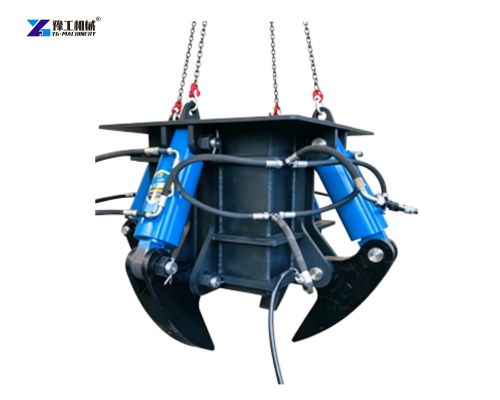
Some manufacturers offer a universal frame. This frame can work for both round and square piles. It uses special adapters. This type is the most expensive. But it gives the most flexibility. Contractors who handle many different jobs often prefer this type.
Why Use a Hydraulic Pile Cutter?
A hydraulic pile cutter offers real value to contractors. It changes how fast work gets done. It also makes the job site safer for everyone.
Main Advantages:
- High Speed: It can break a pile in five minutes or less. A crew can process 12 to 16 piles per day.
- Cost-Effective: It lowers labor costs. You need only one excavator operator instead of a team of jackhammer workers.
- Safe Operation: No one stands near the breaking area. Workers stay at a safe distance. This reduces injury risk.
- Protects Rebar: The machine cuts the concrete only. It does not bend, cut, or damage the steel bars.
- Low Noise: It is much quieter than pneumatic hammers. This is good for city sites with noise limits.
- Modular Design: One machine works for different pile sizes. This saves money on buying multiple tools.
6 Applications of Pile Breaker
A pile breaking machine is used in many large infrastructure projects. It is essential for any work that uses concrete piles for support. Below are the most common job sites where this equipment is needed.
1. High-Rise Building Foundations
Tall buildings need strong foundations. Concrete piles are driven deep into the ground. The pile tops must be broken to the correct level before the building goes up. A pile breaker prepares these piles quickly. It keeps the rebar straight for connecting to the building columns.
2. Bridge and Overpass Construction
Bridge piers sit on top of pile groups. Each pier may have 6 to 20 piles. The pile heads need to be at the exact same height. A hydraulic pile breaker makes precise cuts. This ensures all piles are level. This is critical for bridge safety.
3. Highway and Railway Projects
Roads and train tracks need stable ground. In soft soil areas, engineers use pile foundations. The piles support the roadbed. A concrete pile cutter breaks the pile heads to the design level. Then the road surface is built on top.
4. Marine and Port Construction
Docks, wharfs, and jetties are built over water. Piles are driven into the seabed. The pile tops must be above water level. Marine construction uses pile breakers to prepare these piles. The equipment must be strong and reliable in wet conditions.
5. Wind Turbine Foundations
Wind farms are built in open fields or offshore. Each turbine has a large foundation with many piles. The pile heads are broken to a precise level. This allows the turbine tower to bolt onto the foundation. This work is often in remote areas. A reliable pile breaker is essential.
6. Retaining Walls and Earth Retention
Deep excavations need retaining walls. Some walls use piles as support. The pile tops are broken to create a flat top for the wall cap. This keeps the excavation stable and safe.
Check Our Hydraulic Pile Breaker Models
Two Concrete Pile Crusher Customer Case Studies
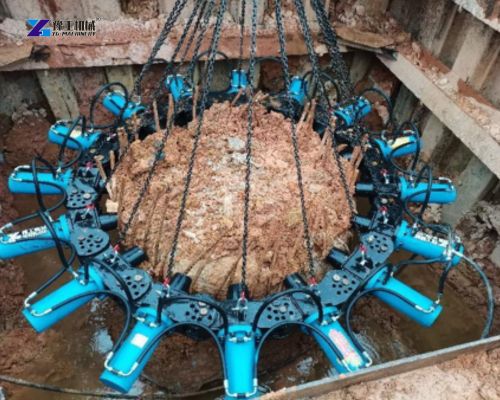
Real-world examples show how a pile breaking machine performs on actual job sites. Here are two projects from different countries. They demonstrate the value of using a hydraulic pile cutter.
Case Study 1: High-Rise Residential Tower – Dubai, UAE
A construction company in Dubai was building a 45-story residential tower. The foundation required 180 concrete piles. Each pile was 1,200mm in diameter. The project schedule was very tight. The contractor used a round pile breaker with 12 modules.
Results:
- The crew processed 15 piles per day.
- Total pile breaking was completed in 12 working days.
- The rebar remained straight and undamaged.
- The project saved about 40% on labor costs compared to handheld breakers.
The site manager reported that the pile breaker reduced noise complaints from nearby buildings. This was very important in the city center.
Case Study 2: Bridge Expansion Project – Texas, USA
A state transportation department was expanding a major highway bridge. The project required 240 square piles. Each pile was 400mm wide. The contractor used a square pile breaker with a fixed frame. The machine was attached to a 20-ton excavator.
Results:
- The crew finished 18 piles per day on average.
- The job was completed in 14 days.
- The machine worked reliably in hot weather (over 38°C).
- No rebar was bent or cut during the process.
The project engineer noted that the pile breaker allowed them to stay ahead of schedule. This saved the state money on penalties for late completion.