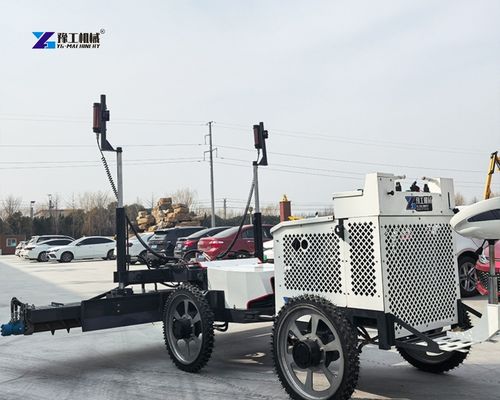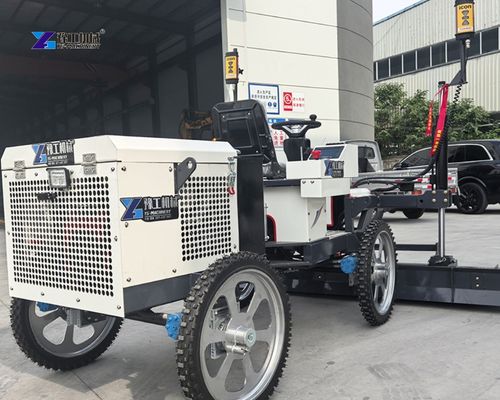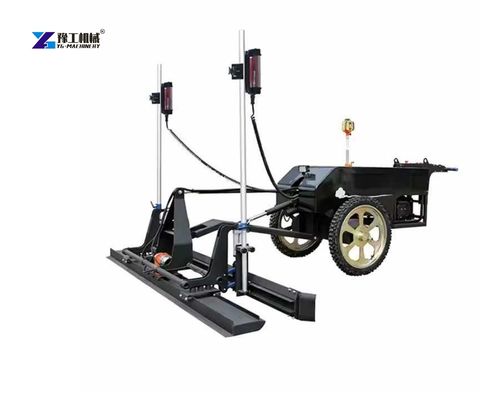
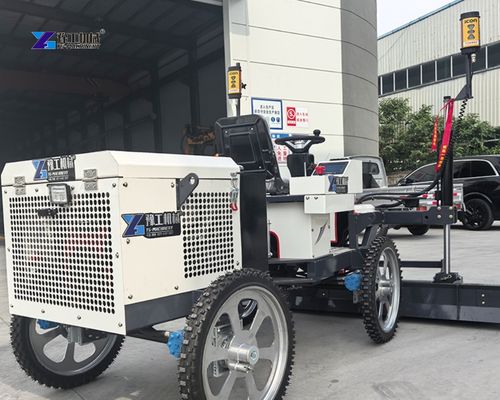
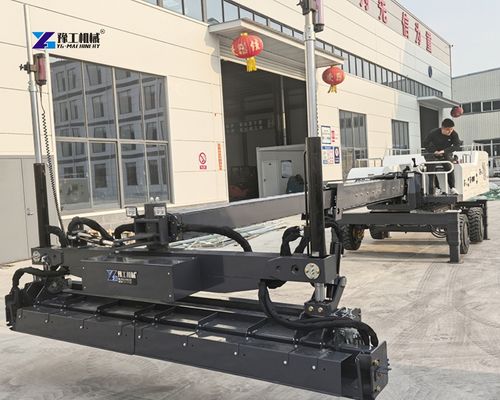
A remote control laser screed is a self-propelled concrete leveling machine that uses a laser reference system to pour and level large concrete slabs with high flatness. It is typically used in warehouses, factory floors, and commercial buildings. It offers fast placement, reduced labor, and consistent floor flatness. If you need reliable equipment and OEM support, contact YG for more product information.
YG Concrete Floor Leveling Machine Parameters – OEM Support
| Model | YGJX31 | YGJX32 | YGJX33 | YGJX34 |
| Engine | ||||
| Model | Generator set | GX390 Electric start | GX390 Electric start | GX390 Electric start |
| Power | 2.0kW | 13hp/3600rpm | 13hp/3600rpm | 13hp/3600rpm |
| Fuel tank (L) | 14.5 | 6.5 | 6.5 | 6.5 |
| Running device | ||||
| Drive | Motor | Hydraulic motor | Hydraulic motor | Hydraulic motor |
| Running mode | Infinitely variable speed | Handle control, stepless speed | Handle control, stepless speed | Handle control, stepless speed |
| Running speed (m/min) | 0-36 | 0-45 | 0-65 | 0-45 |
| Suggest working speed (m/min) | 5 | 5 | 5 | 5 |
| Screed head | ||||
| Type | Self-leveling | Electric control, self-leveling | Self-leveling | Hydraulic control, self-leveling |
| Width | 2500mm | 2500mm | 2500mm | 2500mm |
| Exciting force | 500N | 500N | 500N | 500N |
| Vibration frequency | 50Hz | 50Hz | 50Hz | 50Hz |
| Laser control system | ||||
| Control type | Microcomputer laser scan | Microcomputer laser scan | Microcomputer laser scan | Microcomputer control |
| Operation mode | Walk-behind | Walk-behind | Walk-behind | Walk-behind |
| Forward and reverse | Handgrip control, stepless speed-walking | Hydraulic control | Handgrip control, stepless speed-walking | Hydraulic control |
| Size and weight | ||||
| Working size (mm) | 2758*2622*1980 | 2740×2659×1980 | 2578×2643×1980 | 2780*2622*1980 |
| Weight (kg) | 295 | 365 | 380 | 410 |
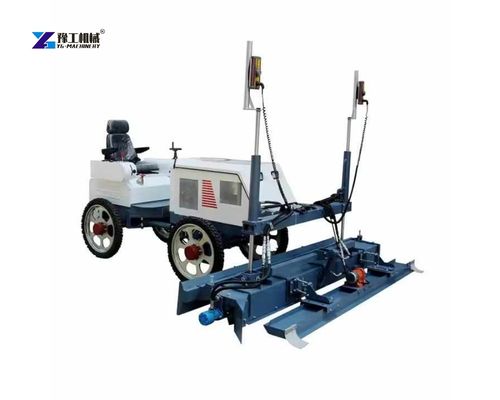
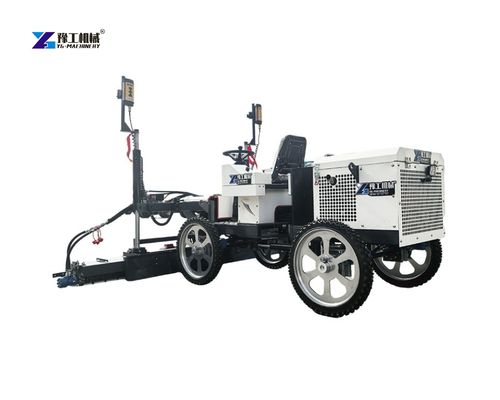
Applications of a Remote Control Laser Screed
You might wonder where this machine actually pays off. The short answer is anywhere you need a large, flat, and durable concrete floor.
Warehouse and Logistics Floors
Modern warehouses run on narrow aisles and tall racking. A floor that is not flat causes forklift bounce, racking misalignment, and safety risks.
A remote control laser screed helps you hit tight FF and FL numbers. That means your client can install very narrow aisles without worrying about floor tolerance.
In a 10,000 m² distribution center, a laser screed can place and level concrete up to three times faster than manual screeding. That speed directly reduces labor cost and project timeline.
Industrial and Commercial Slabs
Factory floors, retail stores, and office buildings all need flat, joint-free surfaces. A concrete laser leveling machine gives you consistent elevation across the entire slab.
This is critical when you install automated guided vehicles or high-precision machinery. Even a 5 mm deviation can cause problems down the line.
Outdoor and Large-Area Pours
Parking structures, loading docks, and outdoor pads also benefit. The laser system works with a tripod or laser transmitter, so you can cover large areas without physical string lines.
Wind and weather can affect manual screeding, but a laser screed keeps its reference even in open-air jobs.
Small Laser Screed vs. Standard Models: Which Fits Your Project
Not every job needs a full-size machine. A small laser screed is often the better choice for tight sites or smaller pours.
| Feature | Small Laser Screed | Standard Laser Screed |
| Working width | 2.5 m or less | 2.5 m and above |
| Best for | Indoor, tight access, small slabs | Large warehouses, industrial floors |
| Transport | Easy, fits in a pickup | Needs a trailer or flatbed |
| Price range | Lower | Higher |
| Daily output | 500–1,500 m² | 2,000–5,000 m² |
When a Small Laser Screed Makes Sense
You should consider a small model if your projects are mostly under 1,000 m². It is also a good fit when site access is limited, like in basements or upper floors.
Many contractors start with a small laser screed and add a larger unit as their business grows. That way, you keep your capital investment low while still winning higher-value jobs.
Features to Check on a Concrete Laser Leveling Machine
When you compare suppliers, do not just look at the price. These are the features that decide whether the machine works for your market.
Engine and Power
Most machines use a Honda GX390 or a similar gasoline engine. Electric start and a reliable generator set matter for daily commercial use.
Check the fuel tank size. A 6.5 L tank is common, but a 14.5 L tank means fewer refueling stops on long pours.
Drive and Running Mode
Hydraulic motor drive with stepless speed control gives you smooth forward and reverse movement. Running speed ranges from 0 to 65 m/min depending on the model.
For most jobs, a suggested working speed of 5 m/min is ideal. It balances flatness quality and daily output.
Screed Head and Vibration
The screed head width is usually 2,500 mm. Exciting force of 500 N and a vibration frequency of 50 Hz are standard for good concrete consolidation.
Self-leveling types include electric control and hydraulic control. Hydraulic self-leveling is generally more responsive on uneven subgrades.
Why Laser Control Type Matters
Most machines use a microcomputer laser scan system. This gives you automatic elevation correction as you move.
Some models offer microcomputer control with hydraulic forward and reverse. That setup is better for operators who want less physical effort.
Self-Leveling and Vibration Performance
A self-leveling screed head keeps the blade at the correct elevation even when the machine tilts slightly. This is what gives you consistent flatness across the slab.
Vibration frequency and exciting force determine how well the concrete settles around rebar and embedded items. Do not overlook these two numbers.

FAQ
1. What is the main advantage of a remote control laser screed over manual screeding?
It levels concrete faster and more accurately. You get consistent flatness across large slabs with less labor.
2. Can a small laser screed handle warehouse floors?
Yes, if the pour is under about 1,000 m² per day. For very large warehouses, a standard model is more efficient.
3. What laser control type should I choose?
Microcomputer laser scan is the most common and reliable. If you want smoother hydraulic forward and reverse, choose a microcomputer control model.
4. Do you offer OEM support for concrete laser leveling machines?
Yes. YG provides OEM support including branding, configuration changes, and spare parts supply.
5. How do I maintain the laser screed for long service life?
Clean the screed head after each pour, check hydraulic oil levels weekly, and keep the laser receiver lens free of concrete dust.
Final Thoughts
Choosing a remote control laser screed comes down to your project size, site access, and budget. A small laser screed works well for tight or smaller jobs. A standard concrete laser leveling machine is better for large industrial floors.
Check the engine, drive, screed head, and laser control type before you buy. And always work with a supplier that offers OEM support and spare parts.
If you are ready to compare models or need a custom configuration, reach out to YG. We will help you find the right machine for your market.