Every construction site needs steady electrical power to keep tools running and avoid costly downtime. A construction site generator is the heart of any modern job site. It powers everything from small hand drills to heavy tower cranes. But how do you know what size you actually need?
To find the right size, you must look at two power numbers: running watts (the power a tool needs to keep running) and starting watts (the extra power a tool needs for a few seconds when it first turns on). If you do not calculate these numbers correctly, you risk overloading your machine or wasting money on too much fuel.
For small construction sites with basic hand tools, a smaller generator is usually enough. For large commercial building projects with multiple heavy machines, you will need a massive industrial unit.
- Small Sites (5 kW to 10 kW): Best for hand tools, small air compressors, and basic site lighting.
- Medium Sites (10 kW to 50 kW): Ideal for concrete mixers, larger pumps, welding machines, and mobile office trailers.
- Large Sites (50 kW to 500 kW+): Necessary for heavy machinery, tower cranes, large concrete batching plants, and massive temporary power grids.
Get a Free Construction Generator Sizing Quote Now
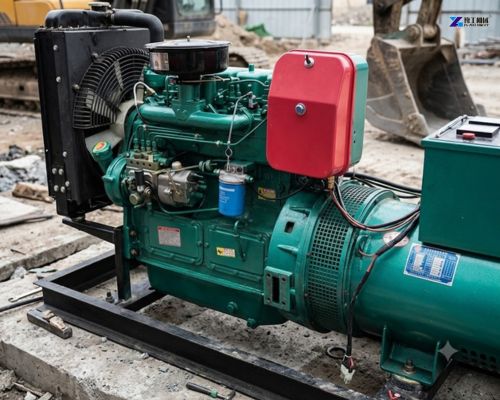
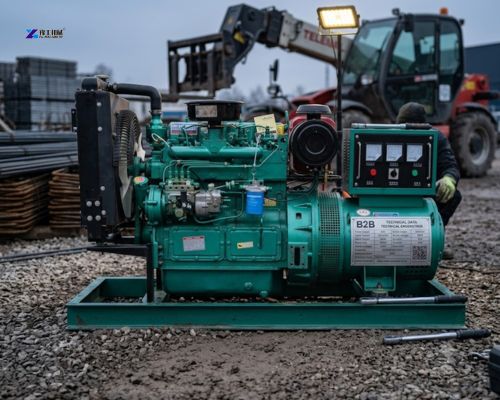
YG Hot Selling Construction Site Generator Specifications
Based on global market demand, here are the technical parameters for our most popular diesel models:
| Parameter | 10kW | 15kW | 20kW | 24kW | 30kW | 100kW | 150kW | 200kW | 300kW | 400kW |
| Cylinders | 1 cylinder | 1 cylinder | 1 cylinder | 1 cylinder | 4 cylinders | 6 cylinders | 6 cylinders | 6 cylinders | 6 cylinders | 6 cylinders |
| Voltage | 400/230V | 400/230V | 400/230V | 400/230V | 400/230V | 400/230V | 400/230V | 400/230V | 400/230V | 400/230V |
| Frequency | 50Hz | 50Hz | 50Hz | 50Hz | 50Hz | 50Hz | 50Hz | 50Hz | 50Hz | 50Hz |
| Rotating Speed | 1500rpm | 1500rpm | 1500rpm | 1500rpm | 1500rpm | 1500rpm | 1500rpm | 1500rpm | 1500rpm | 1500rpm |
| Bore × Stroke (mm) | 115×115 | 115×115 | 125×120 | 130×120 | 100×115 | 105×125 | 105×130 | 126×130 | 126×155 | 135×160 |
| Rated Current | 18A | 27A | 36A | 43.2A | 54A | 180A | 270A | 360A | 540A | 720A |
| Phase & Wiring | Three-phase four-wire | Three-phase four-wire | Three-phase four-wire | Three-phase four-wire | 3-Phase 4-Wire | 3-Phase 4-Wire | 3-Phase 4-Wire | 3-Phase 4-Wire | 3-Phase 4-Wire | 3-Phase 4-Wire |
Pro Tip for Selection: If you are unsure of the required wattage, calculate the total power of your equipment and multiply by 3 (Equipment kW × 3 / 0.8), as the instantaneous starting power is three times the rated power.
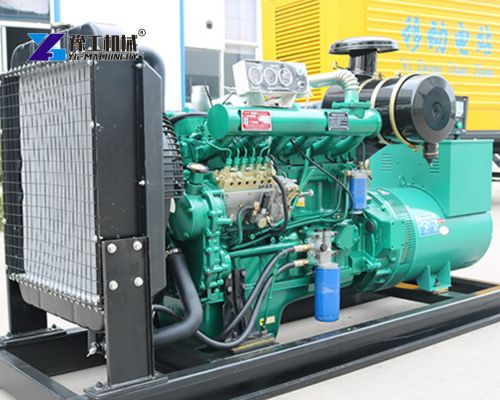
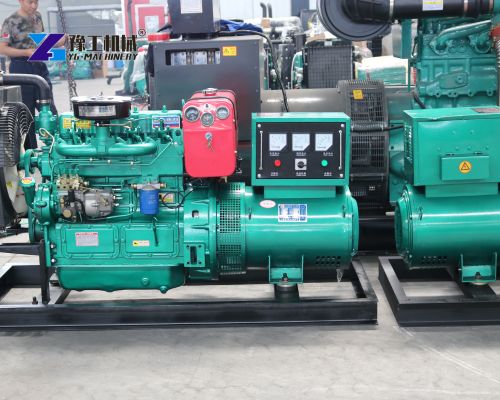
Comparison of Different Diesel Generator Sizes for Construction Work
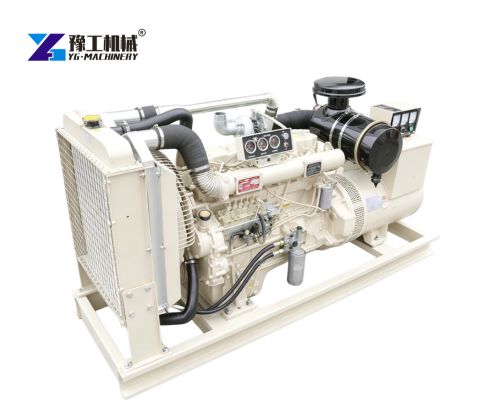
Choosing the right power source is easy when you compare the most common sizes side-by-side. On heavy jobs, a diesel generator for construction site applications is the standard choice because diesel engines last longer and use less fuel under heavy loads.
| 10 kW | Small renovation jobs, road repairs | 2 circular saws, 1 air compressor, basic LED work lights | 10–12 hours |
| 50 kW | Medium building projects, masonry work | 2 heavy concrete mixers, 3 welding stations, drainage pumps | 14–18 hours |
| 150 kW | Large-scale road building, high-rise framing | Tower crane motors, large water pumps, temporary office grids | 24+ hours |
| 500 kW | Massive infrastructure, mining, bridges | Multiple heavy excavators, batching plants, entire site grids | Continuous operation |
Using a diesel engine means your team gets steady power all day without constant refueling stops. This keeps your project on schedule and keeps your workers productive.
View YG Full Heavy-Duty Diesel Generator Catalog
Best Portable Generators Suitable for Construction Sites
Not every job site has flat ground or easy access. This is why a portable generator for construction site use is so popular. These units are easy to move around rough mud and gravel.
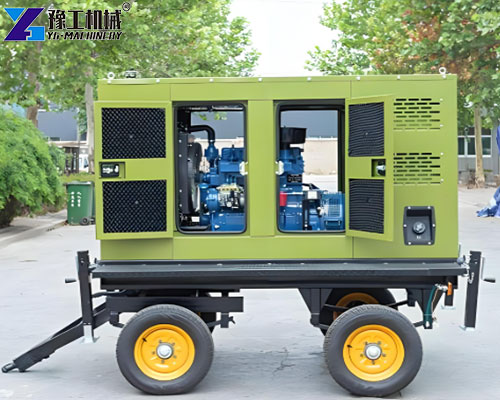
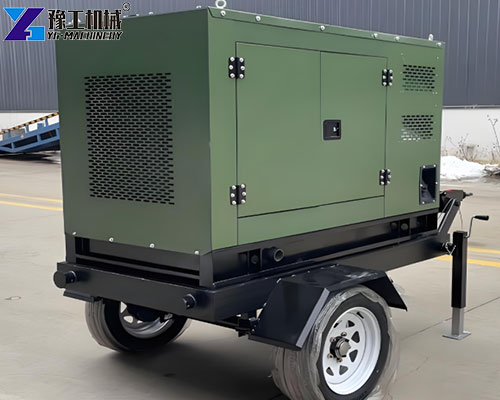
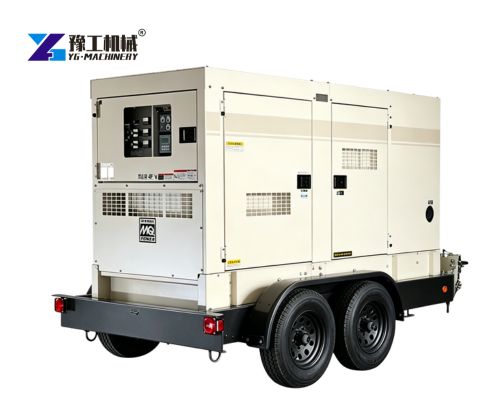
For the ultimate mix of mobility and raw strength, a diesel powered portable generator is the best investment. These mobile machines are designed with heavy steel frames and durable wheels so you can tow them behind trucks or roll them exactly where you need them.
- Heavy-Duty Protective Frames: These generators feature thick steel roll cages to protect the engine from falling debris and rough transport.
- Lifting Hooks and Off-Road Wheels: Designed with top-mounted metal loops for crane lifting and large, puncture-proof wheels to handle thick mud and rocky soil.
- All-Weather Outlets: Outlets feature waterproof plastic covers to protect against rain, dust, and flying debris on active job sites.
- Large-Capacity Fuel Tanks: Built with extra-large diesel tanks that allow the generator to run for a full 10-to-12-hour shift without needing a refill.
Ask YG Engineers for Portable Diesel Pricing
4 Tips For Your Construction Site Generator Maintenance
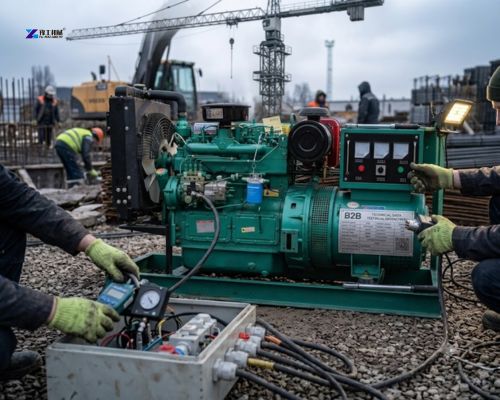
A stalled construction site generator can freeze your entire project, costing you thousands of dollars in wasted labor hours every day. To keep your job site running smoothly, you must follow a strict maintenance schedule. Because a diesel generator for construction site use operates in extremely dusty and muddy environments, it requires more frequent care than a standard backup generator.
Regular maintenance not only prevents sudden blackouts but also extends the lifespan of your machine by several years. Follow these simple checklist steps to keep your equipment in top condition:
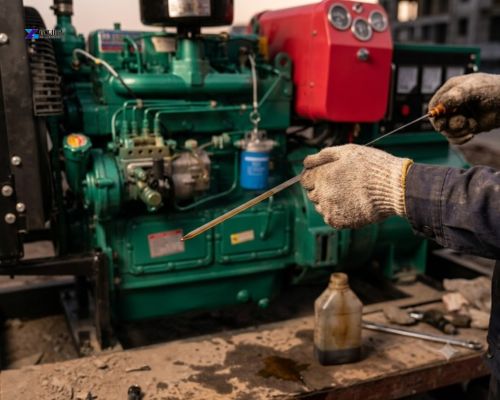
- Daily Fluid and Filter Checks: Check the engine oil level and coolant level before every shift. Drain any water collected in the fuel-water separator to prevent fuel system damage.
- Keep the Air Intake Clean: Construction sites are dusty. Clean or replace the air filter regularly to make sure the diesel engine gets enough clean oxygen to burn fuel efficiently.
- Run a Load Test Monthly: If your generator runs on low loads (under 30%) for too long, wet stacking can occur. This is when unburned fuel builds up in the exhaust system. Run the generator at high capacity once a month to burn off this buildup.
- Inspect Electrical Outlets: Look for any loose wiring, cracked plastic covers, or concrete dust buildup around the plugs. Damaged outlets can cause electrical shorts or dangerous shocks on site.
How To Pick The Right Construction Generator Size For Your Job
Choosing the wrong generator can damage your sensitive electronics or stall your electric motors. To make sure you buy the correct model, follow these three simple steps:
- List Every Tool: Write down every single electrical tool and machine you plan to run at the same time. Check the metal nameplates on each tool to find their running watts and starting watts.
- Calculate Total Power Needs: Add together the running watts of all tools. Then, find the single tool with the highest starting watts. Add that starting watt number to your running watt total. This ensures you have enough power to start your largest tool without tripping the breaker.
- Add a Safety Margin: Never run a generator at 100% capacity for a long time. Always add a 20% safety margin to your total calculated wattage. This extra breathing room protects your engine from overheating and allows you to plug in extra tools later if your project grows.
Don’t let power failures halt your progress or drain your budget on site. Contact YG Machinery today to get a professional, tailored generator recommendation and a free competitive quote on our heavy-duty diesel models. Let our team power your success—get in touch with us now to secure the dependable energy your construction site deserves!